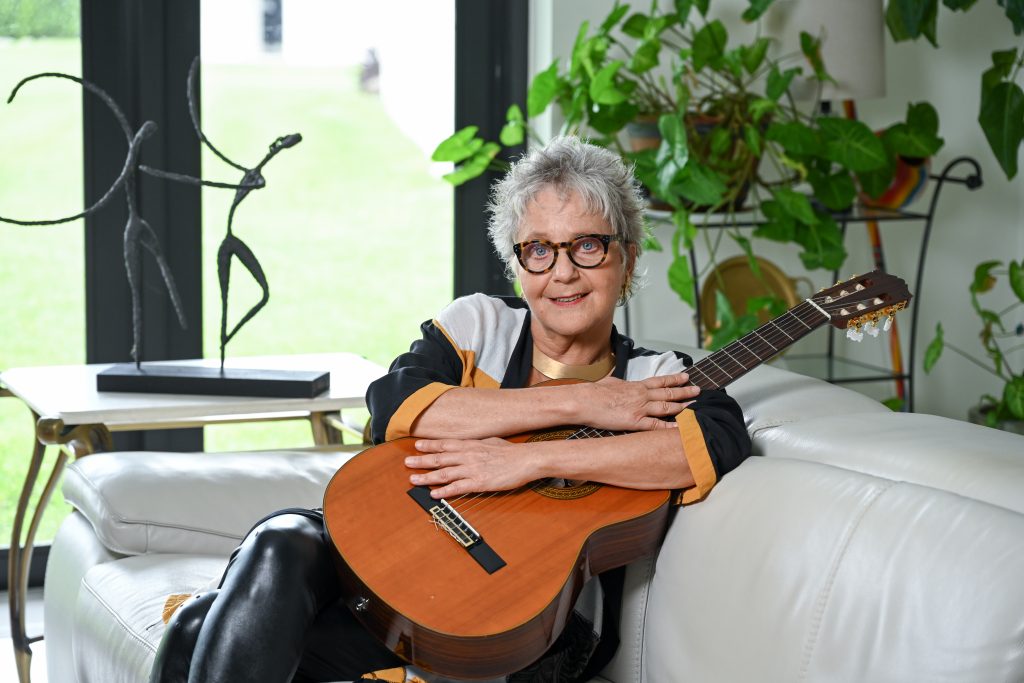
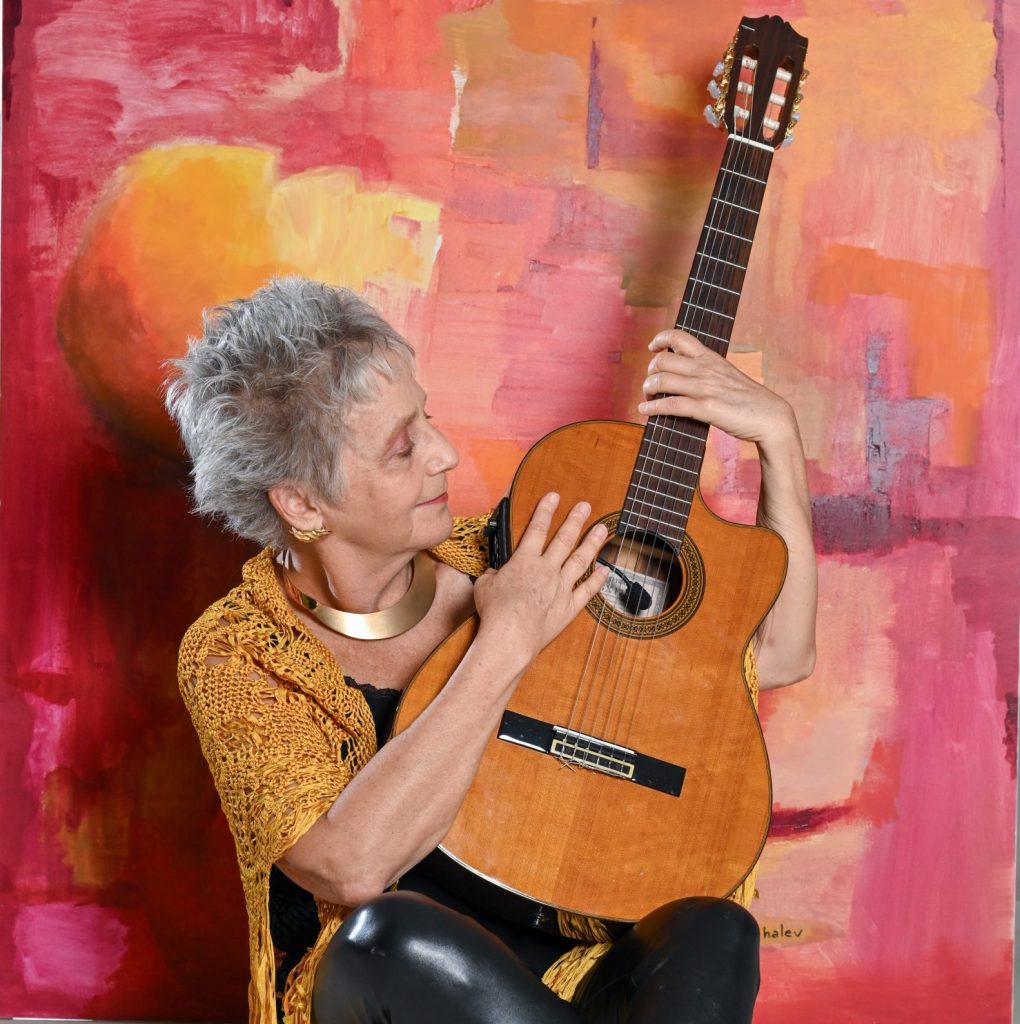
Originally from Buenos Aires, Alejandra Czarny is a singer, educator, and music therapist with a passion for music sung in Yiddish, one of the languages spoken in Jewish culture. Born in a traditional Jewish family, Alejandra grew up learning and singing Yiddish songs, and as a composer, blends her Jewish ancestry with her South American roots. Her performances, album recordings, and educational presentations creatively combine traditional songs and original compositions, defining her unique sound. A longtime South Florida resident, her work regularly leads her to festivals, concerts, and private events throughout North America, South America, and Europe. In addition to her shows, Alejandra also gives back to her community as a music therapist and educator offering singing workshops, group therapy sessions, and teacher training programs. Through her music, Alejandra Czarny draws from her unique cultural heritage to reinterpret songs deeply rooted in the history and traditions of Yiddish culture.
Residency Programs
Performance: When Yiddish Turns to Tango
Monday, September 28
Estudio 35
Performance: Dorem – Original and Traditional Yiddish Songs
Thursday, October 22
Michael-Ann Russell JCC
Community Outreach Event at Aventura Turnberry Jewish Center
Tuesday, November 10
Private event, not open to the public
Free Community Fun Day
Saturday, December 12
Museum of Miami
More About Alejandra
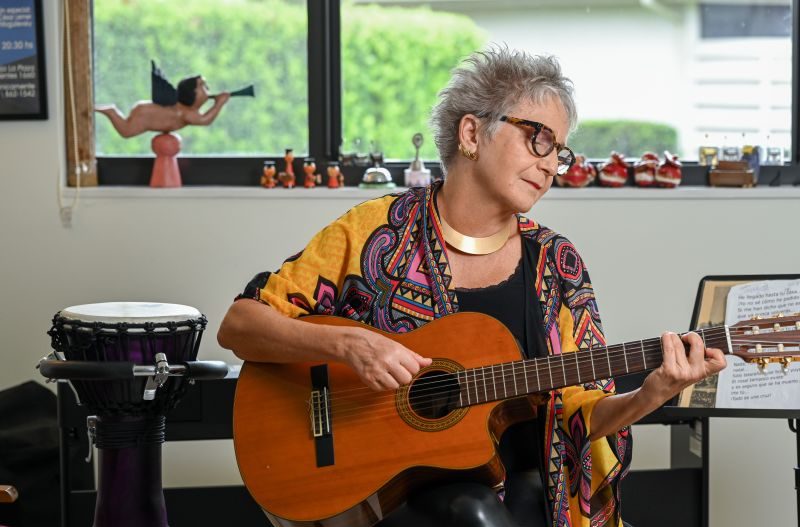
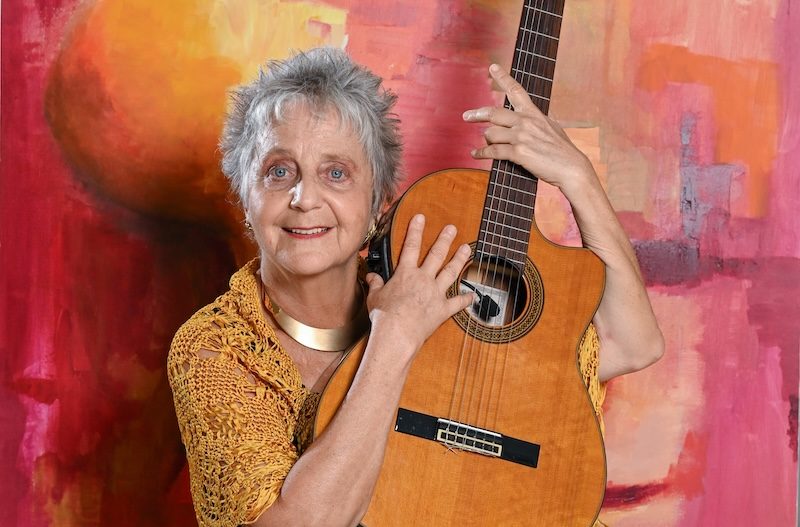
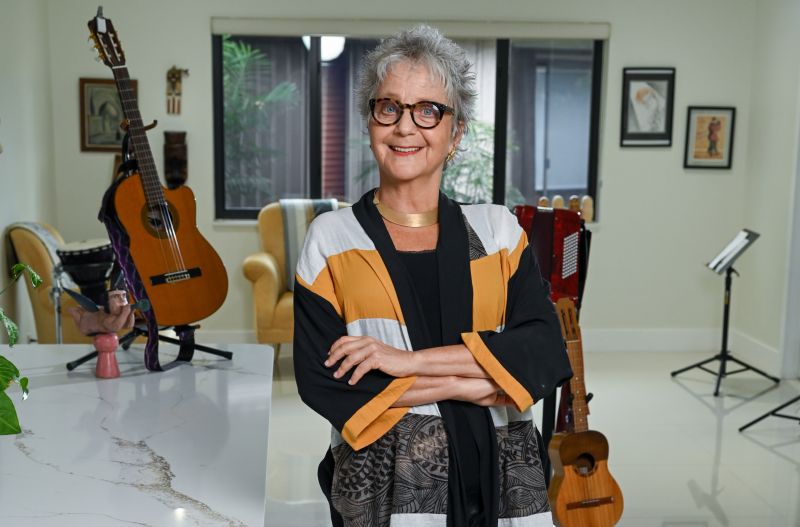
The following is from an interview Alejandra Czarny conducted with the Museum of Miami in 2026.
What is your name? Where were you born?
My name is Alejandra Czarny, and I was born in Buenos Aires, Argentina.
Tell us how you came to live in South Florida.
In 2002, we moved to Miami as a family of four. We had been visiting the city during our vacations, so it already felt familiar. As a Jewish music specialist, I was able to obtain a visa for all of us, which made the decision much easier.
What traditions and art forms do you practice?
My traditions are a blend of being a Jew who grew up in Argentina. Drinking “mate” [a traditional herbal drink in parts of South America] is a deeply rooted custom there, and I have mate every single morning. On the other hand, I light candles almost every Friday evening for Shabbat, a practice I find profoundly meaningful. Besides singing and playing instruments, I have been writing poetry for most of my life. Lately, I’ve been following a poetic form called “décimas,” which has a specific structure and set of rules. For that I use mostly Spanish to which I add pieces and bits of my other languages. I also love to “free dance” to different kinds of music and occasionally do circular folk Israeli dances.
What are some of the ways your Argentine and Latin American heritage combines with your Jewish cultural heritage through your music?
My music — the songs I’ve composed — blends Latin American genres (tango, son, milonga, zamba) with Yiddish lyrics. Some of them refer to historical events, such as the story of the Jewish women who were sexually exploited by a Jewish criminal ring called Tsvi Migdal in parts of South America during the 1920s and 1930s. Other songs draw from personal stories, like my visits to my mother’s hometown and my grandmother’s hometown.
One way to understand that connection is the name I gave to my new musical project which includes recordings of my original Yiddish songs. I named it “Dorem” which means “South” in Yiddish. The project blends my South American roots with Yiddish words and traditions.
Please describe what the word Yiddish means.
Yiddish is a language that emerged in Eastern Europe about a thousand years ago, during the same period when modern English and German were developing. All three languages trace part of their origins to early Germanic speech. The word Yiddish literally means “Jewish,” and the language includes vocabulary from Slavic languages as well as many terms from Hebrew.
Tell us a bit about the history of the music in which you specialize.
Because I sing in Yiddish, my music is sometimes included in the Klezmer genre. The word klezmer originally meant “musical instrument,” but today it refers to a broad, mostly instrumental musical tradition that can also include Yiddish songs. This genre began in the small towns of Eastern Europe, where musicians played at weddings and celebrations, typically using instruments such as accordion, clarinet, and cymbals. My first CDs of Yiddish songs fit more closely into this traditional category, since they featured classic folk repertoire. Today, however, I compose music in a variety of genres.
Tell me about how your connection to Jewish music is more of a cultural connection than a religious one?
I was raised in a Jewish secular family and community. That means we didn’t go to synagogue and we didn’t pray, but we did celebrate the Jewish holidays around my grandparents’ tables, with traditional food and familiar customs throughout most of my childhood. I attended Jewish schools from preschool through high school, and because of that, I am fluent in Hebrew. I studied literature and read the Bible in Hebrew, enjoying the mysteries and multiple meanings of its unique literary styles.
Although we spoke Spanish at home, both of my parents understood Yiddish, which was my grandparents’ language. They had brought Yiddish with them from Eastern Europe. I first encountered the language in Jewish high school and later continued studying it privately — something I still do today. My sense of Jewish identity is deeply connected to languages, which for me are powerful cultural expressions.
Please share your thoughts about the intertwining of Jewish culture and the human experience.
My Jewish experience was deeply rooted in community — groups of people singing, dancing, and learning traditions and the stories behind them. This happened both at school and in youth centers, where culture was lived collectively and joyfully. I think I learned to see the world through universal and humanistic Jewish lenses.
That perspective aligns with two ideas that have always guided me: “Describe your village and you will describe the world,” attributed to Lev Tolstói, and the moral imperative expressed by Auschwitz survivor Roman Kent — “Eleventh Commandment: you should never ever be a bystander.” Together, these ideas shaped my understanding of Jewish culture as something profoundly intertwined with the human experience: rooted in the particular, yet always speaking to the universal; grounded in memory and ethics yet always calling us to act in the world.
What does it feel like when you run your singing groups? What do you tell people when they tell you they don’t sing well?
I have been running singing groups for many years, and I am deeply passionate about this work. It is rooted in my training and experience as a music therapist, and in my profound belief in the healing power of music — especially the healing power of singing together. When people come to me judging their own voices or saying they “don’t sing well,” I always bring them back to the essential question: “Do you like to sing?” Because that is what truly matters. The joy, the connection, and the act of expressing yourself with others — that is where the healing happens, not in how “perfect” a voice sounds.
What does it feel like when you perform this music?
I began singing popular Yiddish songs many years ago, when I was a young entertainer performing for elderly audiences who were deeply connected to that music. I don’t even remember how I first learned those songs, but I do remember the mutual emotion we shared — a sense of recognition, memory, and warmth that passed between us. Each time I sing traditional Yiddish songs, I feel that I am keeping them alive. I recreate them in my own way, adjusting them to the present moment while honoring the generations that carried them before me.
When I sing my original songs in Yiddish, I feel something even more powerful: that I am helping a language that was nearly destroyed during the Holocaust continue to live, breathe, and evolve. It feels like a small act of cultural continuity — a way of giving voice to a language that holds so much history, resilience, universality, and beauty.
Is there anything else you’d like to share?
I would like to share a story that happened after I recorded my first CD of Yiddish songs. I very much wanted to include a prologue on the album cover written by one of Argentina’s most beloved singers and songwriters, the late María Elena Walsh, whose songs are imprinted in the memories of generations of Argentine adults and children. I found her phone number, introduced myself, and explained my special request. She immediately asked, “Why me? I’m not Jewish, and I don’t know the Yiddish language.” I insisted, telling her that many of the songs were lullabies and that her own songs had been part of my childhood. After a moment, she asked me to send her some recordings.
A couple of days later she called back to say she agreed to write the prologue. She added, with her characteristic humor and wisdom that, “young people listen to music they don’t understand at all.” A few days later, she sent me an exquisite text — one that I treasure and would love to share with you:
“To recover the voice of our ancestors, pious intention or emotion alone is not enough — they often lead to an unnecessary emphasis. These songs, created in a language on the verge of disappearing, need to be renewed with as much respect as artistry, so they can be included in the contemporary world without being distorted. Other styles belong to ethnography. The charm of Alejandra’s voice, which brings them into the present through pure music, allows these songs to be appreciated by everyone and to move each listener, regardless of family nostalgia or knowledge of the Yiddish language. Because of their origins, their ability to reveal part of our immigrant cultural heritage, and because of Alejandra’s moving and masterful interpretation, they become part of that universal folklore that captivates all audiences.”
Supported by the National Endowment for the Arts.