Skip to content
Formerly, HistoryMiami Museum

I was raised in the Christian Science faith and went to church from the time I was 4 years old in 1939, but I always considered myself culturally Jewish. I had to go to school during the Jewish holidays as a kid in Brooklyn, and when classmates and teachers expressed surprise that I was at school, I responded: “I am a Christian Scientist of Jewish extraction.”

My parents, Paula and Louis Gelman, never denied their Jewish heritage to anyone, and many of my Christian Science friends in New York were also Jewish. I loved visiting my grandmother in Palm Beach as a child when my parents took me on vacation. Sadie Louber, my grandmother, owned a kosher hotel called the Louber Villa, at 231 Sunset Ave., a block and a half from the ocean.

Grandma Louber was a strong, loving influence in all our lives. My brother, Larry Gelman, says that Grandma took him to black churches in West Palm Beach because she loved gospel music, and Larry credits Grandma with his love of music to this day.

There were always interesting guests staying at the hotel. Grandma served kosher meals. My mother and her sisters were always very close, and it was fun getting together in Palm Beach with my cousins and their parents. There was never any discussion in my presence as a child or an adult about being Jews in a predominantly Gentile area, nor did I realize that it was highly unlikely that a Jewish hotel could have been owned by Jews in Palm Beach.

I moved to Miami as an adult in 1958. It was my first introduction to Miami Beach and its Jewish population and culture. During the early 1960s, we would visit Grandma at her hotel. We always got a kick out of the fact that the Kennedys had an estate in Palm Beach not far from where our family hotel was. To the best of my knowledge, we were still the only Jewish family owning property at that time in Palm Beach.

I decided to investigate how my family came to own this property. I asked a friend, real-estate attorney Daniel Doscher, to look into it, and he did the legal research on the property. He discovered that my father, who was an attorney in New York City, somehow managed to buy it in the late 1930s. He gave the title ownership to Paula Gelman, my mother, and her sister, Ruth Louber.

In 1945, the Louber Villa was transferred to Sadie Louber, my mother’s mother, and Grandma Louber took over the hotel. My grandparents had owned a hotel in Saratoga called the New Windsor Hotel, which they lost in the Great Depression of the 1930s. (I have no memory of Louis Louber, my grandfather, since he passed away when I was very young.)

A few years ago, I visited the Jewish Museum of Florida in Miami Beach and was shocked to see a sign in the museum collection that read: “Always a view, never a Jew.” I thought that the museum might be very interested in the story of the Louber Villa, a hotel that was Jewish-owned and that welcomed Jews in Palm Beach during those years. Today, the picture of the Louber Villa is now in the permanent collection of the Jewish Museum.

Even after the hotel was sold and torn down some years ago, we visited the empty lot annually and walked around the area for sentimental reasons. Recently, my cousin and her husband were in Palm Beach, and we got together there once again!

There is now a large, modern accounting firm on Grandma’s property. We walked to the corner of Sunset Avenue and County Road on our way to the beach, a block and a half away. Almost as a commentary on the inexorable passage of time, there is a beautiful Orthodox Jewish temple on the corner, barely two doors down from where our hotel had been.

Palm Beach has a special sentimental meaning for me, but my permanent home is now in Miami. The changes in the culture and population in South Florida over the many years I have lived here make me proud to live in Miami. It is an exciting place to call home.

My grandfather, George W. Smith, and my grandmother, Ellen Cook Smith, came to Homestead in 1925 at the height of the boom.

My grandmother’s brother, “Uncle Bob” Cook, had urged them to come south. He later served as a Dade County commissioner. My mother Evelyn Smith was 10 years old. She had two brothers (Lester and Wade), and one on the way when they drove their Model T Ford down the two dirt ruts in a road called “Dixie Highway.”

My grandfather had converted the Model T into a sort of camper with a kerosene burner so that Grandmother could cook and they could all sleep inside. There were no road signs, no rest stops (except in the woods), and only painted markers on trees to show the way. According to my mother, the east coast highway was marked with red birds painted on pine trees and the road from Georgia to Florida’s west coast was painted with white stripes on the trees.

During a particularly bad rainstorm, the road became so muddy that they could not travel. They decided to stop and stay at a turpentine camp for several days where they lived on stale doughnuts.

My mother told her favorite story of finding a bracelet in the bushes on one of their “rest stops.” She gave it to her dad who took it into Miami when they arrived. A jeweler gave him $75 for it and he bought his first piece of property in Lemon City with the proceeds.

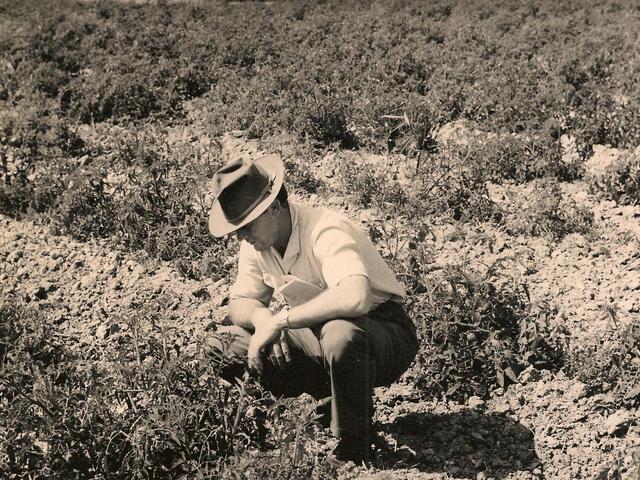
They finally settled in Homestead and endured the terrible hurricanes of 1926, 1928 and 1935, all the while farming (tomatoes and potatoes), first in the Redlands and then in the East Glades. Granddaddy told of the massive clouds of mosquitoes in the ’glades that required him to wrap his arms and legs in newspaper under his clothes and to put burlap bags over the muzzle of the mule to keep it from suffocating from inhaling the bugs.

He said that he always carried a shotgun under one arm to shoot rattlesnakes “just in case.” He didn’t want to lose his plowing mule. Eventually, the old mule became too old to work and died, whereupon Granddaddy gathered his sons around him and announced that they “might not have a crop this year” because he was going to buy a tractor and didn’t know how it would perform. But, he was never one to shy away from technology and later bought a new car every two or three years. Apparently, the tractor performed very well.

My mother and uncles attended Homestead schools and graduated from Homestead High School (later, Homestead Junior High). The uncles all served their country during the war. Hubert, the youngest, and Wade were in the Navy, while Lester (the oldest) went into the U.S. Army. After the war, they all came home to farm with their dad.

My mother met my dad in North Carolina when she was a teacher in his hometown, Rural Hall, near Winston Salem. My dad, George W. Ledford, drove for Greyhound bus lines during the war, taking Marine recruits to boot camp at Parris Island, SC.

After World War II, they moved to Homestead to farm with my grandfather. They farmed with him and Mother’s brothers, Wade and Lester, for 50 years. The youngest, Hubert Smith, went to school to become a chiropractor and he moved his family to Gulfport, MS in the mid-1960s.

As my brother, Larry Ledford, and I grew up, we experienced the growth of Homestead with the establishment of the Strategic Air Command (SAC) base. Many of my friends at South Dade High School were from Air Force families with the rest of us “farmers’ kids” coming from older families who had been in the area for a while.

I was there during the Cuban Missile Crisis and sat on my parents’ front porch watching the endless convoys coming down Krome Avenue. We could hear the B-52 bombers revving their engines at all hours, on alert should their service be needed. I also felt our house tremble when an underground missile was test fired in the Everglades, west of town. I was 15 years old and home alone at the time, certain that we were all going to die and that I’d never see my family again.

I was a senior at South Dade High School when John F. Kennedy was assassinated. I was sitting in the parking lot waiting for my riders to meet me after school when one of them raced out to the car crying that “the President’s been shot!” All these years later, I still recall that moment very clearly. That singular event changed us and it changed our country.

Many of my classmates went off to Vietnam; others of us went to college. For security and solidarity, seven of us girls from the class of 1964 went to the new University of South Florida, which was then a sand dune with several buildings. There was one little pizza place and a Holiday Inn nearby, as well as a Schlitz brewery.

Freshmen were not allowed to have cars so we were pretty much stuck on campus. There was no football, basketball or other intercollegiate sports, so some of my friends bolted for the high life at the University of Florida. Gainesville certainly had more to offer, but my wise parents knew I would HAVE to study at U.S.F. and so I stayed.

I never returned to live in Homestead but visited many times during my adult life and came back to help clean up after Hurricane Andrew, another event that changed our lives forever.

My grandparents’ story is not unique among the pioneers, but I often wonder if any of us today would have the fortitude to stick it out in South Florida if conditions were the same today. With the end of the war and the advent of air-conditioning, my grandparents saw South Florida go from a booming agricultural area to a huge city.

They survived many hurricanes, and yet they stayed, farmed the ‘glades and raised their family. They saw interstate highways being built and they saw men walk on the moon. (My grandmother never quite believed that.) To paraphrase Shakespeare: “What a piece of work!”

In November 1967, after my girlfriend and I became registered nurses, we moved from Wisconsin to Miami Beach. This was a goal we had dreamed of since high school.

We lived at the Castaways Motel in Sunny Isles Beach until we secured our first jobs at Miami Beach’s Mt. Sinai Hospital. After saving our money for several months, we moved to Miami Springs. It was a party, day and night, with all the flight attendants and pilots staying there. Our favorite club was 6 West. It was our hangout to dance and have a good time. We could be found listening to the talented Rhodes Brothers there every Sunday afternoon.

I left Mt. Sinai in 1969 and did private duty nursing that summer. I was dating an executive with A&M; Records. He invited me to a concert in Woodstock, N.Y. but I was unable to go because I was about to start my new job the following Monday in the Emergency Department at Jackson Memorial Hospital. Woodstock, who knew?

While working in the E.D., I was privileged to meet and work with Dr. James Jude. Dr. Jude was a thoracic surgeon who helped develop the use of CPR (cardiopulmonary resuscitation) lifesaving technique. Working with Dr. Jude, I taught CPR classes to my co-workers as well as the Miami-Dade and City of Miami paramedics. I also set up the first “crash cart” in the E.D., which we used for patients in cardiac arrest.

There were times we literally had to jump up on the stretchers to perform CPR and other procedures. A friend of mine and I decided it was not appropriate to wear uniform dresses in situations like those so we decided to wear white uniform pants and pastel uniform tops to work.

We were the first at Jackson to do so. We had nurses coming from every department to see us. The word had spread quickly that dresses were out and pants were in. The majority of nurses now wear uniform pants.

Part of the E.D. consisted of Ward D, or Detention Ward. Essentially, it was the prison ward of the hospital. Anyone who was sick or injured and under arrest was sent to Ward D. We treated murderers, rapists, and even lawyers or doctors on occasion. We were also responsible for treating “Drug Mules,” those who swallowed or inserted packets of heroin or cocaine to avoid arrest.

Sadly, we witnessed several of them die due to the drug packets breaking open in their abdomens. I worked primarily in Ward D from 1972 until I retired in 2000. Jackson Memorial Hospital was a wonderful place to work. I learned so much and had an incredible career as a registered nurse.

Coconut Grove was a haven for artists, musicians, and the “flower child” generation. I moved there in 1969, finding a cadre of friends who would come together in Peacock Park to play our guitars and make delicious vegetarian meals for everyone. The tallest buildings in the Grove at that time were the Coconut Grove Bank and the Mutiny on Sailboat Bay.

It was such a quiet and peaceful time in the Grove. We had plenty of places to congregate. Dick’s Old Grove Pub was one of those places. They had the best cheeseburgers in the greater Miami area. One Sunday, the Jefferson Airplane rock group came in and played all afternoon. We would catch breakfast at the Florida Pharmacy, lunches and dinners at the Feed Bag, the Village Inn, The Taurus, 27 Birds, Lum’s and many more.

On any given day, one could see great musicians walking or biking through the Grove: Vince Martin, Bobby Ingram, John Sebastian, Neil Young, David Crosby, Jimmy Buffet and so many others.

We didn’t restrict ourselves to eating and playing in the Grove, though. Some terrific restaurants in Coral Gables and South Miami included Fox’s Sherron Inn, Jahn’s Ice Cream Parlor, the Sweden House, Sambo’s, the Glorified Delicatessen, Uncle Tom’s BBQ, Food Among the Flowers, The Monk’s Inn and Vinton’s.

Riding my bicycle through Coconut Grove one day, I met my future husband Bruce Liptak. He and a friend had just opened Om Jewelry and Leather. We married in 1972 but Bruce passed away seven years later at the age of 36 from a cerebral aneurysm.

Friends and family were very instrumental in helping me through that horrific time. In 1982, I had a dinner party and some friends brought over John Blocker. We married in 1995. He has a daughter, Vergene, who was 4 years old when I met John. I helped raise her and consider her my very own daughter. She is now 38 years old.

After retiring from JMH in 2000, we moved from Coconut Grove to Sunny Isles Beach. I wanted to remain active in my profession so I returned to Jackson and worked part-time for another six years. My husband, a cardiopulmonary technologist, still works at Jackson.

I no longer work but I am a tireless volunteer. I take classes and am on the board of our condo association. In a fitting tribute, the building in which we live in stands where the Castaways once stood. It’s a lovely reminder that I’ve come full circle in this city.

I left Mt. Sinai in 1969 and did private duty nursing that summer. I was dating an executive with A&M; Records; he invited me to a concert in Woodstock, N.Y. but because I was about to start my new job the following Monday in the Emergency Department at Jackson Memorial Hospital, I was unable to go. Woodstock; who knew.

While working in the E.D. I was privileged to meet and work with Dr. James Jude. Dr. Jude was a thoracic surgeon who helped develop CPR (cardiopulmonary resuscitation). Working with Dr. Jude, I taught CPR classes to my co-workers as well as the Miami-Dade and city of Miami paramedics. I also set up the first ” crash cart “in the E.D. which we used for patients in cardiac arrest.

There were times we literally had to jump up on the stretchers to perform CPR and other procedures. A friend of mine and I decided it was not appropriate to wear uniform dresses in situations like those so we decided to wear white uniform pants and pastel uniform tops to work. We were the first at Jackson to do so and had nurses coming from every department to see us. The word had spread quickly that dresses were out and pants were in. Since that day the majority of nurses wear uniform pants.

Part of the E.D. consisted of Ward D, or Detention Ward. Essentially, it was the prison ward of the hospital; anyone who was sick or injured and under arrest was sent to Ward D. We treated murderers, rapists,, even lawyers and doctors on occasion. We were also responsible for treating ” Drug Mules,” those who swallowed or inserted packets of heroin or cocaine to avoid arrest. Sadly, we witnessed several of them die due to the drug packets breaking open in their abdomens. I worked primarily in Ward D from 1972 until I retired in 2000. Jackson Memorial Hospital was a wonderful place to work. I learned so much and had an incredible career as a registered nurse.

Coconut Grove was a haven for artists, musicians, and the “flower child” generation. I moved there in 1969, finding a cadre of friends who would come together in Peacock Park to play our guitars and make delicious vegetarian meals for everyone.

The tallest buildings in the Grove at that time were the Coconut Grove Bank and the Mutiny on Sailboat Bay. It was such a quiet and peaceful time in the Grove. We had plenty of places to congregate. Dick’s Old Grove Pub was one of those places, having the best cheeseburgers in the greater Miami area. One Sunday afternoon, the Jefferson Airplane rock group came in and played all afternoon.

We would catch breakfast at the Florida Pharmacy, lunches and dinners at the Feed Bag, the Village Inn, The Taurus, 27 Birds, Lum’s and many more. On any given day one could see great musicians walking or biking through the Grove: Vince Martin, Bobby Ingram, John Sebastian, Neil Young, David Crosby, Jimmy Buffet, and so many others.
We didn’t restrict ourselves to eating and playing in the Grove, though. Some terrific restaurants in Coral Gables and South Miami included Foxx’s Sherron Inn, Jahn’s Ice Cream Parlor, the Sweden House, Sambo’s, the Glorified Delicatessen, Uncle Tom’s BBQ, Food Among the Flowers, the Monk’s Inn, and Vinton’s.

Riding my bicycle through Coconut Grove one day, I met my future husband Bruce Liptak. He and a friend had just opened Om Jewelry and Leather. We married in 1972 but Bruce passed away seven years later at a the age of 36 from a cerebral aneurysm. Friends and family were very instrumental in helping me through that horrific time. In 1982, I had a dinner party; friends brought over John Blocker. We married in 1995. He has a daughter, Vergene, who was four years old when I met John. I helped raise her and consider her my very own daughter. She is now 38 years old.

After retiring from JMH in 2000, we moved from Coconut Grove to Sunny Isles Beach.I wanted to remain active in my profession so I returned to Jackson and worked part-time for another six years. My husband, a cardiopulmonary technologist, still works at Jackson.

I no longer work but I am a tireless volunteer; I take classes and I’m on the board of our condo association. In a fitting tribute, the building in which we live in stands where the Castaways once stood, a lovely reminder that I’ve come full circle in this city.

Seventeen. That is when I graduated from high school. I had many choices of where I wanted to go to school, but the university I dreamed of going to rejected me. I ended up choosing a school I had never visited and taking a blind leap.

A couple of weeks after I turned 18, I moved down to Miami to attend college. I never had been to Miami before and I was honestly scared to attend the only university I did not tour on my application list. I have family in the area and I knew that even though my immediate family was just four hours away I could take a 20-minute drive to see my cousins.

I remember the day before I was going to move into my dorm, I stayed up all night in my cousins’ house watching TV and honestly scared out of my mind. I tried to play off the fact that I was scared to move to a place I had never been before and afraid I would not like the university I chose to attend. I wanted my father to see my strength in leaving instead of my fear that first year here.

Now, I’m about to graduate and time never seemed to have passed so fast. My challenges now seem like moments I cherish and take with me as a lesson learned. I do not know what scares me more about finally graduating: the memory of the two beloved men in my life or me actually moving on to accomplish my life goals.

I started my freshman year with my whole family moving me into a dorm with my best friend from high school, and then my father went clubbing with his cousins. I honestly thought my father enjoyed coming to visit so he could party, and he always enjoyed dragging one of my sisters along for the drive. He occasionally came down with my middle sister, but as time went by we visited each other less often. The reason for the broken connection was my boyfriend at the time; he was very close to my father and tended to not like my ways.

My first semester was a success, and I came home for winter break to my loving family and boyfriend with A’s and B’s. Time seemed like it did not change in four months, and each moment I spent at home reminded me why I love my family and why I also went to college four hours away.

The start of my second semester seemed as easy as the first one; I figured college wasn’t so bad. Mid-semester I got eight calls from my boyfriend who eventually reached me to tell me my father had died from a blood clot. At first I thought it was a bad joke. No, it was a harsh reality that I was not ready to face.
I went home that week to find out my father had put me as head of household. I was 18 with responsibilities I thought I would not have to deal with until I was in my twenties. I had to take care of my mother, who was blind, and figure out how to put two sisters through college, along with myself. My family lost our houseman that year as well, and I tried my best, with the help of my mother’s best friend, to manage the family.

Even though everyone tells me I did a great job, I felt I did not do the best I could have because I stayed in college instead of moving closer to my mother. My mother’s best friend did everything possible to make sure her needs were met. I called my mother every night for a year and half to read her stories. She did not remember the four months after my father died.

My sisters spent most of the college fund and ended up doing their own things. My older brother tried to help my youngest sister but she became trouble to him. After two years of being in charge and feeling drained by my family, I gave the guardianship to my middle sister. I wanted to forgive my family for the hurt, and even today I have a hard time with it.

I am now 21 and lost my mother’s best friend three years to the day after I lost my father. He had been a father figure to me and I felt devastated to lose him. He was the man who watched over me after my father passed and made sure I was always okay.

Now, I am getting ready to graduate and all I see is their memory as I am about to walk across that stage, wishing they were here to watch that moment. I cannot help but think Miami will always be a part of me, just like all the great people in my life.

My name is Sylvia Pedraza and I was born in Raymondville, Texas. My mother was born and raised in Mercedes, Texas; my whole family has lived in Texas for generations.

When I was about 6, my mother decided to follow the fruit and vegetable crop, and we worked in the fields in Homestead and South Dade.

We became migrant farmworkers. We were a family of eight, but only four of the family moved to South Florida.

My older brothers and sister went to live with my father in California, and the last four — ages 5 to 12 — went with our mother.

We traveled throughout the United States following the crop. We picked fruit and vegetables, whatever was in season at the time. I even remember picking cotton in west Texas.

We came to Homestead in 1966. We came and left and returned for the first four years until my mother decided we would no longer travel.

We lived in the South Dade Labor Camp in Homestead. That labor camp is still there.

My brother Romualdo Pedraza volunteered in the Army. My brother served in Vietnam — he actually made two tours to Vietnam.

I was 13, but I attended school only until then, as we all worked in the fields.

You could always find a job in Homestead because nature always has something in season. I picked tomatoes, squash, okra, strawberries — or I would be in the field planting or pulling weeds.

Then I started working in the packing house, where we packed mangoes, avocados and limes at J.R. Brooks and Son. I worked from 8 a.m. until 7 p.m., sometimes until 11.

After the season died down, I worked in their plant nursery, where I did everything from planting the avocado seedlings to grafting them. I also worked in other plant nurseries, and many other odds-and-ends jobs. There is always work in Homestead!

My brother returned from Vietnam and made his home in Homestead. He then moved to Naranja, where he married and raised his family.

He did landscaping, working on many of the sites you see in South Florida.

He was a very hard worker, and he knew his stuff. He loved Homestead. He passed away in 2008, and is buried in Homestead.

I went back to school, got my GED, and worked with nonprofits, helping the migrant farmworkers. I also worked at West Homestead Elementary. Then I went into nursing, and worked at various health clinics.

Hurricane Andrew took what little I had built up. Even though I had my apartment, it was not livable. My daughters, Cecilia and Venita, and I lived with a friend in Hollywood.

The commute from Hollywood to my work in South Miami-Dade was unbearable. I would leave at 6:30 a.m. and return at 7 p.m.

I had to ask for a leave of absence until I could figure out a better solution.

Dr. Sayfie took me and my girls under his wing. He gave me a job, at Safecare Medical Center, even though he wasn’t hiring.

I have been in Hallandale Beach ever since. I’ve added to my family — Justin Sr., Justin Jr., and Jayden.

I love South Florida; I love Hallandale Beach.

I was born in 1939 in Winston-Salem, N.C. I’m the last of eight children. I was born to John Fair and Mary Lou Fair.

People ask me about the name “Talmadge,” which is an unusual name for me to have. The day I was born, I came home and the insurance broker came by and inquired as to whether or not my mother had named me. She said no. He said, “Why don’t you name him Talmadge?’’

The irony is that Herman Eugene Talmadge, Sr., was a segregationist. [Talmadge, a U.S. senator from Georgia from 1957 to 1981, was one of several Southern senators who boycotted the Democratic National Convention of 1964 after President Johnson signed the Civil Rights Act of 1964 into law.]

I finished high school in 1957. I went off to Johnson C. Smith University in Charlotte, N.C. The most exciting part about being there was this was when the Civil Rights revolution was beginning. I couldn’t wait to get out of class to go downtown Charlotte and protest.

I went to graduate school in Atlanta. Atlanta was the bedrock of black intellectual society. With all those colleges and students there, we demonstrated every day. When I finished graduate school, I had a master’s degree in social work.

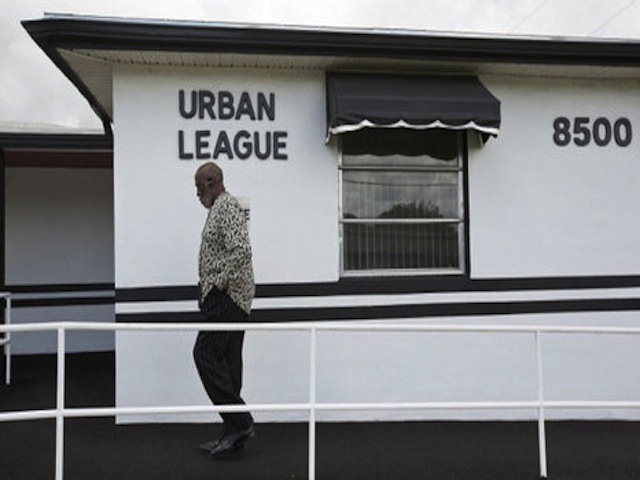
I was 24. My notion was that I would volunteer for the Army, but they wouldn’t take me because of an injury. So now it’s 1963, I’m home and have no job. I went up to the Winston-Salem Urban League and told them I was looking for a job.

The head of the Winston-Salem League asked me to work for the Urban League, which was founded in 1910 to improve the lives of black Americans. He found an opening in Miami. Around August 1963, I took my first plane ride to Miami for an interview.

I don’t know whether or not they intended to hire me, but I intended to be hired. I convinced them that I was like Jesus, that I could walk on water. Even though I had no experience, I had commitment and dedication. Long story short, I got the job.

The director of the Urban Renewal Program was looking for a deputy director, and they wanted the deputy director to be a person of color because the greatest impact of the Urban Renewal Program and I-95 would be on black people who lived in Overtown.

James Whitehead, then CEO of the Miami Urban League, got the job and left. They were getting ready to start a search for a new CEO when the board heard that Whitney Young Jr., the executive director of the National Urban League, was planning on filling the vacancy in Miami with one of his friends.

As a result, the board became upset. Before they let someone else pick the new CEO, they were willing to give it to a young, inexperienced man.

They said, “You want this job?’’ I said, “If you all want me to have it, I’ll take it.’’

I became the youngest president and CEO in the history of the Urban League movement at age 24. I didn’t know anything about running anything. I knew everything about being aggressive about the things that I believed in.

Our role was to begin to do the things to make life better for black people in spite of the circumstances. In 1963, we started with a staff of three people. In less than a decade, we became the largest Urban League affiliate in the history of the movement in terms of employees. We had 476 full-time employees, plus 25 part-timers and four consultants.

The Rev. Martin Luther King Jr. had a formula. In whatever city he’d visit, he’d identify the top black lawyer, the top black preacher and the top black activist in that city. When he came to have his first meeting in Miami at Mount Sinai Baptist Church, I was chosen as the activist. I got a chance to meet Martin and I’ll never forget it.

I was the Muhammad Ali of black Dade County and I was talking the talk. I was talking back to white folk, sassing white folk. I couldn’t wait to get to the conference in Louisville, Ky., just step out and say, “Yeah, I’m here! Ol’ bad T. Willard.’’

While I was writing my decade of progress report, it said the Urban League of Greater Miami was doing great but its constituency was not. I realized then that we’re not here to do great for ourselves. We’re here for the people who we’re supposed to serve.

We came up with a leadership Miami component. We began to look at identifying persons to place them on boards. We identified more than 400 young black people. They came through our leadership training classes and we placed them throughout this community. We integrated every workforce in Dade County.

If you were black, you could not work east of Biscayne Boulevard. That was the unwritten code. We changed that. We ran the open occupancy law. We drafted that law and got it passed.

The next step was clearly a step that my parents understood, education. I know today that the only thing that is broken in my community is the will to achieve.

We decided to make the league self-sufficient. Now we can say what we want to say, do what we want do, be who we want to be without the support of other folks. We’re the largest developer of housing in Liberty City, second only to the city of Miami.

We have the freedom to be as aggressive as we want to be in helping change the system. Martin said, ‘Free at last, free at last.’

Well, we’re free, we’re free.

This story was compiled by Museum of Miami intern Lisann Ramos, as recounted by T. Willard Fair

Growing up in Miami Shores in the 1940s was an experience almost unimaginable today.

Mothers were at home when we returned from school — having volunteered in the earlier part of the day — and fathers took their children to the Community House on weekends to shoot baskets or play tennis.

On special occasions, we’d go for pony rides on Biscayne Boulevard, near where the Omni is today, or take a picnic to Greynolds Park. Also nearby was a pineapple plantation where, in anticipation of the later U-Pick farms in South Dade, we’d choose our own fruit and pluck it.

?At Miami Shores Elementary School, we had air raid drills and packed boxes of supplies (bandages and cigarettes among them) for soldiers overseas. We also received cards with slots for dimes and quarters to collect for The March of Dimes in the fight against polio. Our favorite field trip: Borden’s Dairy, where we were given samples of chocolate milk and ice cream!

?Another treat: A piña colada, invented (we thought) by a man at the John Owens Fruit Shippers Market at the bend in Biscayne Boulevard near 50th Street. He mixed fresh pineapple and coconut juices for a refreshing drink that was a splurge at 25 cents. (Fresh orange or grapefruit juice was 10 cents.)

Saturday afternoons usually meant the movies, often starring Roy Rogers or Gene Autry. Tickets: 14 cents; popcorn: 10 cents; the nut machine: one cent. Boys were required to leave cap guns and holsters at the entrance!

?After the movie, we’d all line up to call our parents on the phone in the men’s shop next door. (Years later, I went back there and thanked the son of the original owner!) The main drag was Northeast Second Avenue, and our favorite spot was the ice cream parlor. When air conditioning came to Miami, that was the first commercial establishment to install it.

When parking meters were introduced along the street, the chief of police (who used to borrow my father’s shoes for the Policemen’s Ball) carried a pocketful of pennies he inserted into all expired meters. (Even at 12 minutes for a penny, no one remembered to go out to feed the meters!)

The Food Palace was our small-town grocery store, until the new and modern A&P; brought competition, along with the joy of choosing your coffee beans and grinding fresh coffee. My mother preferred the Eight O’Clock beans. I loved the aroma and the job of measuring and grinding the beans, then neatly filling the special coffee bag.

For large-quantity grocery shopping, we went to Shell’s Supermarket, west of downtown. I can still remember the sawdust-covered floor in the farmers’ market and a machine where we watched dough turned into doughnuts, then dropped into boiling oil and lifted onto a tray to cool (and be eaten by us, if we were good).

Another Saturday activity: taking the bus to classes at the old Miami News building, now The Freedom Tower. There I learned to twirl a baton and the art of photography. (I had earned a Brownie Hawkeye camera by selling three subscriptions to The Miami News.)

My mother used to take courses at the Lindsey Hopkins building — furniture upholstery and pastry baking. Once, when I was on Christmas vacation, I went with her and learned to make the rum balls that still remain part of my favorite holiday baking!

We saw operettas at Edison Senior High school and musical theater under a tent on the 79th Street Causeway, and were intensely involved in Brownies and Cub Scouts.

We walked, rode our bikes, frequented the school library and played outside ’til dusk. TV was in the future and, in its early years, had little of interest to us.?

In 1937, when I was nine months old, my parents, Thomas J. Lee Smith and Lila Smith moved from Tampa to Homestead, Florida so my Dad could pursue a sales position with Kilgore Seed Company.

My dad was orphaned at a young age, so settling into an old wood-framed house in a small farming neighborhood seemed like a perfect setting—family, community, and for Mother, church down the road.

Growing up in Homestead, where everyone knew your name and who your parents were, placed an indelible mark on my perspective of life. Deals could be made with a handshake. Your word was your bond. Trust, loyalty and commitment were a part of your core values and beliefs and each of those were equally embraced and sustained.

In 1943, my world of innocence was turned upside down. World War II had reared its ugly head all the way to Homestead, Florida. Dad was drafted into the Army and shipped off to the Philippines. I was seven years old, and Mother was left to raise me and somehow find a way to keep our family intact and financially secure.

Mother got a job in my school as an assistant to the principal of Neva King Cooper Elementary. We walked together to school every day, waiting for Dad’s return so we could once again return to life as it used to be, but it would take three more years before everything returned to normal.

Dad was back home, unscathed by the war, and working once again at Kilgore selling to vegetable farmers.

As the years passed, Homestead started rising above its small town standing with increased construction of strip malls, restaurants and paved roads.

The Homestead Air Force Reserve Base brought in a military population and there was enough of a surge in residents that old Homestead High and Redland High were merged into the brand-new South Dade High School. My parents bought a house behind the First Presbyterian Church—where I sang first bass in the church choir—and I was part of South Dade’s first graduating class.

In the 1950s, my Dad borrowed money from a friend and founded S & M Farm Supply, Inc., with his partner, A. McIntyre. They rented a wooden building for tomato packing on the southwest corner of U.S. 1 and S. W. 248 Street and next to the F.E.C. Railroad tracks. Not long after that they had a concrete-block warehouse and sales store erected right across from the Homestead Electric Power Plant.

After graduating from the University of Florida with a Bachelor of Science degree in Agriculture, I joined my Dad at S & M. Years later we acquired Woodbury Chemical Company of Homestead, and both corporations were the local base for the agricultural, pesticide, and fertilizer industries in South Florida.

It’s been a long time since Woodbury was sold and S & M closed its doors. My parents have been gone for years. Homestead is different not only because of time and growth, but also from the tragic destruction of Hurricane Andrew.

Our old house is now bank offices and the church is no longer on the corner. I’m quite sure business contracts have replaced the handshake and the farming industry has waned. But I know that one thing still remains the same: I can stop by a roadside stand, pick some strawberries, close my eyes, and remember what it was like when everyone knew my name.

My family moved to Miami from Philadelphia in August 1959 as I was nearing my 6th birthday. My father, Nate Adelman, owned a successful furniture store in Philly and at the ripe old age of 40 decided to hire someone to run the business for him while we would live in sunny Miami and enjoy the beautiful weather and sandy beaches. After spending our first year in the Shenandoah neighborhood we moved to a beautiful new house in the Skylake section of North Miami Beach.

North Miami Beach was a wonderful place to grow up. The neighborhoods were very safe and kid friendly. You could play outside at all hours of the day without any fears and there were many fun and interesting activities to partake in. At the back of our home was Sparling Lake. We would swim and fish in the lake and my older brother and sister, Nolan and Linda, would go water skiing in our 15-foot Boston Whaler boat. We lived just a few blocks from Greynolds Park and you could spend the day there hiking through the trails, fishing, and riding on the paddle boats.

My mother, Zena Adelman, would roast the most amazing rotisserie chickens and the family would enjoy our lunch sitting on the picnic tables in one of the park pavilions overlooking the lake. Each Sunday the family would spend the day together at nearby Haulover Beach along with my grandparents, aunts, uncles, and cousins. We would grill burgers and hot dogs, go swimming in the ocean, and play games of horseshoes in the sand.

The 163rd Street shopping center was an open-air center back then and was the place to go. Besides Burdines, Richards, JC Penney, and Woolworths there were the movie theaters and the little amusement park full of rides for the children. It was also the home to such wonderful eating places back then as Corky’s, Wolfie’s, Mr. Coney Island, Mr. Donut, and Figaro’s Pizza.

Back in the 1960s the public schools in North Miami Beach were not air conditioned or heated. In the winters you would really have to bundle up to stay warm and the rest of the year you had to battle the heat. I can remember the sweat running down my forehead onto the papers I would be writing on throughout my years at Ojus Elementary, JFK Junior High, and Miami Norland Senior High.

North Miami Beach had a very large Jewish population during the time I grew up there. I attended Hebrew school at Beth Torah and later on at Temple Adath Yeshuron. These were both wonderful congregations and along with my magnificent parents they taught me important family values that have stuck with me throughout my life.

As I got to be an older teen I experienced the wonders of downtown Miami. My best friend and I would take an hour-long bus trip to Flagler Street to check out the stores and restaurants and take in a movie or two before taking that long trip back home. It was like visiting another country for us back then with all of the Cuban cultural things we would find there that were so different than what we were accustomed to at that time in North Miami Beach.

After graduating high school I began what was to be a temporary weekend job as inventory help at the new JByrons department store at the Skylake Mall. That temporary job ended up lasting 25 years. I worked as a stock boy and salesperson while attending Miami-Dade Community College and later FIU. After graduating from college in 1975 I went into their management program and was the store manager at many of their locations from 1977 until they unfortunately went out of business in 1997.

During my 20 plus years in retail management I worked in numerous areas of Miami-Dade County, such as Allapattah, Suniland, Cutler Ridge, Homestead, Kendall, Skylake, Hialeah, and Coral Gables. I was very fortunate to work with so many outstanding people during those years of all different races, ethnicities, and cultures that help make Miami the incredible city that it is. It also allowed me to meet my beautiful wife, the former Susana Suarez.

We have been married now for over 38 years and have the pleasure of living a multi-cultured life of American-Cuban, as well as Jewish-Catholic. We, along with our loving daughter, Michelle, son-in-law Lu, and new baby grandson, Angel, speak in both English and Spanish, celebrate a number of diverse holidays such as Hanukah and Christmas, and cook and enjoy foods like matzo ball soup and arroz con pollo.

We get to attend the bar mitzvahs and bat mitzvahs of my sister Linda’s beautiful grandchildren and also Noche Buena celebrations with all of the wonderful members of my wife’s family who have been very loving toward me from the very first day I met them. I wouldn’t want to have lived my life in any other way.

As mentioned earlier, these are just some of the things that make living in Miami so unique and I am so happy that I was able to grow up and live here the vast majority of my life.

I am the youngest of the Wood brothers — Hayes, David, Hugh “Hooty” and Tom — all born between 1926 and 1931. We were very close and shared many things together in Old Miami. We all were born at Victoria Hospital on Northwest 10th Avenue, which still exists as a nursing and rehab center.

We were raised on a truck farm on Southwest 19th Street, about five acres that is now part of Shenandoah Park and middle school. We were always playing ball in the park. The park had many famous supervisors who went on to play pro ball, including Al Rosen with the Cleveland Indians and Lefty Schemer with the New York Giants. My only buddies still around are Lester Johnson, Fred Kirkland and Ed Woitke.

We attended and were baptized at the Riverside Baptist Church on Southwest Ninth Avenue and First Street (the congregation moved to Kendall in the 1970s and the church sanctuary now houses the Manuel Artime Theater).

As kids, we worked with the farm’s chickens and vegetables and created Wood Brothers Poultry and Produce Co. We sold the products to Wrights Market on Southwest Eighth Street and 22nd Avenue. My brothers and I all attended Shenandoah Elementary and Junior High schools. I also went to Coral Way Elementary when it opened in 1937 on Southwest 19th Street and 13th Avenue. We all went to Ponce de Leon Senior High School on U.S. 1 in Coral Gables. My brothers Hayes and Hugh and I were president of the student council. I met my beautiful wife, Virginia, in high school in 1949 and in June we will have been married 60 years. Ponce is now a middle school and the high school is now Coral Gables Senior High on Bird Road.

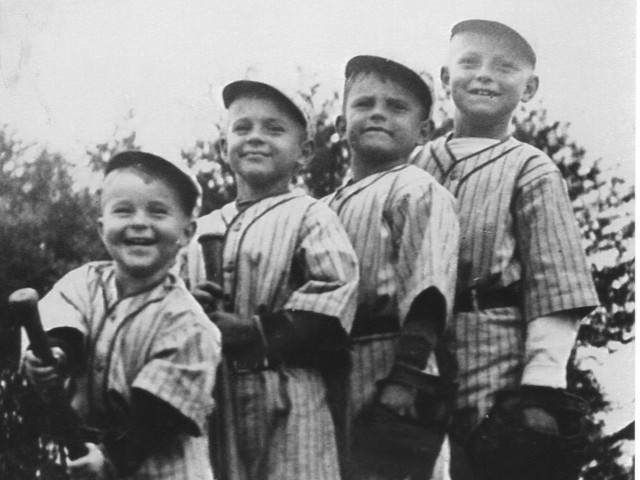
My brothers and I founded a band and played at high school dances, New Year’s Eve parties and other events. Hayes played saxophone; David and I, trumpet; and Hugh was on the trombone.

Someone gave my brother Hooty an Indian Pinto horse. He would hop on bareback and pull me up behind him and we would ride all the way down 22nd Avenue to the bay, where we would swim in cold, ice-blue water so clear we could see the bottom and the fish clearly.

We watched the roller derby at the Coliseum on Douglas Road. It is now a Publix and eight-story condominium. John Rosasco was the star of the team. He later ran Venetian Pool in Coral Gables, where everyone loved to hide in the caves. Fader’s Drug Store on 22nd Avenue and Coral Way was a popular spot for milkshakes and root beer floats. I remember watching Pan Am Clippers on the bay in the Grove on the site of what is now Miami City Hall.

It was only a bike ride to the Tower Theater on the Trail and for nine cents I could see two double features, a cartoon and a live amateur show. We could hop the Dunn bus at the corner and go downtown to various theaters — the Rex, Town or Paramount — and have a grilled-cheese sandwich at the counter of the Red Cross Drug Store, or a hotdog at Woolworth’s for a dime.

There were many favorite eating spots: Rosedale Delicatessen, owned by the Pont brothers (I would have corned beef on rye with a slice of onion and mustard, a big kosher dill and some potato salad); Kitty and Jean’s on the Trail; hotdogs at the Pig Trail Inn on Miami Beach. Who remembers the Mayflower Doughnut Shop on Biscayne Boulevard sporting a sign that read, “As you wander through life in search of your goal, keep your eye upon the doughnut and not upon the hole.”

Sometimes all four of us would take a long bike ride to the deserted University of Miami skeleton campus, where we would swim in the lagoon. Today, UM is one of the finest private universities in the country. I am honored to serve as a member of the Board of Trustees. All four of us worked our way through UM. Three of us graduated with juris doctor degrees and one with a master of engineering.

All of us served in the armed forces: three Naval officers and one Army Air Corps technician.

One of my favorite memories was riding on the handlebars of my oldest brother’s bicycle on a Saturday morning as we and my other brothers went to the Ringling Brothers Circus in the vacant lot on the northeast corner of Coral Way and Douglas Road. There, we watered the elephants until the matinee started. We got free admission plus money we spent on hotdogs.

My brothers always looked out for me and I will never forget them as I am blessed to still live in Miami, the Magic City.

Translate »