Skip to content
Named Best Museum 2022
by Miami New Times

My father was a traveling salesman for my grandfather’s haberdashery business, Dixie Company, which manufactured white suits for the poor to buy on layaway in the rural areas of the deep South. He would be more centrally located out of a base in Florida, so my parents, baby sister and I moved to Miami Beach from New York City when I was 6 years old.

We first rented an apartment on Pine Tree Drive near 41st Street. There were hotels on nearby Collins Avenue, but no apartments at that time. That area of Pine Tree was all apartments, not single family homes as it is now. Indian Creek Canal was a lazy waterway with sight-seeing boats docked a little to the south of 41st Street.

The first thing I remember was going over the MacArthur Causeway and seeing the old Flamingo Hotel. The roof would light up at night and it was spectacular. After the hotel went out of business, a group of us kids would bicycle over there to look at the pool. It was a salt-water pool and full of fish, though the hotel was uninhabited.

The MacArthur Causeway was an old drawbridge made out of wood. That, and 79th Street Causeway, were the only ways to access Miami Beach. My grandfather’s brother would take me fishing off that old wooden bridge.

When I was in second grade, we rented a house on Nautilus Court, just off Alton Road. I had a friend whose father was a doctor and he lived behind Mount Sinai Hospital on an island with homes for people who worked in the hospital. It was connected to the hospital by a pedestrian bridge. Mount Sinai’s location originally housed a hotel called The Nautilus.

I went to Nautilus Elementary and in the sixth grade I attended North Beach Elementary on 41st Street, where it still stands and functions today for my friends’ grandchildren. There was a vacant lot on Nautilus Court where soldiers had been bivouacked during World War II.

My father saw the opportunities in Florida development and real estate and began building in North Miami Beach. He built custom homes in a section named Skylake, and then went on to build in an area quite remote, called Kendall.

I started building there years later where Brown’s Airport had been, on Southwest 104th Street and 77th Avenue.

My parents bought a lot at 5004 North Bay Rd. and we built our house in 1950. There was no air conditioning at that time; our house had a hurricane fan to cool it. Jalousie windows and vented wood slats in the interior spaces allowed the air to move freely within the residence.

Carl Fisher’s mansion was a few lots down and we bought the land from his estate. He reportedly had gone bankrupt at some point and in order to save on taxes, he filled his land in. To our chagrin, when we put the pilings in to build the home, we hit his magnificent pool made of thousands of pieces of mosaic tiles.

The house was on Biscayne Bay and as a teenager I would ski in front of the tourist boats that would come to show off Millionaire’s Row.

Some of the families made their parties and celebrations very ostentatious. One of my friends had Tony Bennett as the entertainment at his Bar Mitzvah. They could not stop outdoing one another. Eddie Fisher sang on another’s yacht.

I would take my boat to what is now Fisher Island. On the south side of the island, we would all go fishing. Nothing was there but an abandoned Vanderbilt mansion and rows of large gas tanks kept for storage. There was a road around the island, but it was uninhabited except for an occasional vagrant.

Also, at that time, Lincoln Road was a two-lane street for car traffic. One could park one’s car and do high-end shopping at Saks Fifth Avenue or The Dinghy. The street boasted three theatres — the Carib, the Beach and the Cameo.

In ninth grade I was sent to a boarding school in St. Petersburg called Admiral Farragut Academy. In 10th grade, I entered Miami Beach Senior High School. The old Beach High was on Pennsylvania Avenue and Española Way. It was not air-conditioned and most of the students were Jewish.

I have kept in touch with my friends all these years and have watched Miami Beach and South Dade grow beyond my wildest expectations.

I’ve spent my entire life in South Florida and after celebrating my 80th birthday I’m sharing my story.

My father Danny came from Greece to Miami before the 1926 hurricane hit. He joined his sister Mary Hatzopoulos and her family.

By 1929 he saved enough money to return to Greece and marry my mother Evangelia. When they returned as newlyweds, my Mother called Miami “Paradise” and she lived here the rest of her life.

I was born in 1930 at the Edgewater maternity hospital in what is now known as Buena Vista in the Design District. My family owned an apartment building at 4025 NE Second Ave. near Moore Furniture Company. As a child I loved to ride the trolley car to downtown Miami.

Miami was a very small town then where many wealthy people would come and spend the winter season. They would either arrive by automobile or ride the train called the Seaboard Railway or the Silver Streaker.

I attended Miramar Elementary School on Northeast 19th Street and Second Avenue. When I started the first grade I could not speak English, but was quickly taught by my first grade teacher, Ms. Young.

I went to Miramar through the fourth grade and then Buena Vista Elementary and Robert E. Lee Junior High for the seventh and eighth grades.

About this time my family bought a house and I attended ninth grade at Shenandoah Junior High and afterwards went to Miami Senior High, from which I graduated in June 1948. The house I lived in was one-half block east of Miami High — I loved walking the short distance for my first class.

After graduating from Miami High I worked in the insurance department of the American Automobile Association (AAA).

Things I remember about growing up in Miami include swimming at South Beach at 10th and Ocean Drive. During World War II, U.S. Army soldiers filled the Art Deco hotels and the windows facing the ocean were covered with black-out shades because of the threat of foreign submarines and ships in the Atlantic.

I raised funds for Greek War Relief by performing Greek Dances at the Bayfront Park band shell. On Saturday I went to the movies at the Olympia, Roxcy or the Paramount theatres on Flagler Street.

After the movie we would eat at the Paramount Restaurant, or we would gather at the downtown Walgreen’s in the basement restaurant. Miami was the best back in those days.

With my young children I often ate lunch at the Burdines Tea Room downtown. I shopped at the great women’s clothing stores Hartleys, Nordells and of course, Burdines.

In 1955, I married George at St. Sophia Greek Orthodox Cathedral and we had our children Alexandra, James and Danny. James and his wife Nikki have two daughters, Arianna and Mia.

Miami is a special place — a paradise.

In 1925, my parents and I disembarked in Miami after a three-day train trip from Chicago, and went to stay at a cottage surrounded by a grapefruit grove that belonged to my mother’s aunt. I was three years old, and it marked the beginning of my nearly nine-decade-long adventure in South Florida.

That first evening I responded to a noise at the back door, and found what appeared to be a large kitten, but turned out to be a Florida bobcat. We lived on that farm, now part of the University of Miami campus, for three months before the electric grid reached us.

After the 1926 hurricane, which we rode out in the old McAllister Hotel, we relocated to Fort Lauderdale where my dad operated the city’s only shoe store.

One local character was a Seminole named “Shirttail Charley,” who wandered the unpaved streets cadging nickels and dimes for beer. One day he produced a 50-cent piece as a deposit on “paleface shoes.” Dad gave him a pair, which Charley carried under his arm, donning them only when entering a bar or store.

My life in journalism and public relations began when I was 15, and my football coach asked me to make notes on practice sessions for the Fort Lauderdale Daily News sports editor. After two weeks the editor persuaded me to file complete stories, eventually with a byline. After three months he said, “You’re doing a great job, kid, and I’m going to pay you, too!” He did — one dollar for football season and a second dollar for covering baseball season.

Early on I became fascinated with flying. One day, my best friend Leonard and I scraped together two dollars for a 30-minute sightseeing flight in a World War I “Jenny.” My parents were furious. The pilot was fond of bourbon, and we were henceforth grounded.

Saturday morning movies cost a dime in those days, and after seeing “The Last of the Mohicans,” my pal and I got mohawk haircuts a full 75 years before they became trendy. We were forced to wear caps to hide our “ avant garde” style for months.

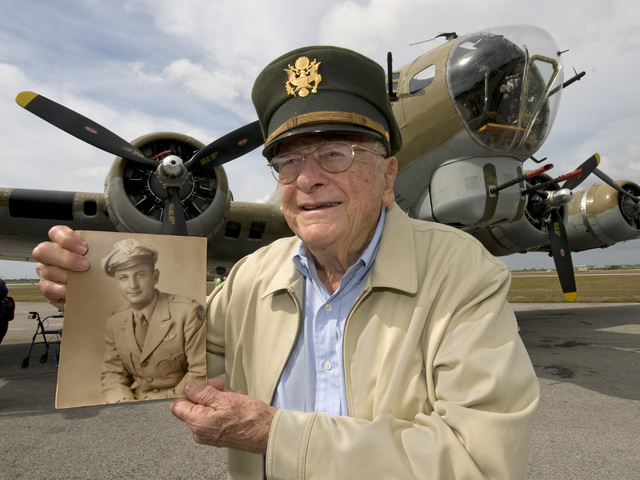
After almost four years at the University of Florida and summers spent as a full-time Daily News reporter, I was summoned by the Army Air Corps and eventually flew 35 combat missions as a navigator on a Flying Fortress bomber in the European front.

On a January 1945 bombing mission two of our engines were shot out, forcing us to crash land at a Belgian farm. Both German and Allied forces were in the vicinity. Fortunately, the British got to us first.

In June 1945, I began the final six months of military duty as a public relations officer at Coral Gables’ Biltmore Hotel, at that time a rehabilitation hospital. Those were heady days, with 315 nurses to date, two swimming pools and a golf course.

Among the staff were special services officer Ben Hogan, whose assignment was golfing with visiting generals, and future Dade County Mayor Steve Clark, the payroll sergeant.

In January 1946, capitalizing on my Biltmore PR contacts, a University of Florida fraternity brother and I opened a public relations agency on Lincoln Road. We specialized in nightclubs, restaurants and hotels, including the new oceanfront Sherry Frontenac.

Through the years I have represented such interesting clients as evangelist Oral Rogers, the Fontainebleau resort and Rosie the dancing bear. After arranging an “interview” for Rosie and her trainer at the Miami Herald, the trainer bowed out, leaving the bear and me to fulfill the assignment. When we arrived at the old Herald building on Miami Avenue, pandemonium broke out. A photographer positioned Rosie at a typewriter and the clamor drew Publisher John Knight from his office.

Glaring at me, Knight asked, “What’s going on, Stuart? I thought you only represented hotels!”

“Mr. Knight,” I quickly replied, “this bear just bought a Miami Beach hotel.” The publisher led the laughter.

My public relations career, mostly representing leisure-travel clients, has provided me extraordinary globetrotting opportunities. Though I have visited countless cities in more than 80 countries and every continent except Antarctica, none has replaced Miami.

I’ve led a charmed life in South Florida. In 1948, I married Edith Koenig, a registered nurse, newly arrived from New Jersey. In 1950, I received the first GI housing loan on Miami Beach, which allowed us to build a three-bedroom home on Biscayne Bay for less than $17,000.

Our daughter, Cathy, now a veteran editor and author for National Geographic, and son, Andy, who has taken our PR agency to new heights, have given me three equally successful grandsons.

Following my first wife’s passing after 44 years of marriage, I married another nurse, Sandy Sharpe. We summer in Greenbrier County, West Virginia, where my claim to fame is as the region’s reigning barbecue ribs champion.

Because Miami has been good to me, I strive to give back to the community. We support the University of Miami’s Sylvester Comprehensive Cancer Center and the University of Florida, where my son, daughter-in-law Maria and grandsons Alan and Michael are alumni, too. We also support Camillus House.

I’ll celebrate my 92nd birthday this month and still manage to wrestle Gulf Stream game fish as well as play the same bad golf I’ve played for 65 years.

My mother lived until she was 101. That’s my goal now. But even if I don’t make it, Miami has provided a more than rewarding life for me and my family.

Like every other night, I sit by my window to finish my homework, but tonight the light of the full moon distracted me. It was a beautiful night, but I could only see the full white moon, not the stars. Then I started to remember a time during my childhood when watching the stars was possible every single night.

I also remembered this girl catching cocuyos (fireflies), playing hide and seek with her cousins and friends from the barrio (neighborhood). It was me as a child, with the people I love and whom today I miss the most. Since watching the sky brought me some good memories, I decided to look at albums of photos and videos I had from when I lived in Cuba.

Going through the pictures, I could smell the soft aroma of the jasmine flowers, feel the breeze from the open field, and the sound of the small waterfall near my home. I could hear the woodpecker doing his work on the tall palm tree, the tractor in the far distance plowing the land to plant the sugar cane later in the year, and see the cows passing by the house, which provided me with the milk I drank for 16 years.

I grew up in the countryside of Cuba, in Villa Clara, in Viana, a very small town, and when I say small I mean it. We were roughly 1,000 people. There was only one main road with a broken surface, and the other roads were covered with an orangy dust and when it rained you’d better wear rain boots or you could lose the only pair of shoes you owned.

There was also only one school from pre-kindergarten to sixth grade, and when you got to middle or high school you had to travel to another town. We had one library, where new books came once a year, and the dust and humidity of the place damaged them. There was one clinic, one pharmacy, one food store, three or four clothing stores, and restaurants were 20 kilometers away from where we lived so we had to travel there. And when I say travel I don’t mean go in your car. Cars were a luxury for only a few, so we had to go on buses when they came. It wasn’t easy but somehow we survived. I love the place where I grew up, and I wouldn’t trade it for anything in this world.

As I viewed the pictures, one caught my attention because it brought one of the best memories I have with my uncle, grandfather, and dad. In the picture, we are seated in the green chairs around our dinner table in our old house, watching our Samsung TV of the year 2000. That was our first color TV and we took care of it as if it were gold. We wore orange shirts and we were watching a baseball game. And you’ll have to ask, why is that picture so special? Anyone can have a picture like that one. But since I was little I developed a passion for every televised sport because I saw my dad, uncle, and grandpa watching them; that’s how my passion was born.

My favorite sport of all time was baseball. Every time the season started, my uncle, my grandpa, my dad, and I stayed up until 1 or 2 a.m. watching the games. Obviously I was an Orange fan, that was my Villa Clara team, and we always supported them. The rush of adrenaline, our hearts pumping out of our chests, our sweaty hands, but above all, that moment we all shared together as a family. Now it’s so different; we are 90 miles apart from each other, and every time the season starts my grandpa and my uncle tell me, “¿Vivi, cuando vamos a ver el juego juntos?” (Vivi, when are we going to watch the game together?).

Now, my heart drops because we are close, yet so far apart and I can’t see them as much as I want to. That moment is now in our memory.

I continued looking through the albums, keeping in mind the magical power of pictures. I found more from Christmas. Christmas in Cuba is very different from those here. There are not many decorations in houses or parks. You’ll see a small Christmas tree in most houses with the manger scene, and that’s about it. We celebrate Nochebuena (Christmas Eve) on December 24 and New Year’s Eve on December 31. All the family comes together — Mami, Papi, brothers, sisters, grandpa, grandma, cousins, uncles, aunts, and close friends that are like family. We celebrate with lots of food, rice and beans, and the best puerco asado ever, salads (tomato, cucumber, lettuce, cabbage, and avocado) with lime and a little bit of oil on top and salt, and sweet and salty fried tamale. Yum!

There is nothing better than that, and the dessert time: flan, pudding, grapefruit (and if you eat it with cheese it would be a hundred times better), peanut brittle, fritters with a sweet salsa, and the list keeps on growing as people come. All of the desserts and food are homemade, which make them so much better. While the food is being cooked most of the men in the family start playing dominos, a tradition in our family. Every time we celebrate something, the domino table is around. After everything is cooked we set the table and we eat. The Cuban coffee comes right after.

Then the real party starts. We put on the music and dance from salsa to reggaeton and every genre in between. Everyone has a good time.

Children don’t get to open presents on the night of the 24th because we celebrate “El Día de los Reyes Magos” on January 6. On that day, children open their presents. December 31 is the day that we celebrate the end of a year, and we kind of do the same as on December 24 with lots of foods, sweets, and drinks. We burn the old year by making a scarecrow that symbolizes the old year, and exactly at midnight, we burn it so the New Year can come with prosperity, health, and happiness. We kiss and hug every family member and wish for a better year, and for all the dreams to come true.

One picture was hiding beneath the blanket, the last picture we took before coming to the United States. Suddenly, my heart felt as if it had been ripped out of my chest. It has been four long years since I’ve seen the people in this picture, since I’ve hugged them. The picture was taken at the airport in front of the automatic doors, where once we went in we couldn’t come back. There we were: my mom with her twin brother, Tio Luis, my dad, my brother, and my cousin Yuni, who was like a sister to me. My mom, dad, brother and I were the only ones leaving. The time to say goodbye was the hardest one, but that is another story.

I was raised in the Christian Science faith and went to church from the time I was 4 years old in 1939, but I always considered myself culturally Jewish. I had to go to school during the Jewish holidays as a kid in Brooklyn, and when classmates and teachers expressed surprise that I was at school, I responded: “I am a Christian Scientist of Jewish extraction.”

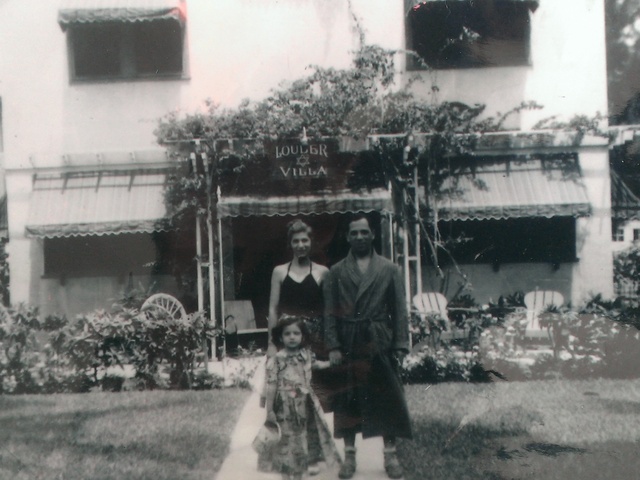
My parents, Paula and Louis Gelman, never denied their Jewish heritage to anyone, and many of my Christian Science friends in New York were also Jewish. I loved visiting my grandmother in Palm Beach as a child when my parents took me on vacation. Sadie Louber, my grandmother, owned a kosher hotel called the Louber Villa, at 231 Sunset Ave., a block and a half from the ocean.

Grandma Louber was a strong, loving influence in all our lives. My brother, Larry Gelman, says that Grandma took him to black churches in West Palm Beach because she loved gospel music, and Larry credits Grandma with his love of music to this day.

There were always interesting guests staying at the hotel. Grandma served kosher meals. My mother and her sisters were always very close, and it was fun getting together in Palm Beach with my cousins and their parents. There was never any discussion in my presence as a child or an adult about being Jews in a predominantly Gentile area, nor did I realize that it was highly unlikely that a Jewish hotel could have been owned by Jews in Palm Beach.

I moved to Miami as an adult in 1958. It was my first introduction to Miami Beach and its Jewish population and culture. During the early 1960s, we would visit Grandma at her hotel. We always got a kick out of the fact that the Kennedys had an estate in Palm Beach not far from where our family hotel was. To the best of my knowledge, we were still the only Jewish family owning property at that time in Palm Beach.

I decided to investigate how my family came to own this property. I asked a friend, real-estate attorney Daniel Doscher, to look into it, and he did the legal research on the property. He discovered that my father, who was an attorney in New York City, somehow managed to buy it in the late 1930s. He gave the title ownership to Paula Gelman, my mother, and her sister, Ruth Louber.

In 1945, the Louber Villa was transferred to Sadie Louber, my mother’s mother, and Grandma Louber took over the hotel. My grandparents had owned a hotel in Saratoga called the New Windsor Hotel, which they lost in the Great Depression of the 1930s. (I have no memory of Louis Louber, my grandfather, since he passed away when I was very young.)

A few years ago, I visited the Jewish Museum of Florida in Miami Beach and was shocked to see a sign in the museum collection that read: “Always a view, never a Jew.” I thought that the museum might be very interested in the story of the Louber Villa, a hotel that was Jewish-owned and that welcomed Jews in Palm Beach during those years. Today, the picture of the Louber Villa is now in the permanent collection of the Jewish Museum.

Even after the hotel was sold and torn down some years ago, we visited the empty lot annually and walked around the area for sentimental reasons. Recently, my cousin and her husband were in Palm Beach, and we got together there once again!

There is now a large, modern accounting firm on Grandma’s property. We walked to the corner of Sunset Avenue and County Road on our way to the beach, a block and a half away. Almost as a commentary on the inexorable passage of time, there is a beautiful Orthodox Jewish temple on the corner, barely two doors down from where our hotel had been.

Palm Beach has a special sentimental meaning for me, but my permanent home is now in Miami. The changes in the culture and population in South Florida over the many years I have lived here make me proud to live in Miami. It is an exciting place to call home.

My grandfather, George W. Smith, and my grandmother, Ellen Cook Smith, came to Homestead in 1925 at the height of the boom.

My grandmother’s brother, “Uncle Bob” Cook, had urged them to come south. He later served as a Dade County commissioner. My mother Evelyn Smith was 10 years old. She had two brothers (Lester and Wade), and one on the way when they drove their Model T Ford down the two dirt ruts in a road called “Dixie Highway.”

My grandfather had converted the Model T into a sort of camper with a kerosene burner so that Grandmother could cook and they could all sleep inside. There were no road signs, no rest stops (except in the woods), and only painted markers on trees to show the way. According to my mother, the east coast highway was marked with red birds painted on pine trees and the road from Georgia to Florida’s west coast was painted with white stripes on the trees.

During a particularly bad rainstorm, the road became so muddy that they could not travel. They decided to stop and stay at a turpentine camp for several days where they lived on stale doughnuts.

My mother told her favorite story of finding a bracelet in the bushes on one of their “rest stops.” She gave it to her dad who took it into Miami when they arrived. A jeweler gave him $75 for it and he bought his first piece of property in Lemon City with the proceeds.

They finally settled in Homestead and endured the terrible hurricanes of 1926, 1928 and 1935, all the while farming (tomatoes and potatoes), first in the Redlands and then in the East Glades. Granddaddy told of the massive clouds of mosquitoes in the ’glades that required him to wrap his arms and legs in newspaper under his clothes and to put burlap bags over the muzzle of the mule to keep it from suffocating from inhaling the bugs.

He said that he always carried a shotgun under one arm to shoot rattlesnakes “just in case.” He didn’t want to lose his plowing mule. Eventually, the old mule became too old to work and died, whereupon Granddaddy gathered his sons around him and announced that they “might not have a crop this year” because he was going to buy a tractor and didn’t know how it would perform. But, he was never one to shy away from technology and later bought a new car every two or three years. Apparently, the tractor performed very well.

My mother and uncles attended Homestead schools and graduated from Homestead High School (later, Homestead Junior High). The uncles all served their country during the war. Hubert, the youngest, and Wade were in the Navy, while Lester (the oldest) went into the U.S. Army. After the war, they all came home to farm with their dad.

My mother met my dad in North Carolina when she was a teacher in his hometown, Rural Hall, near Winston Salem. My dad, George W. Ledford, drove for Greyhound bus lines during the war, taking Marine recruits to boot camp at Parris Island, SC.

After World War II, they moved to Homestead to farm with my grandfather. They farmed with him and Mother’s brothers, Wade and Lester, for 50 years. The youngest, Hubert Smith, went to school to become a chiropractor and he moved his family to Gulfport, MS in the mid-1960s.

As my brother, Larry Ledford, and I grew up, we experienced the growth of Homestead with the establishment of the Strategic Air Command (SAC) base. Many of my friends at South Dade High School were from Air Force families with the rest of us “farmers’ kids” coming from older families who had been in the area for a while.

I was there during the Cuban Missile Crisis and sat on my parents’ front porch watching the endless convoys coming down Krome Avenue. We could hear the B-52 bombers revving their engines at all hours, on alert should their service be needed. I also felt our house tremble when an underground missile was test fired in the Everglades, west of town. I was 15 years old and home alone at the time, certain that we were all going to die and that I’d never see my family again.

I was a senior at South Dade High School when John F. Kennedy was assassinated. I was sitting in the parking lot waiting for my riders to meet me after school when one of them raced out to the car crying that “the President’s been shot!” All these years later, I still recall that moment very clearly. That singular event changed us and it changed our country.

Many of my classmates went off to Vietnam; others of us went to college. For security and solidarity, seven of us girls from the class of 1964 went to the new University of South Florida, which was then a sand dune with several buildings. There was one little pizza place and a Holiday Inn nearby, as well as a Schlitz brewery.

Freshmen were not allowed to have cars so we were pretty much stuck on campus. There was no football, basketball or other intercollegiate sports, so some of my friends bolted for the high life at the University of Florida. Gainesville certainly had more to offer, but my wise parents knew I would HAVE to study at U.S.F. and so I stayed.

I never returned to live in Homestead but visited many times during my adult life and came back to help clean up after Hurricane Andrew, another event that changed our lives forever.

My grandparents’ story is not unique among the pioneers, but I often wonder if any of us today would have the fortitude to stick it out in South Florida if conditions were the same today. With the end of the war and the advent of air-conditioning, my grandparents saw South Florida go from a booming agricultural area to a huge city.

They survived many hurricanes, and yet they stayed, farmed the ‘glades and raised their family. They saw interstate highways being built and they saw men walk on the moon. (My grandmother never quite believed that.) To paraphrase Shakespeare: “What a piece of work!”

In November 1967, after my girlfriend and I became registered nurses, we moved from Wisconsin to Miami Beach. This was a goal we had dreamed of since high school.

We lived at the Castaways Motel in Sunny Isles Beach until we secured our first jobs at Miami Beach’s Mt. Sinai Hospital. After saving our money for several months, we moved to Miami Springs. It was a party, day and night, with all the flight attendants and pilots staying there. Our favorite club was 6 West. It was our hangout to dance and have a good time. We could be found listening to the talented Rhodes Brothers there every Sunday afternoon.

I left Mt. Sinai in 1969 and did private duty nursing that summer. I was dating an executive with A&M; Records. He invited me to a concert in Woodstock, N.Y. but I was unable to go because I was about to start my new job the following Monday in the Emergency Department at Jackson Memorial Hospital. Woodstock, who knew?

While working in the E.D., I was privileged to meet and work with Dr. James Jude. Dr. Jude was a thoracic surgeon who helped develop the use of CPR (cardiopulmonary resuscitation) lifesaving technique. Working with Dr. Jude, I taught CPR classes to my co-workers as well as the Miami-Dade and City of Miami paramedics. I also set up the first “crash cart” in the E.D., which we used for patients in cardiac arrest.

There were times we literally had to jump up on the stretchers to perform CPR and other procedures. A friend of mine and I decided it was not appropriate to wear uniform dresses in situations like those so we decided to wear white uniform pants and pastel uniform tops to work.

We were the first at Jackson to do so. We had nurses coming from every department to see us. The word had spread quickly that dresses were out and pants were in. The majority of nurses now wear uniform pants.

Part of the E.D. consisted of Ward D, or Detention Ward. Essentially, it was the prison ward of the hospital. Anyone who was sick or injured and under arrest was sent to Ward D. We treated murderers, rapists, and even lawyers or doctors on occasion. We were also responsible for treating “Drug Mules,” those who swallowed or inserted packets of heroin or cocaine to avoid arrest.

Sadly, we witnessed several of them die due to the drug packets breaking open in their abdomens. I worked primarily in Ward D from 1972 until I retired in 2000. Jackson Memorial Hospital was a wonderful place to work. I learned so much and had an incredible career as a registered nurse.

Coconut Grove was a haven for artists, musicians, and the “flower child” generation. I moved there in 1969, finding a cadre of friends who would come together in Peacock Park to play our guitars and make delicious vegetarian meals for everyone. The tallest buildings in the Grove at that time were the Coconut Grove Bank and the Mutiny on Sailboat Bay.

It was such a quiet and peaceful time in the Grove. We had plenty of places to congregate. Dick’s Old Grove Pub was one of those places. They had the best cheeseburgers in the greater Miami area. One Sunday, the Jefferson Airplane rock group came in and played all afternoon. We would catch breakfast at the Florida Pharmacy, lunches and dinners at the Feed Bag, the Village Inn, The Taurus, 27 Birds, Lum’s and many more.

On any given day, one could see great musicians walking or biking through the Grove: Vince Martin, Bobby Ingram, John Sebastian, Neil Young, David Crosby, Jimmy Buffet and so many others.

We didn’t restrict ourselves to eating and playing in the Grove, though. Some terrific restaurants in Coral Gables and South Miami included Fox’s Sherron Inn, Jahn’s Ice Cream Parlor, the Sweden House, Sambo’s, the Glorified Delicatessen, Uncle Tom’s BBQ, Food Among the Flowers, The Monk’s Inn and Vinton’s.

Riding my bicycle through Coconut Grove one day, I met my future husband Bruce Liptak. He and a friend had just opened Om Jewelry and Leather. We married in 1972 but Bruce passed away seven years later at the age of 36 from a cerebral aneurysm.

Friends and family were very instrumental in helping me through that horrific time. In 1982, I had a dinner party and some friends brought over John Blocker. We married in 1995. He has a daughter, Vergene, who was 4 years old when I met John. I helped raise her and consider her my very own daughter. She is now 38 years old.

After retiring from JMH in 2000, we moved from Coconut Grove to Sunny Isles Beach. I wanted to remain active in my profession so I returned to Jackson and worked part-time for another six years. My husband, a cardiopulmonary technologist, still works at Jackson.

I no longer work but I am a tireless volunteer. I take classes and am on the board of our condo association. In a fitting tribute, the building in which we live in stands where the Castaways once stood. It’s a lovely reminder that I’ve come full circle in this city.

I left Mt. Sinai in 1969 and did private duty nursing that summer. I was dating an executive with A&M; Records; he invited me to a concert in Woodstock, N.Y. but because I was about to start my new job the following Monday in the Emergency Department at Jackson Memorial Hospital, I was unable to go. Woodstock; who knew.

While working in the E.D. I was privileged to meet and work with Dr. James Jude. Dr. Jude was a thoracic surgeon who helped develop CPR (cardiopulmonary resuscitation). Working with Dr. Jude, I taught CPR classes to my co-workers as well as the Miami-Dade and city of Miami paramedics. I also set up the first ” crash cart “in the E.D. which we used for patients in cardiac arrest.

There were times we literally had to jump up on the stretchers to perform CPR and other procedures. A friend of mine and I decided it was not appropriate to wear uniform dresses in situations like those so we decided to wear white uniform pants and pastel uniform tops to work. We were the first at Jackson to do so and had nurses coming from every department to see us. The word had spread quickly that dresses were out and pants were in. Since that day the majority of nurses wear uniform pants.

Part of the E.D. consisted of Ward D, or Detention Ward. Essentially, it was the prison ward of the hospital; anyone who was sick or injured and under arrest was sent to Ward D. We treated murderers, rapists,, even lawyers and doctors on occasion. We were also responsible for treating ” Drug Mules,” those who swallowed or inserted packets of heroin or cocaine to avoid arrest. Sadly, we witnessed several of them die due to the drug packets breaking open in their abdomens. I worked primarily in Ward D from 1972 until I retired in 2000. Jackson Memorial Hospital was a wonderful place to work. I learned so much and had an incredible career as a registered nurse.

Coconut Grove was a haven for artists, musicians, and the “flower child” generation. I moved there in 1969, finding a cadre of friends who would come together in Peacock Park to play our guitars and make delicious vegetarian meals for everyone.

The tallest buildings in the Grove at that time were the Coconut Grove Bank and the Mutiny on Sailboat Bay. It was such a quiet and peaceful time in the Grove. We had plenty of places to congregate. Dick’s Old Grove Pub was one of those places, having the best cheeseburgers in the greater Miami area. One Sunday afternoon, the Jefferson Airplane rock group came in and played all afternoon.

We would catch breakfast at the Florida Pharmacy, lunches and dinners at the Feed Bag, the Village Inn, The Taurus, 27 Birds, Lum’s and many more. On any given day one could see great musicians walking or biking through the Grove: Vince Martin, Bobby Ingram, John Sebastian, Neil Young, David Crosby, Jimmy Buffet, and so many others.
We didn’t restrict ourselves to eating and playing in the Grove, though. Some terrific restaurants in Coral Gables and South Miami included Foxx’s Sherron Inn, Jahn’s Ice Cream Parlor, the Sweden House, Sambo’s, the Glorified Delicatessen, Uncle Tom’s BBQ, Food Among the Flowers, the Monk’s Inn, and Vinton’s.

Riding my bicycle through Coconut Grove one day, I met my future husband Bruce Liptak. He and a friend had just opened Om Jewelry and Leather. We married in 1972 but Bruce passed away seven years later at a the age of 36 from a cerebral aneurysm. Friends and family were very instrumental in helping me through that horrific time. In 1982, I had a dinner party; friends brought over John Blocker. We married in 1995. He has a daughter, Vergene, who was four years old when I met John. I helped raise her and consider her my very own daughter. She is now 38 years old.

After retiring from JMH in 2000, we moved from Coconut Grove to Sunny Isles Beach.I wanted to remain active in my profession so I returned to Jackson and worked part-time for another six years. My husband, a cardiopulmonary technologist, still works at Jackson.

I no longer work but I am a tireless volunteer; I take classes and I’m on the board of our condo association. In a fitting tribute, the building in which we live in stands where the Castaways once stood, a lovely reminder that I’ve come full circle in this city.

It is unfortunate that nostalgia comes later in life. Having it when memories are fresh might make one more appreciative of what is being lived. I speak of this because of a recent incident that sparked my memories of growing up in the late 1950s through the 1960s in Dade County, on a street just a little north of Perrine and just a little south of South Miami.

My street was an unpaved cul-de-sac that began at U.S. 1 and ran for a couple of blocks. Across the street from my house was a Florida pine forest, though it did not match the forest I would read about in the books I was given in Perrine Elementary school. In those books, leaves fell in the fall and everyone in town would bury potatoes to be roasted with the leaves as they were burned. It sounded like fun to me and it was hard for me to understand why I was not experiencing it in Miami.

The books mentioned snow as well. The good teachers at my school helped give all of us students an idea of what snow was like by having us cut snowflakes out of paper. It was only much later in life that I discovered that our paper models and the real thing in no way matched.

My yard was enormous, or so I remember. It was filled with monarch butterflies, dragon flies, and frogs. Once a year, our yard, the woods, and almost all side streets filled with land crabs. On Old Cutler Road it was not odd to see people collecting them nor was it was unusual see cars with flats caused by them.

The house I lived in was small but made slightly bigger by my father who was very skilled with his hands — something I apparently did not inherit.

A bit north on U.S. 1 there was the Dixie drive-in movie theater, a popular hangout for high school students. Somewhere not far from there was the Miami Serpentarium, a local tourist landmark that was marked by a giant snake statute.

And then there was Harry.

Harry Troeger lived in a small home a few houses down from mine. He designed and built the house. It had no electricity. I suspect he had a well but I do not know for certain. He seemed like a strange man who lived in the small wood and coral house he built. It was almost hidden by trees. For me, my sisters and the other children who lived on the street or the next street over, he was a mystery.

Once a year on Halloween, most of us were brave enough to approach the small house and peek in the windows. We ran like the blazes when we heard a noise. We all assumed the house was haunted.

Harry Troeger, who died in 2008 at the age of 92, was Miami’s Henry Thoreau: a unique man who lived an unusually solitary life in what was, back then, the sticks. Harry was a pioneer.

As a small child I was too timid to say little more than hi when he walked by, heading (I was told) to his job at a movie theater.

Recently, I read in the Miami Herald that his house had been sold to a contractor because of unpaid taxes. The taxes had lapsed in large part because the county was forwarding the bill to an old out-of-date address where Harry lived in the late 1940s.

The article indicated that the house was in danger of being torn down. There was hope, however: it came in the form of a small band of merry Don Quixote types led by Amy Creekmur. The “Friends of Harry” (aka the FOH) were scrambling to make an offer to purchase and save the property.

The lady’s name was familiar. By chance, several weeks earlier, out of curiosity, I checked county records to see who was recorded as the owner of my childhood home. Amy Creekmur had purchased the house I grew up in.

But neither Amy nor the troops that made up FOH were able to move fast enough to save Harry Troeger’s house. His house was brought down. The coral stones he had used for the construction were moved. The wood discarded. A unique part of our local history lost.

It is not reasonable or expected that every old house or historic building be saved. And it is understood that there are many who would save none. To them, the properties are old buildings with no value.

But I believe most of us seek to save some links from our past. Harry Troeger’s house once had historical designation but the agency that granted the status took it away. For me, it is hard to believe that there was a more worthy candidate for continued preservation. Harry Troeger’s house was one of our most vivid links to our past.

I can close my eyes and relive how Dade County was years ago. Sadly losing Harry Troeger’s house takes that ability away from others.

Addendum from the Miami Herald

Troeger built the cabin, which was loosely divided into a wash room, bedroom and reading room, by hand out of coral rock and Dade County pine in 1949. Troeger, who made the cabin his home for nearly 60 years, lived a simple life: no electricity, no car, no running water, only a pump he built himself. The cabin walls were lined with books about Buddhism and works by Emerson.

In 1998, the county deemed the home “unsafe” and threatened to tear it down. When friends and neighbors rallied, the county designated the home as historic and Troeger was allowed to live out his life in his home. In 2008, he died in his bed at age 92.

The U.S. Coast Guard does more than search for rafts, drugs, and errant boaters in this area. “Coasties” saved 70 merchant mariners during a blizzard off Massachusetts in 1952. It was called the “two-tanker disaster,” and this Miamian was aboard one of the Coast Guard vessels involved in the rescue of two storm-savaged ships.

I grew up on Miami Beach, and always admired those sleek Coast Guard cutters that were moored off Biscayne Bay’s islands. Who would have dreamed that some day I would be a seaman aboard a cutter involved in the T2 tanker rescue? It is still listed as one of the Coast Guard’s 10 most significant rescues.

During my summer vacations from the University of Florida, I bell-hopped at the Sands, Royal Palm, and White House hotels. My favorite bartender worked at the White House — my dad, Philip Morris. The oceanfront lounge had the greatest view of any beach hospitality venue.

Who would have known that I would meet my future wife in the nearby Club Deuce? Diane drove down from Detroit to get away from another cold, slushy Michigan spring. Two gal friends introduced her to the Deuce, now the oldest bar in Miami.

A fairly new CG cutter is moored at Port Miami. This 154-foot fast-response cutter is named the Bernard C. Webber, after a true American hero. Bernie rescued 32 stricken mariners from the tanker which had cracked in half from the fury of this unnamed storm a few miles east of Chatham, Massachusetts.

Bernie was the coxswain (skipper) of a motor lifeboat, out of Chatham
Light Station. It was 36 feet long, and had a capacity of 12 people, including a crew of three.

During the blizzard, and despite 50-foot waves, Bernie managed to cram 32 merchant seamen into his windshield-smashed boat. A 350 lb. sailor didn’t make it as he leaped from the S.S. Pendleton stern.

Cutters are named after enlisted heroes. Bernie denied that he was a hero all his life. He refused the CG gold lifesaving medal, unless his crew of three received gold also, instead of silver.

A sister ship, S.S. Fort Mercer also cracked in half, just forty miles away from the S.S. Pendleton. I was a deck-hand aboard the CGC Acushnet, which rescued 17 sailors off the foundering Mercer stern.

After a night of plowing through 60-foot seas, the CGC Acushnet arrived at the S.S. Fort Mercer’s stern section, just south of Nantucket Island. The icebreaker Eastwind was attempting to rescue three panicked sailors by pulling them over to safety in rubber rafts. One survivor had nearly drowned in the process.

Finally, our captain, John M. Joseph, had seen enough. He got permission to drift alongside the stern and convince the survivors to leap to our fantail. Capt. Joseph maneuvered the Acushnet parallel to the stern, and when we were close enough, three feet, seven distressed sailors leaped to our waiting arms. Then, rogue swells suddenly
swept us together and the vessels collided at taffrail height. CLUNK, KNEEL, HUG THE DECK!

We made a full circle and returned to rescue 11 more mariners from the tottering hulk. One hefty mariner slipped on our railing, but was snatched from the freezing water by our two bosun mates. [The word is boatswain, but the common term uses the pronunciation and spelling “bosun,” so I’ll let the Herald folks make that determination.] He explained that he wore his new shoes to make the leap. Another mariner landed on our fantail wearing two suits and two overcoats. In the chaos, he had neglected to grab a shirt.

I was third in the catch-and-hold rescue line, and was escorting a successful jumper to the pharmacist mate’s cubbyhole for his shot of brandy. “Hey, Doc!” I yelled. “How about me? I’m just as wet and cold as he is.” Doc replied, “Get this guy a shirt, and we’ll think about it.” He didn’t and neither did I, with my innards doing flip-flops.

Another merchant seaman told me, “That was the greatest demonstration of seamanship I have ever seen. It was also the worst storm I have been through in 20 years at sea.” Dented, but not beaten, or cracked, the “Mighty A” then headed northwest to drop the survivors at the Boston base.

Tally of the tragedy: 14 lost at sea, 57 rescued from foundering vessels.

To me, it was the most harrowing and exciting three days of my life.

Decades later, the CGC Acushnet was stationed in Miami. She was one of 24 cutters which helped ferry 125,000 downtrodden refugees from Cuba to Florida in the Mariel Boat Lift. In case you forgot, that historical event occurred from April to October of 1980. In three years, I got to see a panorama of America: Portland, Maine; Boston; Baltimore; San Juan; Guantanamo; and finally, the 180-foot buoy-tender CGC Bramble, in Miami Beach. This was before the Coast Guard base was built on Watson Island, so we were moored alongside Alton Road, just south of Fifth Street.

Glad to be back in Miami, but it took me months before I would go fishing with friends in their tiny 24-foot skiff.

I was born in Louisville, Kentucky in January 1944, what you would call a war baby.

My mother and father were both born in Louisville and attended school in Louisville. They met at the old Anchorage High School and were married in 1941.

My father became a pilot in the Army Air Force in late 1942 and was serving in England late 1943 and early 1944. His plane was shot down over Germany on April 1, 1944 and none of the crew made it through the crash and burn.

My mother bought a car and a trailer from my grandfather, a Chevrolet dealer, and then headed south. Mother, my grandmother, and I made it to Tampa, Florida, after driving through Alabama in the dead of winter.

She was told one of the best parks was on the east coast at Briny Breezes, and after checking out the park, she decided to take us and the trailer there. Just outside of the park was the Jungle Inn Bar, a favorite hangout for singles in those days. My stepfather, his brother, and uncle were working on construction of new homes in the Boynton-Delray Beach area. My mother, a lonely war widow, and my stepfather, lonely war vet, met each other at the Jungle Inn and six weeks later wedding bells were ringing at the Lutheran Church in Delray.

They lived in the park for about six months after this and ended up renting a home in downtown Boynton Beach. Within a year, they purchased a home in Delray Beach and moved just before the 1947 hurricane. They constructed a small, two-bedroom cottage on the rear of this property and would rent out the house to winter visitors and live in the cottage.

My stepfather remained in the construction business until 1957 when he suffered several strokes on Easter Sunday, ending his home construction business. At one point, he worked with an investor, constructing several homes in Boynton Beach. My father had to make many trips to Miami to see the investor while the development of this street was taking place.

Over the years, we made many trips to Miami to attend some of the attractions such as the zoo and the Jungle Gardens. After my father’s strokes, he went to work for a company in Boca Raton that did business all over the United States.

They would have an annual picnic at Crandon Park in Miami. Several times when my parents had to fly out of town for a special vacation, they would leave from the old Miami International Airport.

I attended school at Delray Lutheran Elementary School, then, I was part of the first sixth grade class at Plumrose Elementary School in Delray, Boynton Beach Junior High, Seacrest High School, and, I finished high school at Kentucky Military Institute in Lyndon, Kentucky, which had winter headquarters in Venice, Florida. I finished school at Palm Beach Junior College in Lake Worth.

My wife and I met at the First Baptist Church in Delray Beach Florida, and in 1965 were married at First Baptist. We left Boynton in September, 1965, and moved to Louisville unfortunately, our moving van did not make it that far.

Somehow it went off a mountain in Tennessee and that was the last we saw of most of our possessions and wedding gifts. We had moved to Louisville, because I was going to work for my father’s family business. The Eline Realty Company has been in business, either selling homes, building homes, or selling Chevrolets, since 1913.

I will always have a fondness in my heart for South Florida and the twenty years I spent growing up there. My wife and I still enjoy coming to the Panhandle every spring for rest and relaxation. The place we go to has only one fast-food restaurant in the whole county.

The east coast has gotten somewhat overcrowded with people, roads, and buildings the last 30 years, but that is progress.

Translate »