Skip to content
Named Best Museum 2022
by Miami New Times

Sheila Presser (Bronx born) and Norman Litz (a Philadelphian) both moved to Florida with their families in 1946. Sheila graduated from South Broward High School, named “The Wittiest” in her senior class. Norman graduated from Miami High, a left-handed star pitcher on the baseball team; he was also known as “Lefty Litz.”

Upon graduation, the University of Miami offered Norman a baseball scholarship; he pitched for two years as a Miami Hurricane. He had offers from the St. Louis Cardinals and the Boston Braves, but instead he made the decision to enlist in the United States Air Force, during the Korean War. It was 1951.

Norman, also known as my father, was sent to Los Alamos, N.M., for two years. During this period, Dad worked in the Los Alamos Scientific Laboratory, and was then sent on temporary duty to the Marshall Islands (Eniwetok Atoll and Bikini Atoll) and the Mercury Proving Grounds (outside Las Vegas) where he participated in the testing of the atomic bomb and the H-bomb. He speaks often about this experience of a lifetime, remembering every detail. He has always spoken very proudly of his service to our country.

Fast forward to 1957. Sheila, my mother, a radiology technician, worked at Mount Sinai through the early ‘60s, and continued her career managing physicians’ practices for many years thereafter. Her finest job, however, was that of being our mom, and no one ever did it better.

Mom and Dad met in 1960. They married in 1961, and embarked on their life together, living on Miami Beach. Dad’s career began with the City of Miami Beach, first as an auditor. He was soon after offered the job of assistant manager at the Miami Beach Convention Center. In 1971, Dad was promoted to director of the Convention Center (and the Jackie Gleason Theater of the Performing Arts), where he remained until his “first retirement” in 1993. Dad spent 22 years in this extraordinary position, hosting the 1968 Republican National Convention and the 1972 Democratic and Republican National Conventions, the major expansion of the MBCC in the late 80s and, if you give him an hour or two, he could come up with innumerable experiences while there.

Though Dad loved his work, it required so much of his time – many weekends and evenings, too. That left Mom with the gigantic task of raising their two children, kind of single-handedly. You know what? They made it work. Moreover, they raised two children who love life, cherish their family immensely, and enjoy their flourishing careers.

Post-Miami Beach Convention Center, Dad came out of retirement, bored to death, and finished up his long career with the Lincoln Theatre-New World Symphony as facilities director, from 1994 through 2008. Like the Lincoln Theatre, Dad, too, is truly a Miami Beach “landmark!”

Now, the children: Steve Litz, political reporter for NBC-6 with a career in television that has spanned 20 years; and me, Ronni Litz Julien, nutritionist/author/media consultant for the past 28 years.

Steve and I had what you might consider a “normal and happy” childhood. We are both Miami natives, born at Mount Sinai, and have remained loyal Miami residents most of our lives. The public schools we attended – North Beach Elementary, Nautilus Junior High, and the beloved Miami Beach Senior High – educated us well. We grew up with tons of love, a meaningful value system (and a true zest for life and a desire to be successful, joyful and well-respected adults. Our parents instilled so much good in us, which we hope we have now “paid forward” to our children, the next generation of Miami natives.

Seven years ago, Steve took a reporter position in Miami at NBC-6 after a 10-year stint working for the ABC affiliate in Charlotte, N.C. It was a very special event when Steve moved back home, which meant our nuclear family was reunited, along with Sheila and Norm’s three grandchildren (my children, Jamie and Jordan, and Steve’s son, Seth).

My own career as a nutritionist began in 1986, after completing my undergraduate college education at Florida International University, then receiving my master’s degree from Boston University. After only one winter in Boston, this Florida girl ran back to Miami.

I had the good fortune to have done so many things, and am blessed with a job I love, teaching healthful eating habits, longevity and behavior change. I have authored three nutrition-related books (national book tour included), plus a parenting manual on how to teach children better eating habits. Additionally, I have been a media consultant to most of the television stations here in Miami and have taught at the college and high school levels, but most of my years have been spent in private practice. Presently, I have expanded my practice to “concierge nutrition,” in which I go into the home and develop nutrition programs for the family, focusing on any and all nutrition and medical-related conditions. I am blessed with a wonderful life here for the past 50 years, and can only hope it continues as long as good health allows it.

Steve recently covered a special story on the possibility of the Democratic National Convention returning to Miami in 2016. He called Dad and asked him for a few “sound bites.” Once I saw the piece air that night – when Steve Litz interviewed Norman Litz – I realized that our lives here in Miami had come full circle.

I was born in New Castle, Pennsylvania and moved to Ft. Pierce, Florida, in June of 1940. Shortly after we moved to Ft. Pierce the Japanese attacked Hawaii and we entered WWII.
Back then the newspapers were not allowed to print everything that was going on. There was a slogan: “a slip of the lip will sink a ship!”
When a boat was blown up off the coast of Fort Pierce, we could feel the vibration in our homes. There was no news on the radio or anything in the paper and for some reason we never talked about it. I think being teenagers, we had no idea how serious it all was.
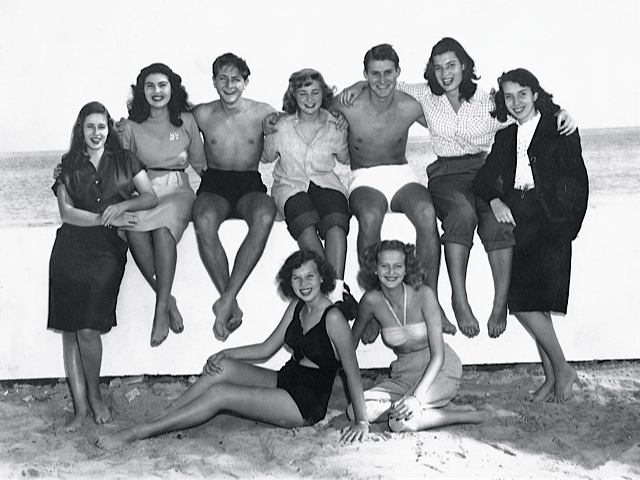
One late afternoon, two girlfriends and I were sitting on the beach watching a convoy of several big ships go by. They were so close that we could see the sailors wave their shirts at us and we knew they were watching us. That night every one of those ships was sunk. We went to the beach the next day and watched the ships still burning—I don’t know if there were any survivors. This was not on the news or in the paper.

The Ft. Pierce beach was an island by itself and the only way to it was over a drawbridge. There were a few houses on the beach, a Coast Guard station, a Coast Guard tower that was manned 24/7 and a casino with a dressing room, rest room, and a snack bar that was right on the beach.

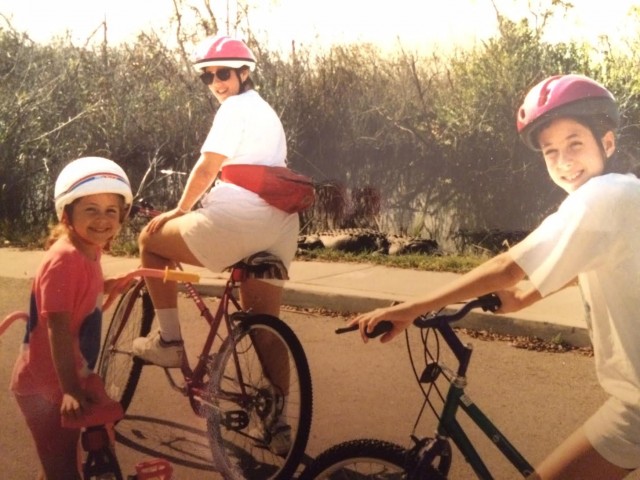
The Coast Guard fellows had one day off, one day stand by, and one day duty on the tower. It was within walking distance of the casino. They usually spent a lot of their “time-off days” at the casino. As dating teenagers, we too spent our free time at the casinos when we went to the beach. As we had no cars and gas was rationed, we rode our bikes everywhere or we walked.

One night Hazel and I went to a movie and in the middle of it, an usher came in and announced that all Coast Guard men were to report to duty, then all Coast Guard auxiliary were to report, and then any doctors were to report to the hospital, and so on until there were just a few of us left in the theatre.

When I got home, my dad took us over and parked our car by the hospital and we saw ambulances go to the hospital and then to the funeral home. Later we learned a whole American convoy had been bombed, burned, and sunk. We often heard bombing blasts that were so drastic that our windows and walls shook. A couple of places in town could hardly keep glass in their windows because of the vibrations.

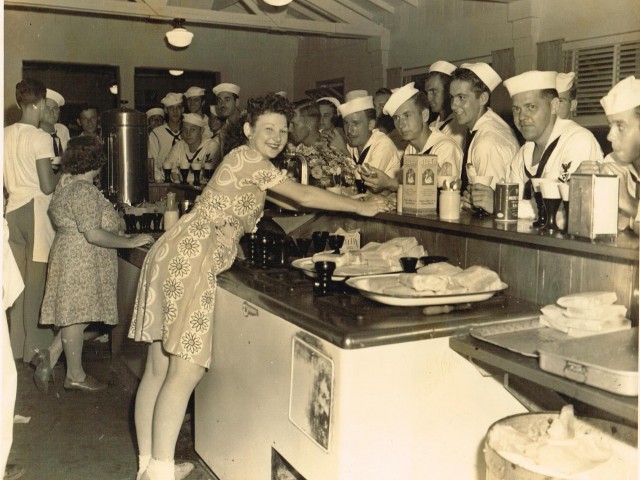
We had a United Service Organization (USO) in Fort Pierce which organized programs, services, and entertainment for the troops. Any young, unmarried women who wanted to volunteer had to be approved by a committee of the organization before they could participate in the activities.

All activities were well chaperoned. Camp Murphy, now Jonathon Dickenson State Park, was a radar military base, located south of Stuart. They would bus us girls to Camp Murphy once a week to a dance. The bus was stopped at the base entrance and thoroughly inspected. We were not allowed to leave the bus until we got to the dance hall and then we were escorted by military men on each side of the sidewalk and not allowed to leave the dance hall at any time.

Ft. Pierce was financially in bad shape during the war. There were no tourists and no money was coming in. The politicians were trying to get a military base to come into town to bring in money and finally, a surprise! A train load of sailors came into Ft. Pierce; no one knew they were coming so the city did not know where to put them or how to feed them.

A Red Cross city manager and everyone in town went to work to solve this problem and the result was an amphibious Navy training base in Ft. Pierce. They took over the south beach which included all the mosquitos and sand flies! The beach closed to everyone except military. Again we had a lot of explosions as they built concrete waits and then practiced blowing them up. By then, we were used to the explosions so didn’t think anything about them.

During the time I lived in Ft Pierce I met my husband Les who was in the Navy as Medical officer. After discharged from the Navy, Les took employment in banking and was also in the National Guard. Over time his banking career took him down the east coast of Florida and eventually landed in Miami were we took up permanent residency in Homestead. We’ve been here since 1972 and love it.

Nostalgia. It is what happens to me when I start thinking about where Miami begins and where I end. This remarkable city, a nexus of comings and goings, is my homestead and refuge. Although young, I have enough “I remember when” statements to paint my childhood and youth with as much warmth as the offerings of Miami’s midday sun.

I remember when Sunset Place used to be the Bakery Centre, where inexpensive and fresh baked goods were actually sold, and which had a rare coin shop and an Eckerd’s Pharmacy on the side. Sunset Drive also had a children’s bookshop that had the most remarkable story hours that ignited my passion for reading. Saturday mornings were spent at Velvet Creme, the doughnut parlor that introduced me to crullers and provided my family and me a cozy place to start the weekend.

And how could I ever forget each hurricane? My first was Hurricane Andrew and ever since then, I keep track of Miami’s storms and their lasting effects based on the absence or damage of ficus trees in the neighborhoods. Each memory, even the ones on the surface, brings to life a part of my growing years here. These memories, vignettes really, represent the rich excess that defines my beloved city.

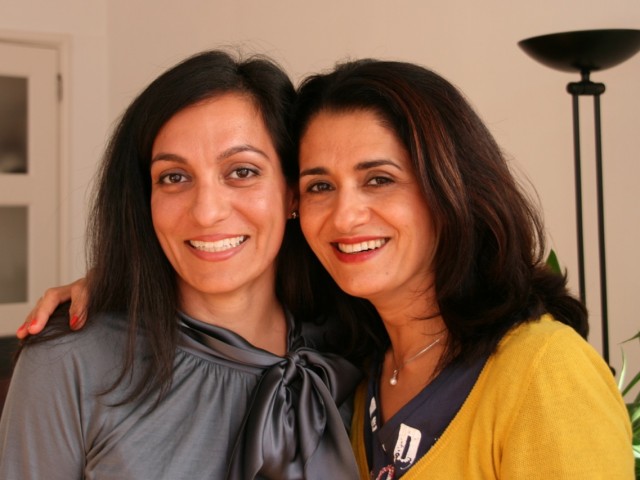
In the summer of 1996, my deliciously beautiful cousin Sohela came from the Netherlands to visit my family and me in Miami. This was a particularly special visit because it was her first time in Miami and my first time meeting her. I had high expectations because I had already bonded fiercely with her older sister, my cousin Sara, who in previous visits had convinced me that Sohela was a witch.

My two cousins, along with my precious mother, became model examples for me because they gave me a context for what it meant to be a modern Iranian woman. Sara and Sohela were beautiful, well-spoken, well-traveled and highly educated. Essentially, my two cousins represented everything my 12-year-old heart wanted to be when I grew up.

Having been born in Miami, and the only Iranian-American girl in my class, I often shied away from my olive skin, thick eyebrows and massive curly hair. I went by my middle name, Leslie, because it was much easier to pronounce than my first name, Saghar. I struggled with where I fit in Miami and more so, how I fit in my own skin. These cross-cultural family visits in Miami let me see the beauty of my heritage and appreciate my place in the broad spectrum of diversity in Miami.

When Sohela arrived, I was on the fence about her and used every outing to judge whether or not I was going to love her as much as I already loved Sara. When we went to swim and suntan at the Venetian Pool, where I first learned to swim, I decided to judge her by whether she could swim from the edge of one side of the pool to the cave on the other side of the pool without getting her sandwich wet. I stared her down in the cave, as we ate our perfectly dry sandwiches.

When we took her for early morning strolls at Fairchild Tropical Botanic Garden, I quizzed her on starfruits, mangos, sabal palms and sausage trees. Would she appreciate the differences in our fruits and the different types of palm trees? At Matheson Hammock Park, I checked to see if she could spot the ridgeback of an alligator that was barely, just barely, skimming the top of the lake. Being the Miami girl that I was, I thought (and often still do) these things were important! One by one, Sohela passed my little Miami tests and with ease started to win me over.

The evening before Sohela left, we took her to South Beach. My parents, brother, Sohela and I all piled into our cream-colored Jeep and drove from our Coral Gables niche to South Beach. I watched her from the back seat taking in the sights from MacArthur Causeway. With the window lowered and her head slightly tilted out, I could see the light in her eyes as she took in the expanse of the port to our right, the beach in front, and the lights from downtown just behind us. More than anything else, I could sense she enjoyed the warm, evening breeze brushing her cheeks. As we inched our way to Ocean Boulevard, I wondered if she could hold her own in South Beach—outlandish, exotic South Beach.

We parked our car and started our stroll on Ocean Boulevard. Across the street, we heard a ruckus coming from the News Café. When we looked, we saw a row of five shirtless guys holding up large, poster score cards. As women would walk or drive by, they would rate them and hoot and holler. My heart was pounding because I wondered if they would rate Sohela and if they did, how she would fare. Holding my dad’s hand, I picked up the pace of our stride hoping that if we shuffled by quickly enough, we would go unnoticed.

What my cousin did next was so classically “Miami” that I fell in love with her forever. Sohela measured her steps and presented herself squarely in front of these men. She stretched her arms out and gave a slight bow. Sohela then slowly pivoted and awaited the reply. We stood beside her, my mom with a sassy smile and I, a bit bewildered. Sohela held court and the score cards revealed:

10! 10! 10! 10! 10!

In that moment, I soaked it all in. I remember the confident “I know!” nod my cousin gave, the rhythm of the beach, and the comforting hue of the evening sky. I started to wonder if, in that moment, there were any other place in the world as perfect as Miami for creating such an experience.

Years later, I still wonder.

It was terribly hot that summer 63-plus years ago in New York, and Mom and Dad decided, after years of winter vacations in Florida, that they would move to Miami Beach.

Dad used to talk about how there were no motels then, only motor courts and cabins, all of which had big signs in front that read, “Air-Cooled,” which, of course, meant no A/C!

We arrived in “Myamuh” in August 1946. After a short stay in an apartment somewhere below Fifth Street in Miami Beach, we moved to 8035 Harding Ave.

In the meantime, Dad, an artist and sign painter, signed a lease for a sign shop at 222 Fifth St., which he would occupy until he became ill in 1957.

It was sometime in 1947 when Dad and I would begin a routine that we would repeat every Sunday for three years: We would go downtown to the Mayflower Coffee Shop, at Southeast First Street and Biscayne Boulevard, and I would watch the “donut train.” That is, the raw dough would plop onto the flat cars and make the circuit to become donuts.

Bonnie was our waitress, and after breakfast we would go to the pony track, which was where Jordan Marsh would be built, on the corner of Northeast 15th Street and Biscayne Boulevard.

After I rode the ponies, we would head north for the highlight of the day. We would drive up to Northeast 36th Street and Dad would take us into the Florida East Coast Railway’s Buena Vista Yard, where I would climb on the steam engines and play endlessly.

Nobody chased us away, and it was from those deeply ingrained early experiences that I would go on to become the chronicler of the Florida East Coast Railway’s incredible history as company historian.

Sometime around 1948, we moved to 80th Street on Biscayne Beach. I started at Biscayne Elementary School and a month later we moved to Biscayne Point. We lived at 8035 Cecil St. for 31 years. I have wonderful memories of living there, from playing softball on North Biscayne Point Road to riding our bikes on Cleveland Road and around the Point.

It was a special moment in time. We would go to the Surf or the Normandy theaters on Saturdays to see a double feature, a serial, 10 cartoons and the newsreel plus the adult matinee, all for a quarter!

Following sixth grade at Biscayne, I would move on to Nautilus Junior High. It was during my first year at Nautilus, 1956-57 that I walked into the FEC’s beautiful downtown Miami ticket office in the Ingraham Building and asked for timetables. I’ve been collecting FEC memorabilia for more than 52 years.

I was a swimmer. In September, 1959, our Ida Fisher class moved to the “old” Beach High.

We were blessed to have gone to what was, from the late 1940s through the very early 1970s — with the exception of the Bronx High School of Science — the No. 1 rated academic public high school in America. We had between 88 and 94 percent of Beach High graduates going to college every year.

I graduated from Beach High in June of ’62. With no desire to go to Florida, I went to what I fondly nicknamed “1/2 S U” in Tallahassee. I was out of my element and returned to Miami in December, transferring to the U of Miami and going to work at the Fontainebleau as head teenage counselor.

Several friends told me about a new program that they were starting at (then) Miami-Dade Junior College in hotel-motel and food service management. It was the decision to go to Miami-Dade that would change my life.

With greatly improved grades and a bit of luck, I was accepted at Cornell University in June of ’66, graduating in 1969.

Over the years, I’ve worked at some of the legends among Miami and Miami Beach hotels and nightspots: the Castaways, the Newport, the Playboy Club and others. I met Ike and Tina Turner, The Drifters, Frankie Vallee and so many others who played at the Seven Seas Lounge or the Playboy Club. Being at the clubs was like living a different life, and like the old TV show, The Naked City, everybody had their own, unique, different and sometimes interesting story.

The Miami years have been extraordinarily good to me. Since 2004 I have written and had published 15 books.

Indeed, that nonsense about “Will the last American leaving Miami be sure to bring the flag” is, as stated, pure, unadulterated nonsense.

The flag ain’t leaving — and neither am I!

My memories of Miami begin 34 years ago in 1980 when I came here for the first time for a nursing internship at Cedars of Lebanon Hospital. I had completed three years of nursing school at the University of Pittsburgh and came to Miami with a classmate for the summer. We lived in what was called the Cedar’s North Tower in the Civic Center. There were other nursing students from all over the country and we bonded very well. Of course, Cedars hoped to recruit us after graduation as there was a nursing shortage at that time. Our first weekend in Miami unfortunately was interrupted by the McDuffie riots. We all called our parents to reassure them that we were safe in spite of having swat team officers on the roof of our building as we watched parts of the city on fire.

I met my future mother-in-law during my first week on the job. She was a nurse at Cedars and upon meeting me she replied, “Have I got a son for you!” Our first date was to see the movie “Dressed to Kill” with Angie Dickenson and Michael Caine at the Omni theatre. By the second date, it was true love.

At the end of the summer, I returned to Pitt to complete my final two semesters of my nursing degree before moving permanently to Miami after graduation. I took my nursing boards at the Miami Expo on Milam Dairy Road and began working at Cedars. I lived again temporarily in the Cedars North Tower where my husband proposed to me on the rooftop overlooking my new city. We were married in November of 1981 and we bought our first townhouse in West Kendall when the home loan interest rates were greater than 15%.

My husband grew up near 8th Street and 71st Avenue and so he introduced me to Gold Star Deli, Sarrusi’s, Pumpernik’s, Arbetter’s and the Blue Grotto. We explored the Keys, Marco Island, and his family’s favorite destination: Sanibel Island. We bowled at Bird Bowl on a league, and shrimped off the bridges of the Rickenbacker Causeway.

We had two daughters who spent lots of time at the new Dave and Mary Alper Jewish Community Center in after-school care and summer camp. My husband and I took ballroom dancing and salsa classes at Miami-Dade College in Kendall. We picked strawberries and tomatoes in a field where Town and Country is now. Some of our favorite family activities included strawberry milkshakes at Burr’s when visiting Monkey Jungle, nighttime bike trips at Shark Valley when there was a full moon, kayaking at nine-mile pond in Everglades National Park, snorkeling at Pennekamp Park, and swimming at Venetian Pool.

In August of 1992, we were on vacation with our children in West Virginia when Hurricane Andrew struck. We had people check on our home and found out it was uninhabitable. My daughters and I stayed up north for another week and when the airport opened my husband flew back to Miami with a brand-new chain saw as his carry on. How times have changed. He knew what a useful commodity it would be with all the downed trees reported to us by the neighbors. As he drove from the airport to survey the damage, he found it difficult to find the house without the usual landmarks. Luckily our neighbors were willing to take us all in until our house was ready to move back into in mid December.

During the next several years we got the house and yard back into shape. My husband, who has a degree in horticulture, restored our yard with lots of fruit trees including grapefruit, orange, lemon, lime, and tangelo trees and other native plants. However, in 1999, a citrus canker outbreak occurred putting all of the state’s citrus trees at risk and so an eradication program was enacted. One day after work we came home to find all of our beloved citrus trees cut down and in the swale of our house. After a few days of moping, we decided to make the most of our now barren yard by putting in a swimming pool. This was the best investment for our family because we have spent many hours of quality time together trying to stay cool during the hot summer months.

I feel so fortunate to have had the experience of living in this multi-cultural city where I learned to love churros and hot chocolate, pan con lechón, chicharrones, and becoming bilingual while working in an ambulatory center on Calle Ocho. My husband and I have a pool surrounded by mamey, lychee, dragon fruit, mangoes, atemoya and papaya. We continue to find new activities in Miami to enjoy, for example the South Dade Cultural Center, Cosford Cinema, the Tower Theater with Azucar ice cream across the street, O Cinema, and Schnebly winery where our daughter was married. I love living here in Miami and am so grateful to my mother-in-law for giving me a reason to come back permanently.

It is unfortunate that nostalgia comes later in life. Having it when memories are fresh might make one more appreciative of what is being lived. I speak of this because of a recent incident that sparked my memories of growing up in the late 1950s through the 1960s in Dade County, on a street just a little north of Perrine and just a little south of South Miami.

My street was an unpaved cul-de-sac that began at U.S. 1 and ran for a couple of blocks. Across the street from my house was a Florida pine forest, though it did not match the forest I would read about in the books I was given in Perrine Elementary school. In those books, leaves fell in the fall and everyone in town would bury potatoes to be roasted with the leaves as they were burned. It sounded like fun to me and it was hard for me to understand why I was not experiencing it in Miami.

The books mentioned snow as well. The good teachers at my school helped give all of us students an idea of what snow was like by having us cut snowflakes out of paper. It was only much later in life that I discovered that our paper models and the real thing in no way matched.

My yard was enormous, or so I remember. It was filled with monarch butterflies, dragon flies, and frogs. Once a year, our yard, the woods, and almost all side streets filled with land crabs. On Old Cutler Road it was not odd to see people collecting them nor was it was unusual see cars with flats caused by them.

The house I lived in was small but made slightly bigger by my father who was very skilled with his hands — something I apparently did not inherit.

A bit north on U.S. 1 there was the Dixie drive-in movie theater, a popular hangout for high school students. Somewhere not far from there was the Miami Serpentarium, a local tourist landmark that was marked by a giant snake statute.

And then there was Harry.

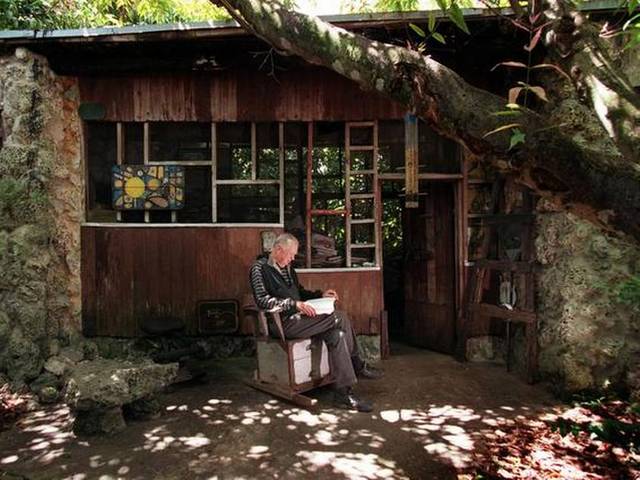
Harry Troeger lived in a small home a few houses down from mine. He designed and built the house. It had no electricity. I suspect he had a well but I do not know for certain. He seemed like a strange man who lived in the small wood and coral house he built. It was almost hidden by trees. For me, my sisters and the other children who lived on the street or the next street over, he was a mystery.

Once a year on Halloween, most of us were brave enough to approach the small house and peek in the windows. We ran like the blazes when we heard a noise. We all assumed the house was haunted.

Harry Troeger, who died in 2008 at the age of 92, was Miami’s Henry Thoreau: a unique man who lived an unusually solitary life in what was, back then, the sticks. Harry was a pioneer.

As a small child I was too timid to say little more than hi when he walked by, heading (I was told) to his job at a movie theater.

Recently, I read in the Miami Herald that his house had been sold to a contractor because of unpaid taxes. The taxes had lapsed in large part because the county was forwarding the bill to an old out-of-date address where Harry lived in the late 1940s.

The article indicated that the house was in danger of being torn down. There was hope, however: it came in the form of a small band of merry Don Quixote types led by Amy Creekmur. The “Friends of Harry” (aka the FOH) were scrambling to make an offer to purchase and save the property.

The lady’s name was familiar. By chance, several weeks earlier, out of curiosity, I checked county records to see who was recorded as the owner of my childhood home. Amy Creekmur had purchased the house I grew up in.

But neither Amy nor the troops that made up FOH were able to move fast enough to save Harry Troeger’s house. His house was brought down. The coral stones he had used for the construction were moved. The wood discarded. A unique part of our local history lost.

It is not reasonable or expected that every old house or historic building be saved. And it is understood that there are many who would save none. To them, the properties are old buildings with no value.

But I believe most of us seek to save some links from our past. Harry Troeger’s house once had historical designation but the agency that granted the status took it away. For me, it is hard to believe that there was a more worthy candidate for continued preservation. Harry Troeger’s house was one of our most vivid links to our past.

I can close my eyes and relive how Dade County was years ago. Sadly losing Harry Troeger’s house takes that ability away from others.

Addendum from the Miami Herald

Troeger built the cabin, which was loosely divided into a wash room, bedroom and reading room, by hand out of coral rock and Dade County pine in 1949. Troeger, who made the cabin his home for nearly 60 years, lived a simple life: no electricity, no car, no running water, only a pump he built himself. The cabin walls were lined with books about Buddhism and works by Emerson.

In 1998, the county deemed the home “unsafe” and threatened to tear it down. When friends and neighbors rallied, the county designated the home as historic and Troeger was allowed to live out his life in his home. In 2008, he died in his bed at age 92.

The U.S. Coast Guard does more than search for rafts, drugs, and errant boaters in this area. “Coasties” saved 70 merchant mariners during a blizzard off Massachusetts in 1952. It was called the “two-tanker disaster,” and this Miamian was aboard one of the Coast Guard vessels involved in the rescue of two storm-savaged ships.

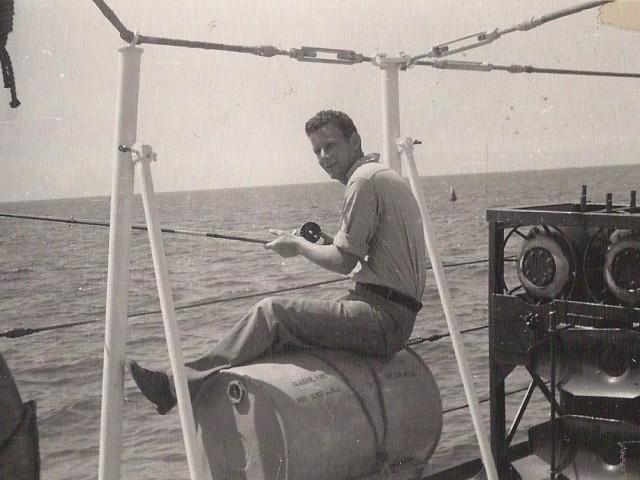
I grew up on Miami Beach, and always admired those sleek Coast Guard cutters that were moored off Biscayne Bay’s islands. Who would have dreamed that some day I would be a seaman aboard a cutter involved in the T2 tanker rescue? It is still listed as one of the Coast Guard’s 10 most significant rescues.

During my summer vacations from the University of Florida, I bell-hopped at the Sands, Royal Palm, and White House hotels. My favorite bartender worked at the White House — my dad, Philip Morris. The oceanfront lounge had the greatest view of any beach hospitality venue.

Who would have known that I would meet my future wife in the nearby Club Deuce? Diane drove down from Detroit to get away from another cold, slushy Michigan spring. Two gal friends introduced her to the Deuce, now the oldest bar in Miami.

A fairly new CG cutter is moored at Port Miami. This 154-foot fast-response cutter is named the Bernard C. Webber, after a true American hero. Bernie rescued 32 stricken mariners from the tanker which had cracked in half from the fury of this unnamed storm a few miles east of Chatham, Massachusetts.

Bernie was the coxswain (skipper) of a motor lifeboat, out of Chatham
Light Station. It was 36 feet long, and had a capacity of 12 people, including a crew of three.

During the blizzard, and despite 50-foot waves, Bernie managed to cram 32 merchant seamen into his windshield-smashed boat. A 350 lb. sailor didn’t make it as he leaped from the S.S. Pendleton stern.

Cutters are named after enlisted heroes. Bernie denied that he was a hero all his life. He refused the CG gold lifesaving medal, unless his crew of three received gold also, instead of silver.

A sister ship, S.S. Fort Mercer also cracked in half, just forty miles away from the S.S. Pendleton. I was a deck-hand aboard the CGC Acushnet, which rescued 17 sailors off the foundering Mercer stern.

After a night of plowing through 60-foot seas, the CGC Acushnet arrived at the S.S. Fort Mercer’s stern section, just south of Nantucket Island. The icebreaker Eastwind was attempting to rescue three panicked sailors by pulling them over to safety in rubber rafts. One survivor had nearly drowned in the process.

Finally, our captain, John M. Joseph, had seen enough. He got permission to drift alongside the stern and convince the survivors to leap to our fantail. Capt. Joseph maneuvered the Acushnet parallel to the stern, and when we were close enough, three feet, seven distressed sailors leaped to our waiting arms. Then, rogue swells suddenly
swept us together and the vessels collided at taffrail height. CLUNK, KNEEL, HUG THE DECK!

We made a full circle and returned to rescue 11 more mariners from the tottering hulk. One hefty mariner slipped on our railing, but was snatched from the freezing water by our two bosun mates. [The word is boatswain, but the common term uses the pronunciation and spelling “bosun,” so I’ll let the Herald folks make that determination.] He explained that he wore his new shoes to make the leap. Another mariner landed on our fantail wearing two suits and two overcoats. In the chaos, he had neglected to grab a shirt.

I was third in the catch-and-hold rescue line, and was escorting a successful jumper to the pharmacist mate’s cubbyhole for his shot of brandy. “Hey, Doc!” I yelled. “How about me? I’m just as wet and cold as he is.” Doc replied, “Get this guy a shirt, and we’ll think about it.” He didn’t and neither did I, with my innards doing flip-flops.

Another merchant seaman told me, “That was the greatest demonstration of seamanship I have ever seen. It was also the worst storm I have been through in 20 years at sea.” Dented, but not beaten, or cracked, the “Mighty A” then headed northwest to drop the survivors at the Boston base.

Tally of the tragedy: 14 lost at sea, 57 rescued from foundering vessels.

To me, it was the most harrowing and exciting three days of my life.

Decades later, the CGC Acushnet was stationed in Miami. She was one of 24 cutters which helped ferry 125,000 downtrodden refugees from Cuba to Florida in the Mariel Boat Lift. In case you forgot, that historical event occurred from April to October of 1980. In three years, I got to see a panorama of America: Portland, Maine; Boston; Baltimore; San Juan; Guantanamo; and finally, the 180-foot buoy-tender CGC Bramble, in Miami Beach. This was before the Coast Guard base was built on Watson Island, so we were moored alongside Alton Road, just south of Fifth Street.

Glad to be back in Miami, but it took me months before I would go fishing with friends in their tiny 24-foot skiff.

I was born in Louisville, Kentucky in January 1944, what you would call a war baby.

My mother and father were both born in Louisville and attended school in Louisville. They met at the old Anchorage High School and were married in 1941.

My father became a pilot in the Army Air Force in late 1942 and was serving in England late 1943 and early 1944. His plane was shot down over Germany on April 1, 1944 and none of the crew made it through the crash and burn.

My mother bought a car and a trailer from my grandfather, a Chevrolet dealer, and then headed south. Mother, my grandmother, and I made it to Tampa, Florida, after driving through Alabama in the dead of winter.

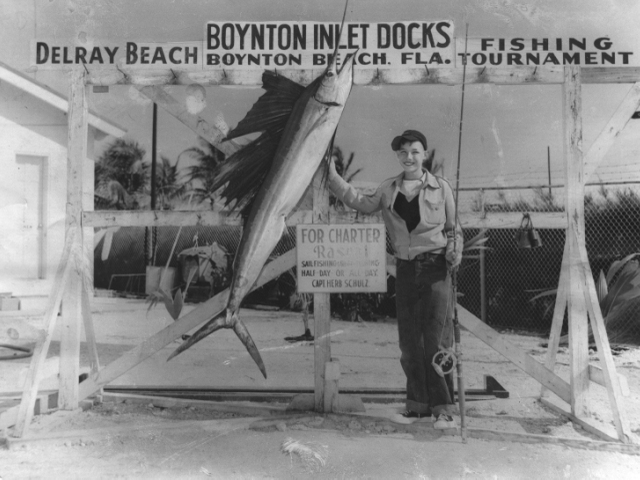
She was told one of the best parks was on the east coast at Briny Breezes, and after checking out the park, she decided to take us and the trailer there. Just outside of the park was the Jungle Inn Bar, a favorite hangout for singles in those days. My stepfather, his brother, and uncle were working on construction of new homes in the Boynton-Delray Beach area. My mother, a lonely war widow, and my stepfather, lonely war vet, met each other at the Jungle Inn and six weeks later wedding bells were ringing at the Lutheran Church in Delray.

They lived in the park for about six months after this and ended up renting a home in downtown Boynton Beach. Within a year, they purchased a home in Delray Beach and moved just before the 1947 hurricane. They constructed a small, two-bedroom cottage on the rear of this property and would rent out the house to winter visitors and live in the cottage.

My stepfather remained in the construction business until 1957 when he suffered several strokes on Easter Sunday, ending his home construction business. At one point, he worked with an investor, constructing several homes in Boynton Beach. My father had to make many trips to Miami to see the investor while the development of this street was taking place.

Over the years, we made many trips to Miami to attend some of the attractions such as the zoo and the Jungle Gardens. After my father’s strokes, he went to work for a company in Boca Raton that did business all over the United States.

They would have an annual picnic at Crandon Park in Miami. Several times when my parents had to fly out of town for a special vacation, they would leave from the old Miami International Airport.

I attended school at Delray Lutheran Elementary School, then, I was part of the first sixth grade class at Plumrose Elementary School in Delray, Boynton Beach Junior High, Seacrest High School, and, I finished high school at Kentucky Military Institute in Lyndon, Kentucky, which had winter headquarters in Venice, Florida. I finished school at Palm Beach Junior College in Lake Worth.

My wife and I met at the First Baptist Church in Delray Beach Florida, and in 1965 were married at First Baptist. We left Boynton in September, 1965, and moved to Louisville unfortunately, our moving van did not make it that far.

Somehow it went off a mountain in Tennessee and that was the last we saw of most of our possessions and wedding gifts. We had moved to Louisville, because I was going to work for my father’s family business. The Eline Realty Company has been in business, either selling homes, building homes, or selling Chevrolets, since 1913.

I will always have a fondness in my heart for South Florida and the twenty years I spent growing up there. My wife and I still enjoy coming to the Panhandle every spring for rest and relaxation. The place we go to has only one fast-food restaurant in the whole county.

The east coast has gotten somewhat overcrowded with people, roads, and buildings the last 30 years, but that is progress.

Little did we know when Ben and I got married in Havana in 1958 and came to Miami for our honeymoon that this city would be our home for the rest of our lives.

We spent two wonderful weeks in Miami Beach in a hotel named “Sands,” and visited all the tourist attractions, such as Vizcaya, the Seaquarium, Coral Castle, the Boom Boom Room at the Fontainebleau Hotel, Eden Roc, Castaways and so on. Miami was a sleepy town where all restaurants closed before 10 o’clock. However, there was night life on Miami Beach.

We came back to our peaceful lives in Cuba, but on December 31, 1958, the communist government took over.

Every day we were waiting for something to happen that would end that horrible nightmare. We could not comprehend how the American government would allow a communist regime with Russian missiles, 90 miles away.

In 1963, the American Red Cross put together a fleet of several cargo ships to transport the Bay of Pigs prisoners and their families to the United States. At this point, we decided to leave our country. We had to abandon all possessions and leave everything behind. It was heartbreaking. We came in the berths of a ship named American Surveyor, and because we both were fluent in English, we were selected to be the ship’s translators.

We were given one cot for every two people, but I was bringing a 9-month-old baby girl to her parents in Miami, so she got our cot. My parents, Mariano Cordova and Dulce Maria Tascon, and my brother-in-law, Daniel, also came with us in this ship. We brought our dog, Canela, as well. We encountered extremely rough weather and as a result, the trip, which normally would have taken 12 hours, lasted 20. Parents with babies were bringing them in shoe boxes (for lack of cribs). It was really horrific.

We finally arrived at Port Everglades on April 29, 1963, all disheveled and dirty from the ship furnaces. We were transported on buses to the old Opa-locka airport where our relatives and friends were waiting for us. I gave the baby to her parents and never heard from them again. She must be 51 years old by now. I have always wondered what became of her — did she marry, and does she have any children? Has she ever been told how she came from Cuba and who brought her?

Because Ben’s relatives were living in Miami Beach, we started our life there and rented a one-bedroom apartment on Ocean Drive in the “Ocean Front Apartments.” It belonged to two older brothers and a sister who were marvelous with us refugees. They learned to speak Spanish and played dominoes with us. It was like a big family.

I remember the two movie theaters, the Cameo and the Cinema, which showed movies for 25 cents before 6 o’clock, and after that it would go up to 50 cents. We ran like crazy to get to the movies before 6 p.m. We were so far behind in the movie business that any film was brand new to us.

I landed a secretarial job at the Mercantile National Bank at 420 Lincoln Road. My husband was offered a position as a teacher’s aide at Southside Elementary in downtown Miami, where all of the newly arrived Cuban children were studying. He served as an interpreter, teacher’s aide, worked at the school office, and did whatever the principal would ask him to do, such as bringing her coffee and doughnuts from the Royal Castle nearby. This school has been designated a historical landmark in downtown Miami.

We were able then to rent a two-bedroom apartment on Euclid Avenue. My brother-in-law slept on the couch and got a job at a Hialeah factory making plastic hangers. He did not own a car and had to take two buses from Miami Beach to Hialeah to get to his job on time. Later on, he bought himself a 1952 Chevrolet for $250. It felt like a Rolls Royce to him.

Our family outings were to Crandon Park for picnics or to Rickenbacker Causeway to fish. They were simple times, but very happy. We remember the small zoo at Crandon Park with lots of parrots and an old lion.

We became proud American citizens on July 4, 1970 in a swearing ceremony held at the Dade County Auditorium.

One Mother’s Day we all went to Shorty’s in Kendall to celebrate, but my mother fell ill and we took her to Mercy Hospital, where she was diagnosed with stomach cancer. She passed away two weeks later at the ripe age of 54.

We decided to leave Miami Beach and were able to buy our first home in the Coral Gate neighborhood in 1966, where a two-bedroom, one-bath would go for $15,000, with $450 down and $110 per month.

I remember that Ben only had a $10 bill in his pocket and that was what the realtor, Fred G. Smith, accepted as our initial down payment. That night, he came to our home, we gave him a check for the full down payment, signed the contract and he returned the $10 to us. I understand this area was developed in the 1950s for World War II veterans under the G.I.Bill.

My father was living with us, and he shared a bedroom with our son, George. We lived one block off Miracle Mile and our outings were confined to McCrory’s and F.W. Woolworth, and Sundays to the ponies and Burger King. I remember the park on Northwest 22nd Avenue, which belonged to the Police Benevolent Association, where all the neighborhood children went and had a fantastic time. We used to pick green peppers, tomatoes and strawberries at 117th Avenue, where Kendall is now a bustling neighborhood, and brought home bags full of freshly picked vegetables and fruits.

We decided to move to a younger neighborhood full of children and excellent nearby schools, Coral Park Estates, where we have lived for the last 40 years. George attended Coral Park Elementary, then Rockway Middle School, Miami Coral Senior High, Miami-Dade Community College and finally, FIU.

When he married Janet, they decided to buy a home in the same neighborhood so that their children would attend these schools. My granddaughter, Gia, attends Coral Park Elementary and is now in fifth grade. The cycle repeats itself!

My husband passed away three years ago and I still live in the same neighborhood. I have been in Miami for 50 years already, longer than in my own country, and have always considered this our only homeland. Over the years, we have witnessed the transformation from a sleepy town to a beautiful and vibrant city — an experience that I wouldn’t change for all the money in the world.

I was not allowed to talk at six o’clock when the news came on. Dinner at the pull-down table in the breakfast room was a silent affair, but for the radio.

Edward R.Murrow was reporting: Hitler’s crossing this river, that river. Daddy fumed that he wanted to go “over there,” to help our country – but he was too young for WWI, too old for WWII and he and Mommy were saddled with 3 little girls and one on the way. Mommy would say, “Why am I bringing another life into this horrible, hopeless world?”

A recurring ghastly nightmare — me, 5 years old, swinging on the playground at North Beach Elementary – and suddenly Hitler was standing on a giant swing, arcing over the playground, with a uniformed German on each side in identical mustaches and on swings, each one scoo-o-o-oping up little children – me, one of them, disappearing into instant night.

During the day I would march alongside soldiers outside my house on Royal Palm Avenue and in Polo Park (where Nautilus Middle School now stands). The army was occupying Miami Beach hotels, with the streets as their training grounds. One of my first songs was, “Over there, send the word . . . that the Yanks are coming. . . .” Me wondering, who ARE the yanks, anyway?

There were blackouts every night and rationing; my parents were on Civil Air Patrol “birdwatching” from the Roney Plaza hotel tower for German subs off the coast.

In school, I remember wrapping bandages for the war effort and singing, “Off we go, into the wild blue yonder. . . .” There were daily drills and we had to duck under our desks.

Then, on Fox Movietone News, concentration-camp skeletons were being liberated. Then came the great day! I was nine years old, and my whole childhood of memory had been nothing but war. Now that childhood was almost gone – I danced around the radio with my sister singing, “The war is over, the war is over, the war is over!!!!”

Translate »