Skip to content
Named Best Museum 2022
by Miami New Times

I moved to Miami Beach in 2009 from Naples, Florida, with my boyfriend, in search of better career opportunities.

I grew up in Massachusetts, however, and lived in Massachusetts until 2005. When I first moved to Miami Beach, I was not a happy camper. It took me a while to adjust to the craziness of South Beach. I couldn’t find my comfort zone and was intimidated by the whole “party” scene.

I didn’t have a true understanding or love for Miami Beach, until I started working for the Miami Design Preservation League. Since starting my position at MDPL, I have learned about the history and culture of Miami Beach. I continue to learn about the Art Deco, MiMo, and Mediterranean Revival historic buildings and architecture and about all the passion and hard work that went into saving these gorgeous buildings that surround my home and office.

My appreciation for these architectural gems grows every day. I feel so lucky to live in such a beautiful place.

MDPL has allowed me to become more involved within my community. I am able to meet people that live and work in Miami Beach. I’ve learned that although Miami Beach is a huge tourist attraction, it is also a small community of residents.

I’ve never lived in a place in which people are so passionate about their community. The residents of Miami Beach care about Miami Beach’s image, its businesses, its organizations, and about each other. They want it to be a safe place, a beautiful place, and a place people want to live and visit.

I feel settled in Miami Beach now. I have made wonderful friends. I am in love with the design and art scene of Miami and Miami Beach. I am a regular at Second Saturday Art Walks in the Wynwood District (the food trucks are a bonus).

I LOVE the Design District, too! I stroll down Lincoln Road every weekend and often have breakfast at Books and Books. I have become a HUGE Heat fan (don’t tell my friends and family back in Boston).

I love spending afternoons at South Point Park and sometimes splurging for dinner at Joe’s Crab Shack afterwards. I LOVE being a car ride away from the Keys, a boat ride away from the Bahamas, and only a short three-hour plane ride away from my friends and family back in (freezing cold) Boston.

I have developed a love for Cuban food and I cannot live without my cafe con leche each morning! I always take my visitors to dinner on Espanola way (its a hit every time). I take my young visitors to the Everglades for a Florida adventure they will never forget. Miami Beach is always a hit for my guests. I have developed a true love for Miami/Miami Beach and the WEATHER!

Miami Beach is my home now. I look forward to many years living and working here.

My family moved to Kendall in the fall of 1975. Both from Ohio, my parents settled here with a pioneer spirit, building a home together in an old pine tree forest at a time when the area felt like it was at the edge of civilization.

A reserve filled with Dade-County pine trees now surrounded them— these tall, skinny trees are covered with red and brown bark plated like paper scales and have tufts of evergreen needles that flourish at the top.

Early settlers built their homes from these pines because they believed them to be strong and capable of withstanding hurricane winds, in addition to being termite resistant due to their high sap content. My parents felt that “high pines” was desirable as it was supposed to fare better than most areas from flooding if Miami was ever struck by a major storm.

They bought the house from an Irish builder on a handshake, and opted for an English Tudor style design. My dad installed his own solar heating system for the pool, circulating the water through black piping on the roof, which was considered innovative for its time and featured in the Miami Herald Tropic section.

The warm tropical climate lured a succession of friends to visit from up north, so having a heated swimming pool was an exotic addition. The first order of business was to ensure that I could swim, so I was enrolled in “water baby” classes—I learned to swim before I knew how to walk.

I attended Leewood Elementary and would walk to school every day. My mother would accompany me to and fro, and when I got a little older I was permitted to ride my bicycle. She would quietly trail behind me until she was confident of my skill and I was then allowed to commute to school on my own.

The area was ripe for development with sidewalks and small homes starting to appear, yet the moment retained so much possibility and opportunity. The pine tree lots were expansive and the generous space predicated the sprawl of urban growth. It was the emptiness that was full. This was the era of magical realism, where childhood was still immersed in innocence and dreams, the excavations of invented worlds abound.

When not in school, I would spend endless days venturing out into woods with neighborhood kids, finding a clearing for forts which we would construct from discarded plywood sheets and old particle board cabinetry, making ladders of 2x4s, furnishing the hide outs with contractor bucket seats and holding court.

Traversing the soft needle carpet beneath my feet, my footsteps padded and dowsed yellow with pollen and sticky sap speckled every surface I made contact with. The edge of the woods was populated with towering cane sugar plants that had downy razor sharp leaves, leaving a stream of paper cuts on my legs in the wake of a mad dash of tag and game playing.

What kind of future could I dream about? I would always lose myself in thought, my head full of possibility and reveling in freedom — definitely a sign of my artistic temperament. Rays falling fast across the sky designating it was time I head home. My mom would be anticipating our return, hair matted hot with sun and retaining the wild airs of adventure. I remember the light had these mysterious ways of southern light, gathering itself together and suddenly dissipate.

The passage of time brought with it inevitable changes. This was a rapidly shifting suburban environment and development was encroaching, and with it came more trouble, incidents of crime were reported, and these occurrences indicated the transformation.

Someone tried to coax a young child into their car after school, a sign of times to come. I negotiated my way into middle school, and the internet became more prevalent as outdoor activities lost their appeal. My parents sold their green Karman Ghia because it didn’t have seat belts. Things were forced to change, to become something new and something different.

The early 80s also brought turbulent times — the Mariel boatlift with its Cuban mass exodus and heartache, the drug trafficking, and the abduction of Adam Walsh forever scarred the landscape of our childhood. Miami had its edge, Miami Vice and South Beach and its lively pursuits of pleasure and the pulse of constant culture, but this atmosphere was not for me. I left Miami to attend college up north, with the assumption that I would not return for a long time.

I was home with my family when Hurricane Andrew hit in 1992, and our house was one of the only ones in the area that withstood its powerful and destructive winds. That Irish builder had designed the house so the doors would swing out- not in, which would prevent the interior corridors from being blown through.

When we woke up the next morning after Andrew, our home was one that was not emptied of its contents. The majestic pine tree forest, or what was left of it after development, was decimated. Those treasured moments of solitude in the woods, and how it provided me with a childhood full of discovery and revelation still remains firmly anchored in my mind.

I was born in Havana, Cuba on July 4th 1956, and came to Miami in January of 1962.

For years I thought I came to Miami as part of the Freedom Flights, until I later discovered that those flights did not start until 1965. As young as I was, I remember boarding the plane with my mother and father and my four siblings.

I sat on my mother’s lap and my father carried my baby sister, making room for two more passengers. At a time when so many parents were sending their children to the states alone and out of harm’s way, my mother did not waiver. She later told me when I was older that she told my father, “we all leave together, or we don’t go,” and so we did.

My father was 38 and my mother 34 when they arrived in Miami. How courageous they were to leave their homeland with nothing but the clothes on their backs and a couple suitcases of belongings. I am certain they struggled but I don’t ever remember going to bed hungry or not celebrating Christmas. How they managed I don’t know.

Shortly after we arrived, my mother took in three young teens sent alone to Miami. The first, my cousin, was later reunited with his parents. The second was our next door neighbor’s son-in-law, who was the eldest but cried the most having left his new bride behind.

He, too, was reunited with his family shortly after living with us. The third eventually married my oldest sister Mary. We lived in a two-bedroom home near the Allapatah area. I don’t remember being cramped but I do remember covering ourselves with the curtains one very cold January in Miami.

My father, a successful salesman in Cuba, took the first job he could find. He made fudge in a candy store in downtown Miami. I wish I could remember the name of the place. I would watch my dad through the large glass window, making fudge in his chef’s hat. We got to enjoy some of the leftovers at the end of his work day.

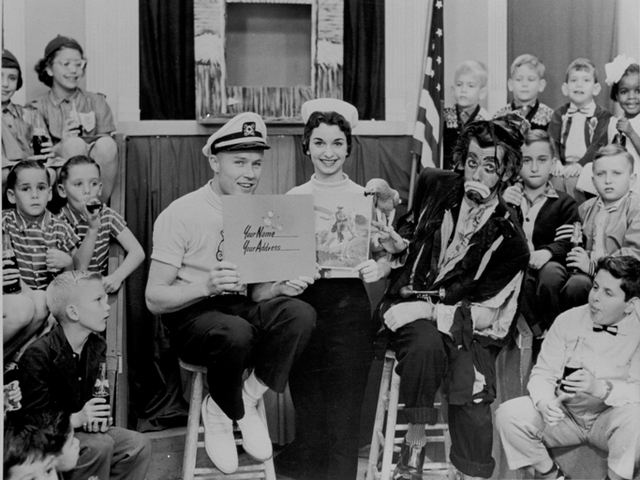
Before arriving in Miami, the Fourth of July did not have much significance other than my birthday. I don’t know what year exactly but I recall all of us sitting on the hood of my dad’s car watching the fireworks at Northside Shopping Center, while “Skipper Chuck,” Chuck Zink, emceed the event. You can just imagine the excitement of my birthdays going forward. We used to have so much fun. It was an event I looked forward to annually.

My parents and my oldest sister have passed away. The rest of us, with our respective families, live in Kendall. I have lived here since 1977. A lot has changed in 34 years. There were mostly strawberry fields in what now is a vibrant community. I live here with my 16-year-old son, David. He attends Belen Jesuit Preparatory School, which is celebrating its 50th anniversary in Miami this year.

I wonder at times what it would have been like if I had remained in Cuba. What would have become of our family there? Would we have been able to remain together? My parents never returned; they would not go as long as the Castro regime remained in power. In the spirit of their beliefs, I have not returned either to the place I was born. Maybe one day I will, but without a doubt Miami is home and it always will be.

Thank you Mami and Papi for your sacrifice and, most of all, your love.

Miami and Dade County in the late 1970s and early 1980s had a different atmosphere and environment than they have today.

Truth be told, I was a vastly different person then, too. In those days I was a full-time undergraduate student (living off-campus) at Barry College (which became a university in November 1981) before it grew west of North Miami Avenue. Bob’s Subs, with the best cheese steaks and onion rings around (and, conveniently enough, cold beer), was still across the street from Barry then, at Northeast 115th Street and 2nd Avenue.

I had neither a car nor a phone and was all but penniless — a thrift-store denizen –so I worked part-time as a bartender, a cook and/or a waiter in just about every restaurant around: Lum’s, Pizza Hut, Prime Steak House, The Round Table, Red Lobster, Watsons Family Restaurant, The Jockey Club, Miami Shores Country Club. Most of those establishments have been renamed, changed, or simply closed.

Next to Lum’s (near Northeast 125th Street and West Dixie Highway) was the Pieces of Eight Lounge, my favorite local bar. It, too, has changed, appropriately enough, into a family planning clinic. Around the corner stood Grand Union, an all-night supermarket, where a broke college student, up all night doing homework, could walk at 3:00 a.m., simply for someplace to go.

Without a car but still a “carouser,” I walked everywhere at all hours: to and from work, school, or the Trailways bus station near Northeast 163rd Street and Biscayne Boulevard. I enjoyed walking. Once I walked home from Coral Gables, and thrice from Ft. Lauderdale Beach. (I still enjoy walking but now own a vehicle.)

My fondest memories of Miami and Dade County are of those times I spent walking. Most often it was late at night. The streets were deserted. The sea breeze, without the sun’s heat, would have died down, and stillness prevailed. The trees, many draped with Spanish moss, were like statues.

As powerful and pervasive as the city seemed during the day — people bustling about, noise from traffic — when the late-night hours came and I’d walk through North Miami and north Dade neighborhoods, I’d get an overwhelming sense of the Everglades, the swamp, residing patiently beneath the brassy urban development’s then deceptively thin veneer. The swamp was perceptible. It seemed like a living organism, an abundantly powerful life force, nonplussed by the concrete and the humanity covering it, casually waiting to reclaim its own.

It’s clear that I never really bonded with the city itself, but rather with the land on which the city stood, and the natural environment that surrounded and permeated the land. It was all so abundantly alive and present, regardless of the city that had been built on it.

It seemed that nothing that humanity could do — no roadways, no stone buildings, no canals slashed through the land — could suppress the swamp that, if not constantly held back, would quickly and inexorably break through and devour all that humanity had built, in a lot less time than humanity had taken to build it.

Yet it was so peaceful. For all of its latent power and authority, the swamp didn’t seem threatening — not like the ocean which, with its hypnotically immense majesty, seemed liable to snatch the city from existence with one convulsion. No, the swamp seemed to have a patient, harmonic personality. It was massive, yet finely balanced: an unfathomably complex mathematical equation, trillions of factors in a constant state of flux and yet perpetually attuned with the organic whole.

The more time I spent walking through southeast Florida, the more I marveled at the swamp’s immeasurable capacity, its abundance, complexity, harmony. It was like a song no human being could write, a portrait no human being could render, or an idea no human being could conceive, simultaneously and symmetrically consuming, producing, and providing.

That is all gone, of course. This land is no longer “mine,” and I’m no longer this land’s. The city, with its tall mountains and expansive plateaus of concrete, steel and glass, seems to have dug into the swamp’s heart with quests for commerce and a continually burgeoning population, all of which seem to have erased the swamp’s former beauty. Given the city of Miami’s prominence as the Caribbean basin’s commercial capital, the city will likely only grow.

But to this day–nigh on 35 years later–I’m still spellbound, not by the city of Miami, but by my memories of the land on which it’s built. Since I first moved to this town in 1979–more accurately, since I first moved to southeastern Florida in 1970–a lot has changed, both about the town and about me. I’ve traveled across the seas and around the globe, and I’ve lived all over the country. I’m older–more emphatically, no longer young–and tired, and not so innocent anymore. Similarly, the city of Miami and Dade County have grown huge and become much more crowded: pervasive, overpowering, dominating the land.

But when I see the pink and white cumulonimbus clouds billowing skyward in the east in the morning, and the seemingly endless saw grass plain stretched out to the horizon, and the scrawny Florida pines silhouetted against the red sky at sunset; when I walk the old, North Miami neighborhoods, feel the stillness–quiet, finally, in the wee hours–and recall, rather than still hear, the swamp quietly whispering behind it; when I smell that damp smell that once seemed to hold and to affirm everything, my fondest memories come rushing back, and I bask in the imagery of 35 years ago, when the land beneath the city and the atmosphere surrounding the city still sweetly breathed the promise held ever true in my heart.

My name is Alex Sturman, and I am sharing with you a glimpse in the life that took place in the summer of 1957 when I was a nine year old in a family of six.

We were living in Charleston, S.C., where I was born. My father was a ‘travelling salesman’ at the time. He would pack up his company station wagon with restaurant supplies and take off for a week or two, covering most of South Carolina.

I’m sure that he was ready for a change when my uncle gave him a call to join him in Miami. My father decided to pack up the family and join his two brothers in business down in Miami.

The business was owning and operating lunch stands and trucks that serviced construction sites such as the Fontainebleau Hotel along Miami Beach. My Uncle Ben started the business a few years earlier and by 1957 he saw a chance to get his two brothers, Coleman and Nathan, to come down and work with him in beautiful Miami. The business was called Hadacal’s Mobile Canteen.

It was August 28th, 1957. My father, brother Philip and I packed up our 1953 Studebaker Champion Starliner, hooked on a U-Haul trailer and headed for Miami. My mother Ruth and sister Anita would join us once we got settled. My oldest brother Joey left for Miami a few months earlier and rented a house with our cousin Dave Hill. They were both nineteen at the time. Dave would later own the Taurus restaurant in Coconut Grove during its heyday in the ‘70s and ‘80s.

There was no I-95 back then. We drove all the way down using US1 and A1A. My father drove and Philip sat shotgun. I sat in the back with our two myna birds, Heckle and Jeckle. When we hit Hollywood, I kept sticking my head out the window looking for John Wayne. My father laughed. I didn’t know that this was a different Hollywood. We made it to Miami and pulled into the Chelsea Court Motel, made up of small cottages located on Biscayne Boulevard.

The car stopped, and once the dust settled I could see these shirtless, shoeless kids looking into the car window. They were my cousins Max, Annie Kay, Ina Rae and Martin. They were my Uncle Nathan’s kids that I was meeting for the first time. Max and I would later attend the University of Miami and become architects.

The next day my brother Joey had to run errands and asked if I would like to join him. He had a 1947 Hudson with an in-dash radio that was the size of a present day boom box. As he ran errands, I would sit in the car, windows down with the smell of horsehair padded seats and listen to the radio on a beautiful sunny day.

I remember the songs that played as I waited. They were “Honeycomb,” by Jimmie Rodgers, “Bye Bye Love,” by the Everly Brothers, and “Diana,” by Paul Anka. I was hearing these songs for the first time ever that day. To this day, whenever I hear any one of those songs, I am a nine year old back in that old Hudson, so excited about this new life in Miami that I am about to begin . . . and what a beautiful day.

Miami seemed so new back then. Everything was clean and freshly painted. It was as hot as it is today, but I never complained. The uniform of the day was shorts, sneakers and no shirt. No one wore shirts back then. The only air-conditioned buildings were the drug store and movie theater.

No such thing as graffiti and the only thing that kept an intruder out of your house as you slept was the latch on the screen door. There was no need to protect your property, because everyone respected each other and a break-in was unheard of. And as you slept, the oscillating fan kept you cool. It felt so good when the fan made its sweep and got back to you.

Trips to Miracle Mile and Lincoln Road were always family events. We would put on shirts, eat at the local cafeteria, and Mother would shop. I always remember the sky being sunny and bright as you looked through palm trees that were everywhere.

From Pogroms to Palm Trees: Rose Weiss, “The Mother of Miami Beach”

How does it feel to be the granddaughter of a Pioneer Family In a word—unique!

It would be a colossal understatement to say being born in Miami and growing up in Miami Beach has been spectacular, but how that all happened is the real story, and it all started with my grandmother, Rose Sayetta Weiss.

“Rosie,” as she was known, immigrated with her family to Brooklyn, New York, from the small village of Mizrich, on the Russian/Polish border. Jews there lived under the oppressive rule of the Czar, and going to America was every family’s dream.

The Sayettas settled in the East Side, and eventually Rosie married Jeremiah Weiss. They had three children: the oldest my Aunt Malvina Liebman Gutschmidt, an educator and author, My father, Milton Weiss, a lawyer and banker, and my Uncle and Godfather, Eugene Weiss, a podiatrist.

Rosie suffered from allergies and asthma and was advised by her doctor to move South. Luckily for me, she chose Miami Beach. In 1919, she arrived, and it’s safe to say the City was never the same.

I remember her as being formidable in stature as well as personality. She immediately became active in politics and attended every city council meeting for 40 years. The City Fathers called her the “eighth councilman.”

While raising her children and then directing her grandchildren, she managed to organize the first Red Cross, found the PTA in Beach schools, design and sew the Flag for the City of Miami Beach and raise five million dollars in War bonds, more than any other woman in the State.

I pity the person who ever tried to say no to my grandmother, and there weren’t many who did. During the Thanksgiving and Christmas Holidays, she convinced the local merchants to donate food and clothing for poor families.

She would take my cousin Wolf (who was 10 at the time) and make the deliveries in her four door green Chevrolet. On her car was the decal of a Rose, and the Police knew when they saw that rose, not to ever ticket her no matter where she parked. If only I still had that car and decal!!!!

I’m told that when my Father announced he would marry my Mother (Ceecee Alexander), Rosie was skeptical of the blonde bombshell as a future daughter-in-law, but after two grandchildren and lots of brisket dinners they became friends.

Grandma Rose loved to babysit my sister and me. Our outings included the Parrot Jungle, The Rare Bird Farm, Crandon Park Zoo, and Pigeon Park, which is now Bayside.

At home she made up endless stories about a fantasy town called “Catsville” and played Opera and classical music all the time. As a result, I became a music lover and a Mario Lanza groupie in the first grade!

Grandma Rose had strong opinions and was very protective of her family. She made it clear that she disapproved of women wearing trousers and smoking in public. When I went to Europe after graduating from Beach High, she cautioned me to have a good time, but not to talk to any strangers; I didn’t always take her advice.

Rosie was nicknamed “The Mother of Miami Beach.” Her friend Carl Fisher once said that it was his money but her spirit that built the city. She died at 88, and whoever said that one person can make a difference certainly knew my grandmother. Miami Beach continues to be my home and I’m proud that my family tree is a Palm.

“Tey, mire esos hombres con esos sombreros tan chistosos. … Tey, yo quiero ir ahi.”

“Tey,” I said to my grandmother. “Look at those men wearing funny hats. … I want to go over there,” I excitedly pleaded.

“Please, take me over there, please, pretty please, I want to see what’s over there. Look at those cars with angels and stars. It is so pretty in there with all the lights. The tall skinny dancing palm trees adorned with sparkling lights. I want to see the Christmas tree, the stars and all the colorful magical lights.”

As I marveled, our bus arrived, and she would grab me by the hand and say, “Let’s get in, watch your step, let’s go home and get some rest.”

We were at this bus stop after my grandmother had worked another long day cleaning and cooking in one of Miami’s opulent homes. I went with her the days I had no school and my single mother worked, to that house with the courtyard, the tennis court, the pool and a giant poodle I loved to play with.

A week went by and here we were again at my favorite bus bench, waiting, and I was hoping this time Tey would take me over there, to “The Beautiful Place,” the magically adorned building. I may have insisted a little too much this time because I will never forget her reply.

“We cannot go over there, you cannot go in there, do you hear me, do you understand?” she shouted.

“Por que?” Why? I asked.

“Because over there is a place where only rich people can go; they are different than us.”

“What do you mean?”

“Ese es un lugar para los TUFOSOS!” That is a place for the snobs.

My tearful eyes looked up at her hoping to understand what she meant by rich and TUFOSOS.

I loved being with my pretty grandmother. She was strict but she was also funny, kind and loving. She would tell me I was beautiful and covered my body and face with hugs and kisses.

I loved going inside the majestic homes and I daydreamed of the day I, too, would live in a fancy home, near or on the bay or beach. I took in my grandmother’s sad and tired eyes with no light, no hope, and no shine.

I insisted, “Please take me over there.” But here comes the bus. She said, “Let’s get in, watch your step, let’s go home and get some rest.”

The years have gone by, my grandmother is now up in the sky, and our world has changed so much that I am perplexed when I think of where my family comes from and all the possibilities for the future.

She was from the countryside of El Salvador, an orphan raised by aunts and uncles, and shuffled from home to home. I only learned her story later from my mother. My grandmother was only granted a second-grade education, and when she was 12 years old, she was hired to clean other people’s houses — the homes of the “tufosos.” It was in these homes of the “tufosos” that my grandmother became an exceptional cook and she mastered European cooking such as apple turnovers, yams, cheese tarts, and various types of stews and quiches. It was because of her gastronomic talent that she was later hired by an American diplomat who arranged for her to come to the United States, first to Boston but settling in my beloved Miami.

I was born in Miami, raised in the suburbs of North Miami, have loving and generous parents and stepparents. I was privileged to go to private school. I have a graduate degree and a well-established career. I now own a beautiful South Florida home, steps away from the beach and the bay.

The beautiful and enchanted place I have been talking about is a ritzy mall called Bal Harbour Shops. When I was a child, security guards and valet parkers wore pompous uniforms that now seem silly. Their hats with feathers, which I found so funny and enchanting as a child, resembled royal guards’ headdresses. The cars that were led by angels and stars are gaudy Rolls-Royce and Mercedes-Benz.

Now that I am grown, with privilege and abundance, every time I drive in my convertible sports car by Bal Harbour Shops, I get an uncomfortable feeling in the pit of my stomach. It is a fleeting feeling that goes away as soon as the light changes. I emphasize drive by because to this day, I have never been in there. Perhaps it is loyalty to my grandmamma, my own limited beliefs or my simple sensibilities. But to this day, “Not in there … not in there. …” I was told I cannot go over there.

You can probably imagine my reaction as a 9-year-old from Winston-Salem, N.C. after seeing Miami Beach for the first time in 1947. My parents brought my younger brother and me down from North Carolina to escape a polio epidemic running through the South that summer. Miami Beach was the first big city I had ever seen. I was mesmerized.

Compared to life where we grew up, the possibilities in South Florida seemed limitless. Back then in Winston-Salem, it was impossible to avoid the smell of freshly harvested tobacco. There was still Jewish segregation and some anti-Semitism. Our family was one of 50-60 Jewish families in Winston-Salem and our contemporary friends were spread out across the South. Many of my friends lived in other towns in North Carolina, Virginia, South Carolina and Georgia. Our world definitely felt a bit isolated.

The Reform Temple in Winston-Salem was basically our home. Aside from a few movie theaters, Aleph Zadik Aleph (a Jewish youth fraternity with chapters all over the country) was the only true local hangout for us growing up. I really had never seen anything like Miami Beach. It was mostly desegregated for Jews by 1947, except for Bal Harbour. That unforgettable smell of fresh tobacco in the air was gone. Once our family checked into the rooms we reserved at The Georgian Hotel on Lincoln Road and Collins Avenue, I took one look out of the window at the ocean and knew that one day I would make the Miami Beach area my home.

The Georgian was at the heart of everything we did for fun that summer. It was a short distance to some of the Beach’s legendary eateries: the Crossroads, DuBrow’s Cafeteria, Huey’s Cathay House, Wolfie’s, Joe Hart’s Pickin’ Chicken and the Noshery at the Saxony Hotel. Between the hotel pool, the beach, miniature golf next door, and breakfast at the Liggett’s Drug Store counter, what’s not to like for a 9-year-old? I can still taste the fried chicken from Joe Hart’s and the corned beef sandwiches from DuBrow’s, sliced thin and piled high for a dollar.

My family continued to visit Miami Beach during the summers before finally moving full-time in August 1954, when I was in high school. Much to my dismay, I had to go back and stay with my brother in Winston-Salem to complete high school. I skipped a grade, but Miami Beach Senior High did not recognize that year and would have required me to redo it.

I’ll never forget what happened in 1954 during our first few days as official Miami Beach residents. We went to see the house my parents had rented in Bay Harbor Islands, when two gentlemen stopped to see my father about urgent business they needed to discuss.

They were sent by Rabbi Leon Kronish, the legendary rabbi at Temple Beth Sholom. Rabbi Kronish had received a tip from our rabbi in Winston-Salem that our family was moving to Miami Beach and that Temple Beth Sholom should recruit us to be members. Rabbi Kronish apparently wasted no time and, we later learned, sent two of his best to recruit us for their congregation. The two gentlemen were Judge Harry Arthur Greenberg and Howard Miller, one of the initial developers of Cooper City. I guess temple membership recruitment was serious business back then.

My family did join Temple Beth Sholom, and my father quickly became one of the leaders in the congregation, a role he proudly held until he passed away in 1973. My father was always volunteering and giving back. He was a community leader in North Carolina and afterward in Miami Beach.

Naturally, I looked up to him and wanted to follow in his footsteps. After college graduation in 1959, my military obligation was fulfilled as a member of the Florida National Guard outpost in Hollywood, and later in the U.S. Army Reserves across from the University of Miami. In March 1960, I landed my first (and only) job and also enrolled in the University of Miami graduate school for classes to prepare for the CPA exam. I was living in Surfside at the time, and my classes were at night. Getting around back then wasn’t nearly as easy as it is now. The interstate had yet to be built, so I had to take the Broad Causeway or the Venetian Causeway to Biscayne Boulevard, taking that all the way to campus in Coral Gables.

Even though there were about 30% fewer cars on the road than we have today, that was still a huge drive. I stayed busy by volunteering as a firefighter with the Surfside Fire Department. Aside from the chief and captain, , who trained us well, the rest of the Surfside Fire Department was composed of volunteers. We had a single truck. They needed us, but I can really only recall one time when there was an actual fire.

I eventually met my current wife Nancy in the late 1970s and would settle with her in Hollywood. She has been a permanent fixture by my side in the community, involved with Temple Solel, Jewish Adoption & Family Care Options (JAFCO), Cystic Fibrosis Foundation, David Posnack Jewish Community Center, and our current involvement with Miami Jewish Health Systems, where I serve as chairman of the board of directors. This August will mark my 60th year as a full-time South Florida resident, though it all began with that first summer vacation in 1947.

Thank you Miami Beach, for making all the dreams of a wide-eyed 9-year-old from Winston-Salem come true.

I was born in Georgetown, Guyana, which is the only English-speaking country in South America.

When I was 6 years old, my parents migrated to Toronto. I started school in Canada, and it was my second-grade teacher who was influential in my love of education at an early age.

You see, I had an accent when I spoke English since I am from Guyana and I did not want the other kids to make fun of me. So I kept quiet because I was intimidated to engage with other students and felt out of place.

My teacher spoke to my parents and let them know that unless I got with the program I was going to be left behind and I was going to repeat the school year. So she suggested that I attend summer school to improve my deficiencies. To this day, I am thankful to this teacher from Jamaica who was able to see through my shyness and understand what I was going through.

Memories like those have also helped me become the person I am today. I remember that my love for police work came from that tall police officer who visited my third-grade classroom for career day. His uniform and command presence stood out the most and left a visual imprint.

I also had a little more push since we lived close to the police academy and every day when I got home from school, I would see the recruits exercising and practicing. I knew that when I grew up I wanted to be a police officer who would be able to help others.

In 1985, I came to Miami with my family, and it was here that I started my public service career. One year after graduating from Miami Southridge Senior High School, I enlisted in the U.S. Army and spent three years as an infantry soldier. I then was hired by the State of Florida as a correctional officer at South Florida Reception Center and I was subsequently hired by Miami-Dade Schools Police Department as a police officer.

Education has always been an emphasis in my life, and I graduated from Florida International University with a bachelor’s of science and from the University of Cincinnati with a master’s of science. I am also a graduate of the prestigious University of Louisville, Southern Police Institute Command Officers Development Course.

I have been blessed to be able to work and train with multiple agencies responding to critical incidents and have offered countless workshops in the area on youth violence, gang awareness, school safety, weapons of mass destruction, emergency management and tactical training. I also teach for the University of Phoenix and FIU.

Fifteen years ago, I worked with Miami-Dade Schools Police. I was working there in the position of captain when the City of Miami Police Department offered me a position as police major to lead and manage the Miami Police College and certainly this was something I could not refuse. I saw this as an opportunity to grow and learn.

Then I saw the chance of rejoining the Miami-Dade Schools Police Department as the chief. I felt that this was an opportunity I could not pass up and also would finalize my law enforcement career and personal mission. I was working for City of Miami Police Department when Superintendent Alberto M. Carvalho offered me a chance to lead the police department for the fourth-largest educational district in the United States.

The Miami-Dade Schools Police Department is currently the seventh-largest law enforcement agency in Miami-Dade County with an authorized strength of 180 sworn personnel. One of the main objectives of the department is to provide a safe learning environment that promotes good health and is free from violence, weapons, hazards, vandalism and substance abuse.

The Miami-Dade Schools Police Department not only deals with incidents of a criminal nature, but the officers strive to be positive role models for the students and prove there is an alternative to crime or violence. The officers play an active role in the prevention of crime on our campuses.

After Hurricane Andrew, I ended up in Broward County with my wife and son. All these years I have been working in law enforcement, my wife has been the rock that has held our family together. She has made sure that my son was properly prepared for school along with participating in social and sporting activities.

My son just recently graduated from FIU with a bachelor’s in public administration and he has chosen to pursue the career as a law enforcement officer. This is a noble calling since it takes a special person to take on these responsibilities in today’s society.

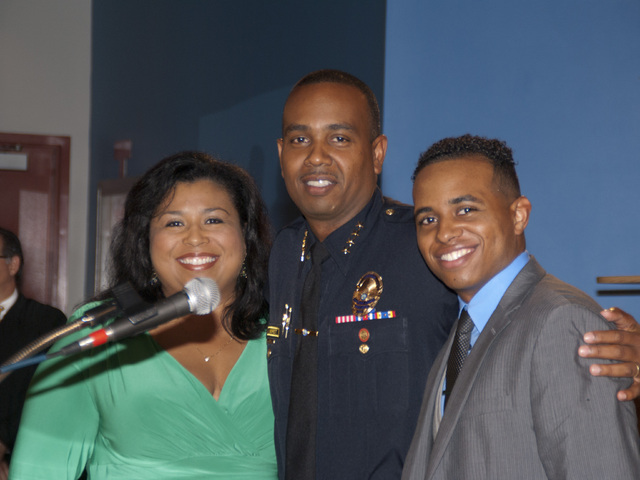
When I left Guyana with my parents and sister, I never imagined I would be where I am today. My parents had the strength to migrate from not just one country but two countries. The opportunity to swear in those new officers made me realize how lucky my family and I are.

We are lucky to live, work, and recreate in a beautiful city with people from many different cultures, which makes me realize that our differences can be the glue that holds us together.

This endeavor to help others has led me to more than 24 years of public service at the federal, state, municipal and county government levels. I can truly tell everyone that great things are made in America, and this is definitely the land of opportunity. For if it was not for the emphasis on education and good family values, I could not be where I am today.

Just like so many other Cuban-Americans, we came to Miami to escape the ravages of the Communist regime that had taken over our island-nation.

We were lucky enough to still be able to come on a regularly scheduled Pan Am flight. My parents obtained their visas to leave Cuba in November 1961 and were forced to leave their two children behind.

Those were torturous weeks waiting to see if we were ever going to see our parents again. However, God was looking over us and my brother and I took our first-ever airplane ride on December 1, 1961, from Havana, Cuba, to Miami, Florida.

I remember looking out the window and, as we prepared to land, I saw my mother, father and cousins standing on a terrace on the roof of the airport. Little did I know then that this terrace would be one of the places where we would frequently spend Sunday afternoons – it was free entertainment!

Since we were only able to bring some clothes and had no money whatsoever, our family discovered all the places that provided diversion for my brother, my cousins, and me for free. So we frequently went to the beach (Crandon Park or South Beach), Lincoln Road, the airport, Morningside Park, and Bayfront Park. All these places still exist today, but in a very different way.

South Beach had a dog track right by where Government Cut is and there was no pier. There were rocks that all the kids would climb on and jump from into the water. Lincoln Road was similar to today, but it did not have all the high-end restaurants and it was not as crowded.

There were simple shops, a Carvel Ice Cream shop and a little tram that would take you from one end of Lincoln Road to the other for, I think, 10 cents.

There was no Bayside Marketplace at Bayfront Park – actually, it was really just a big stretch of grass along the Bay. The airport was tiny and you would still have to walk to the tarmac to get on and off planes. The rooftop terrace was very nice to spend time hearing the roar of planes taking off.

Our family settled in what is now called Wynwood. I really do not know if that area had a name then, but I do not think so. We referred to the general area as “el Norwes” (the Northwest). The building that we lived in is actually still there, but the area has changed dramatically.

There was no Miami skyline to be seen and Midtown was not even a thought in anyone’s mind. In fact, having come from Havana, a bustling city with a lot of nightlife and bright neon signs, Miami seemed like a sleepy town then and reminded me more of the town where I was born, rural Moron, Camaguey.

Somehow, it seemed that half of Moron settled within the same block of NW 32 Street. By 1967, when we bought our first house and moved to Hialeah, the entire two blocks between Miami Avenue and NW 2 Avenue seemed to be inhabited by “Moroñeros.”

It was a great childhood there. Everyone knew everyone, we rode our bikes freely without the concerns that seem to worry every parent today, we played “hide-and-seek” throughout the entire block with dozens of kids, and on rainy days we would play Monopoly.

There was no Publix or Dadeland Mall. The only large supermarket in the area was a place called Shell near NW 54 St. We bought our groceries at “Paul’s Grocery Store” on the corner of Miami Avenue and 29th Street and took the bus for a few stops to shop downtown at places like Richards, Kress, Lerner’s, Burdine’s, and McCrory’s. My mother and I loved to have corn dogs at the McCrory’s luncheonette.

I went to Buena Vista Elementary School where I was first called a “spick.” I can still remember the boy’s name: Juan (!). He was taken a little aback by my non-reaction – I had no idea what it meant. I asked him, he explained it to me, and we became good friends. Still not sure what a boy named Juan was doing calling me a spick, though! Fortunately, I never heard the term (nor any other derogatory name) directed at me again.

Later, I went to Miami Edison Junior High, which was bulldozed out of existence several years ago. My brother graduated from Miami Edison Senior High, which was where Edison Middle sits now. We loved going to the Orange Bowl for the Red Raiders games – especially when we played our main rivals – the Stingarees from Miami High.

My father was a very resourceful, intelligent, and ambitious man. Within a couple of months of arriving in this great country, he owned his first gas station – on NW 7th Avenue near 50 Street.

The pumps were manned at the time – no self-service then. He provided full service and automotive repair. My mother pumped gas, checked the oil, radiators, put air in the tires, and cleaned the car windows.

After school and during summers, my brother also worked at the station. I always wanted to work there, but my father would not let me – I was a girl and this was well before feminism and the time, like now, when everyone pumps their own gas.

Within a short time, my father owned several gas stations throughout Miami and we saved enough to buy a house in Hialeah. Hialeah had not yet become the Cuban and Latin-American haven it is today. We were actually only the second Latin family on our block in 1967.

My mother, who had never worked a day in her life before coming here, was also incredibly hard-working. Initially, she worked the night-shift at a shoe factory nearby. Her shift started at 11 P.M. and ended at 7 A.M. She would arrive home just in time to get us kids ready for school. She would rest while we were in school, but also clean the house and get dinner ready. Once we were tucked into bed, she would go to work.

Eventually, she was able to transfer to the day-shift. Then she went to school in the evenings to learn to speak English and become a beautician. She received a beautician’s license and opened up her own beauty shop on Collins Avenue and 23 Street.

Both my parents accomplished this when they were already in their forties and fifties, in a new country whose language and culture was totally foreign to them. Hardly anyone spoke Spanish then. Both of their children went to college and received advanced degrees – mainly, I believe, as a result of our parents’ example and expectations.

Although I went away to school and have traveled extensively, Miami remains home and will always be. This is where I grew up, where my parents brought us seeking to raise their children in a free land where opportunity is available for all.

I appreciate all that Miami has given us and I try to give back whenever I am able. Coincidentally, a few years ago I moved to the Morningside area, right down the street from the old park that I used to frequent as a kid. It is still beautiful!

Translate »