Skip to content
Named Best Museum 2022
by Miami New Times

I was born in Managua, Nicaragua, in 1977. I moved to San Francisco with my family when I was 3, and when I was 5 we moved to Miami where I grew up. My mom didn’t like the San Francisco weather and heard Miami was more Latino, so she wanted to be here, and she never left.

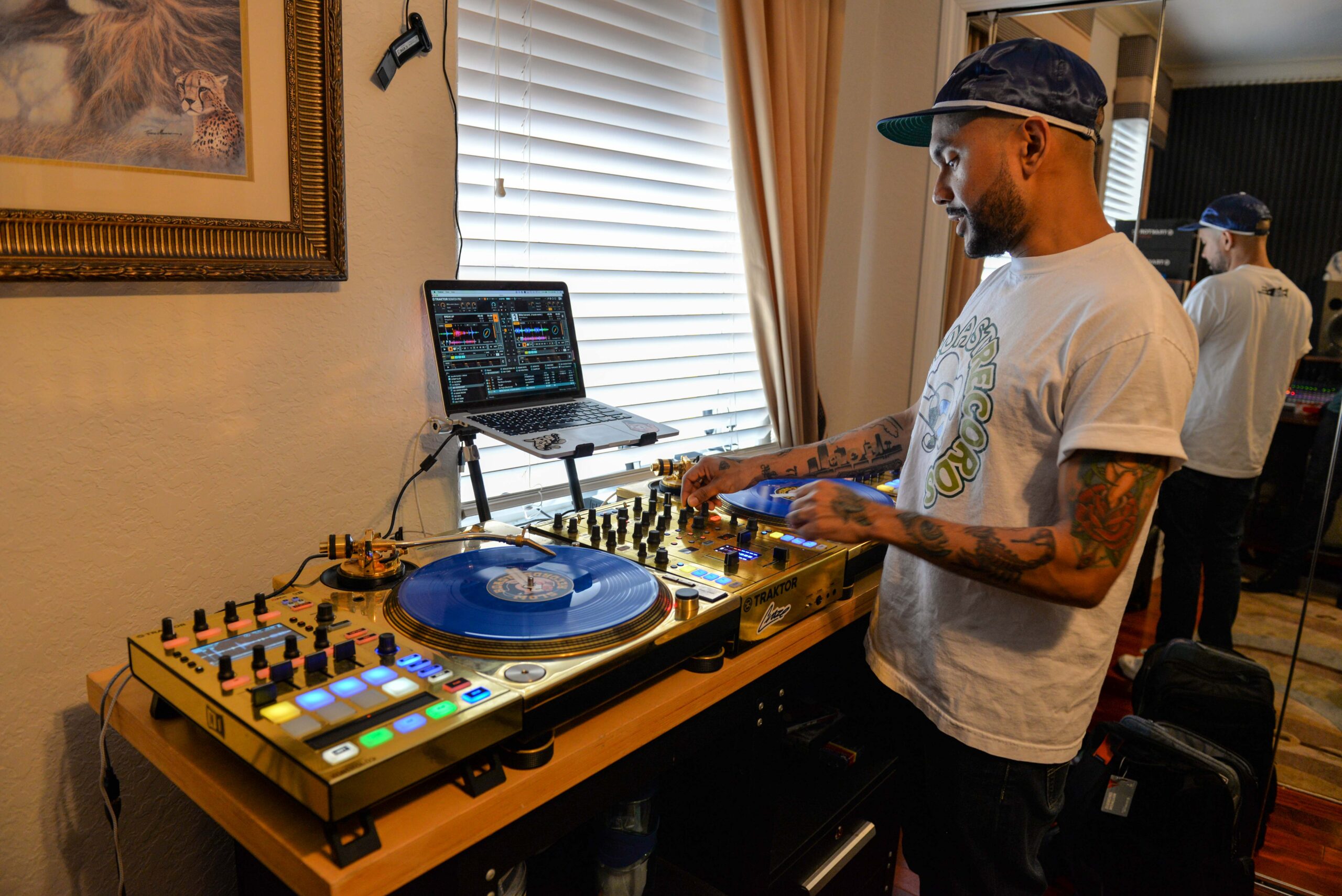
When I was around 13, my brother began DJing with my cousin. I started playing around with the records, and that’s how I got into DJing. At that time, back in the early 1990s, it was all radio DJs like DJ Laz, Eddie B, and DJs on records like Magic Mike and Jock D. There were VHS tapes, like the New Music Seminar battle in New York, the DMC DJ Competition videos, and that was it. If you wanted to learn about DJing, you needed to get a VHS tape or listen to the radio and record stuff while trying to mimic it.

Being from Miami, which has a very Caribbean vibe, influenced me a lot. There’s a lot of bass culture here, not just Miami bass, but also dub, reggae, merengue, salsa. It’s very bass-driven music. Miami bass and freestyle music were the first styles of music that I was mixing. That was what was playing on the radio when I was growing up. There was no hip hop, no electronic music, no nothing – it was just Miami bass, freestyle music, salsa and merengue on Power 96.

Back then it was all about record digging. You had to find the record that said what you wanted to say. You went to the record store, and you might be there for hours digging through records, listening to new music, and discovering stuff. It was part of the culture. Every weekend, my boys and I would get together and go to the record store and see what we could find.

I was practicing a lot, and when I was about 16, I entered my first competition. I won because I was this little kid stepping against this 20-year-old guy. I had mad attitude and records that dissed him. That was my first time on stage, and I was already winning. After that, I knew I wanted to be a DJ.

The competitions were just part of hip-hop culture. There were breaking competitions, emcee competitions, DJ competitions. As long as hip hop has been around, it’s been competitive. I was into the whole culture, but I just couldn’t do it all. DJing was the only thing I felt that I was good at, and that’s what I focused on. Back then, hip-hop culture gave you status. It was people who wanted to be the best at what they did. And for me, it was DJing.

I wanted more. I was practicing more, watching more videos, and then I met my first manager, G Smooth. He entered me into my first DMC regionals in Philadelphia. I lost. So I came back, practiced more, and went to New York for a Zulu Nation battle. I won that two years in a row.

In the early days, when I was just battling, I started a crew with A-Trak called The Allies, and we were on top of the whole DJ battle world. We started traveling the world and winning battles. We were known to incorporate all of the elements of turntablism (the art of manipulating record players and transforming them into musical instruments) into one. We weren’t just good at scratching or beat juggling or body tricks. We were good at everything.

I was also rocking some clubs in Miami. I was DJing at one of the first big, real hip-hop clubs. This club, The Gates, was bringing big names like Fugees, Biggie Smalls, and Wu-Tang. I was the resident DJ, so it was my stomping ground for a couple of years. I was also scratching up jungle music, hip hop, and Miami bass at parties and rave clubs.

At the rave clubs, it was more about psychedelics, freedom, and experimentation with everything. At the hip hop clubs, it about the culture, the style of dressing, and talking, and at Miami Bass freestyle parties, it was just Miami. I wanted to try it all and experience it all.

In 2001, I was named America’s Best DJ by Time Magazine. That was tight. I’ve won the World ITF Scratch Off Championship, Zulu Nation battles, the Source battle, and the 2015 Global Spin Turntablist of the Year. I’m most proud of being the three-time consecutive DMC World Champion. My winning streak has never been matched, so now I’m in the books. It was in London, and I flew my parents out there for it. It was awesome.

After that, I quit. I’m not competing, but I’m still making routines. I put out a new routine almost two years ago with a message within it about the state of DJing, and what’s going on now with the whole culture.

It was at Ultra Music Fest that I noticed that DJing had started to become different. DJs just stand up there and cheerlead the whole time with fireworks. It’s like a weird pep rally and not about the music anymore. I saw a Tosh.0 episode and he said, “Anyone can DJ. Just press play and you’re a DJ.” He was right, it is a joke now. So I decided to make a new routine and use that message.

I used the audio clip, footage of the people that I think are ruining DJing, and I busted out this new routine on video. It reminded people that the culture is not just about the party – it’s about turntables, and DJing, and crowd-rocking. People really took the message and the whole DJ culture blew up after that. Instead of pushing it on people, I started focusing on showing them my mixes and my new routines.

I like people who do great things by pushing it to the next level, being original, standing out, being a leader, and being different, period. You have to make people question everything, and give people something new and fresh.

I run my label (Slow Roast Records), make music for my label, and DJ. The number one thing is that I’m doing what I love. That’s what I value most. That, and that I can provide for my family. My upbringing was completely different. It’s cool to be able to give my daughter what she wants or my wife whatever she wants. I do what I love and travel the world doing it, and I’m able to provide. I wake up every morning and it’s fun. I would not want to be doing anything else but this.

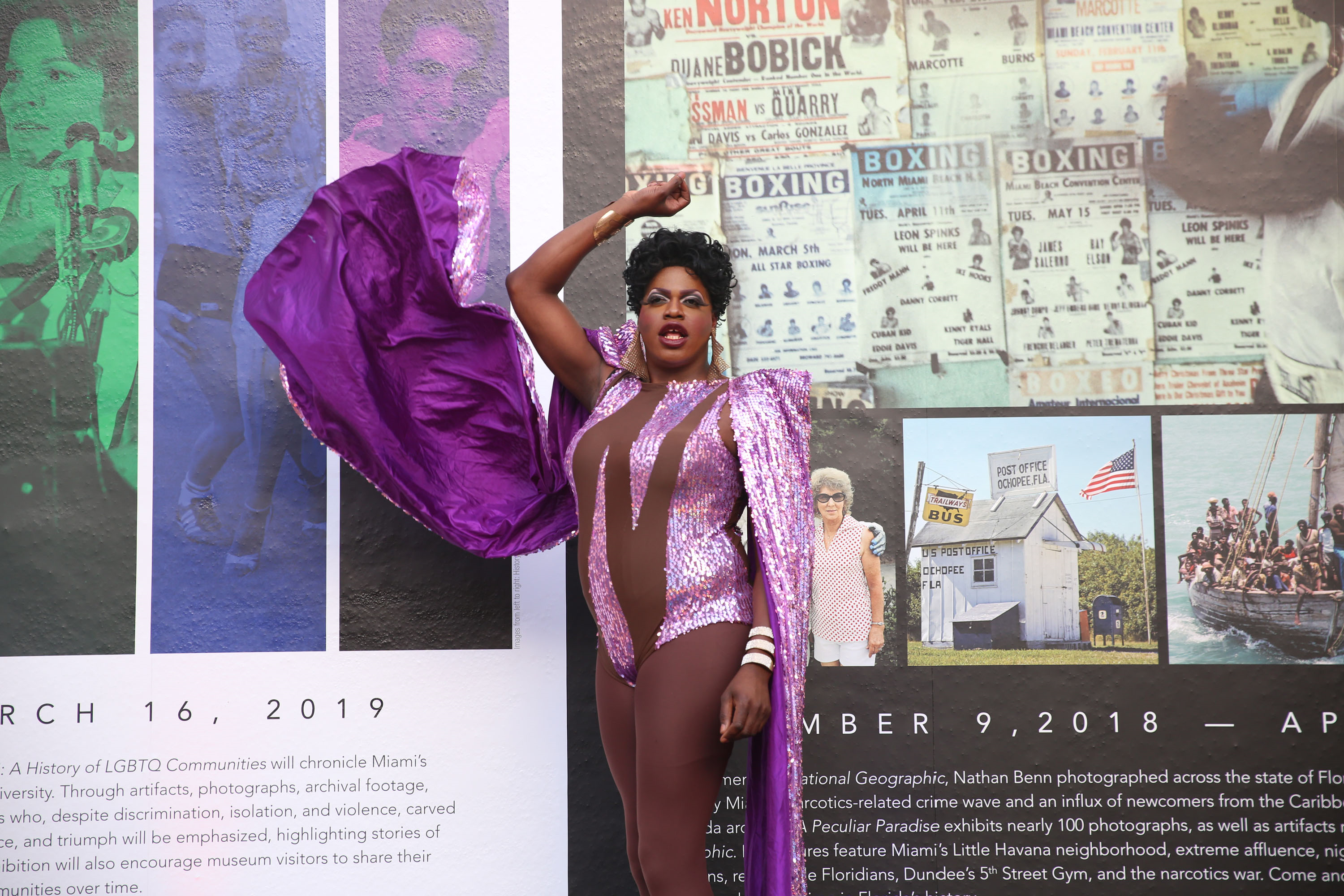
I am Tiffany Fantasia when I am performing and I’m Henry when I’m out. Only when I’m still in drag and I’m talking about business does Henry come back out.

I was born in Riviera Beach in 1982. When I was 2, my family moved to Homestead. My parents were teachers and they both got teaching positions in Homestead. We lived in the area until Hurricane Andrew hit and then we moved into our place in West Kendall.

When I saw Ru Paul on TV doing her thing, I didn’t think anything of it. I saw comedians dressing up in drag doing their acts as a character, and I just felt it was part of art. If you asked me back then if I was gonna be a drag queen the answer would’ve been, “Hell no.” I was gonna be a live singer doing my thing. I was gonna get a record deal. I was gonna tour the world and be famous. I had no ambition of being a drag queen.

Then a friend of mine asked me to go to a show with him at Twist, a local night club. He got a whole bunch of us, and we all got in drag and we did it. I had a good time. I made about $10 in tips and I was a broke college student at that time. That was back when $10 could fill up your tank. It was partially the tips, plus the love of performing, so I just kept doing it and doing it. Once I started getting paid and getting recognized it was fun. It was like this rush. You’re a diva and no one can stop you, you know. It’s a thrill I still get today.

There are no rules in drag but to look your best. Whatever character you’re playing, whatever you’re doing, look your best. Be polished. Just have it together.

Emceeing is a performance. It’s an art. My family has always been good at storytelling. They are the funniest storytellers I know. When the microphone kind of fell into my hand, I just naturally had the knack. And you learn how to develop those skills. I can plan a routine out completely, but something can happen during the number that can change everything so I have to be flexible and go with the flow and just make it happen.

That spontaneity is within both performance and emceeing. Performance involves more preparation, but I’ve done emceeing for so long now that it’s kind of like clockwork. The audience is the reason why we’re performing and they play a major role. If they’re not happy, I’m trying to figure out what the hell I’m doing wrong, to fix the situation. It’s so diverse – men, women, old, young, black, white, in between, rich, poor. You name it, I’ve performed for them.

I’m always true to myself and it’s gotten me to this point. I found that trying to emulate somebody else never got me anywhere. That’s the quickest way for me to lose, so I have to be authentic. I’ve turned down gigs and song requests because I wasn’t comfortable. You need to develop your own character and do it the right way. For my career, it’s been magical for me to be authentic.

Usually, if you decide to do drag, and somebody takes you under their wing, then they’re your drag mother or drag father. You take on their last name if they let you. Some people are very particular about that. You have to earn that right. Once they feel you’re at a certain level, they let you take the name.

The name Tiffany was given to me by the first person who did my makeup. Her name was Brandy. She said, “You’re not like the other black girls.” Most of the other girls had very unique African-type names that nobody could spell. She said, “You’re not like them, you’re different. I’m going to call you Tiffany.”

My last name changed several times over the years before it became Phillips, which was my drag mother’s name. Then Fantasia came along from American Idol. Everyone was saying, “You look like Fantasia.” I saw her and I thought, “Okay, we do kind of look alike,” so I made Fantasia my middle name. From a marquee standpoint, it was just too long, so I dropped the Phillips and became Tiffany Fantasia.

There’s such a wide range of femininity, and for me, it’s in the walk. That’s probably the most feminine part when I’m really feeling myself and I’m doing that walk. Everybody is a “girl.” I don’t care how straight you are or how gay you are. I don’t care if you’re a man, woman, or transgender, you’re a girl. For me it’s not a gender thing, it’s a term of endearment. Everybody is a girl, it doesn’t matter: You cool, but you a girl.

There are several reasons why I do what I do. Why would you do things that you don’t want to do, that make you unhappy? When I fell into drag I was happy because I love to perform, and because it makes me happy, that in turn makes other people happy and helps them deal with the struggle of day-to-day life. I can’t tell you how many times people have come to me and said, “My husband died and I haven’t been happy in months and I saw your show and you made me laugh again,” or, “I was on the verge of committing suicide and then I came to your show and you always cheer me up and make me rethink life.” You start to hear those personal stories about how you brought joy to somebody and helped them deal with a serious situation. You realize how much you mean to people and that’s why you keep doing it. You don’t want to stop. It’s a back and forth, it comes back to you.

This story was translated from Spanish.

My name is Iris Dalia Diaz. I was born in Camaguey, Cuba, in 1949. I left Cuba in 1985 to go to Guatemala, and then Mexico, and then I arrived here in the United States.

I had a friend from Camaguey who worked at Sergio’s Cuban Kitchen & Bar and he told me, “When there’s an opportunity, you’re going to come to Sergio’s.” In 1987, the opportunity was there and I started immediately. I’ve been working at the same location and at the same spot, the counter, since I moved to Miami.

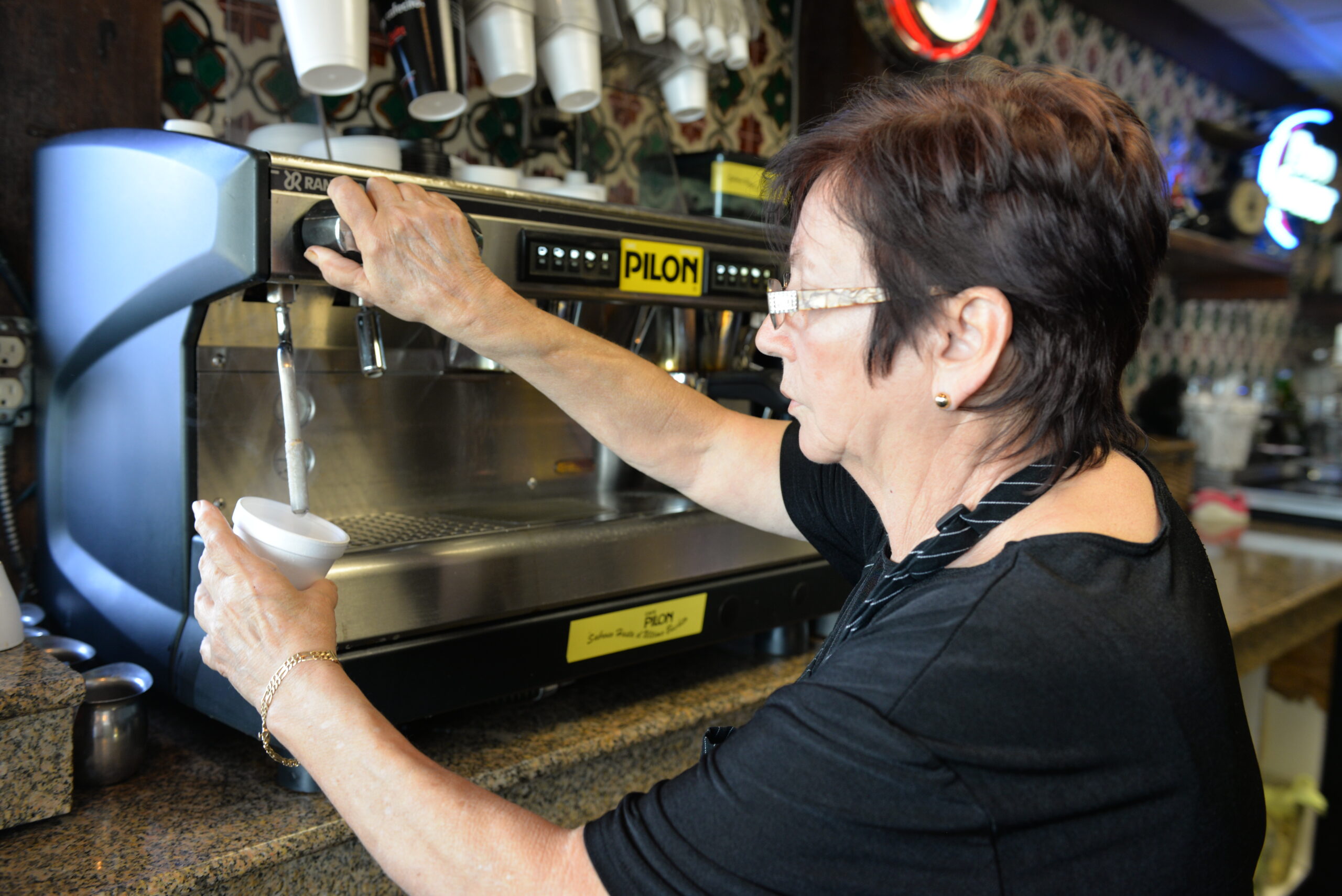
At the counter, I grab the orders. I attend the counter and the window, and I take orders to the window. I make cafecitos – cortadito, café espresso, colada, café con leche. Customers really like the café con leche.

We also serve croquetas, empanadas, papa rellena, sandwiches – everything that people want to take with them.

We’ve had a steady clientele in the three decades I’ve worked at Sergio’s. Many people who used to come here have passed away, or moved on, but we now have lots of Venezuelans and people from other countries. It’s not just a Cuban clientele anymore.

They come all seven days of the week. I arrive at work at 5:30 a.m. and prepare the window to open at 6:00. When it’s open, people are already there, waiting to buy. In one day, 100 people might come to the window. I’m at work five days out of the week, from Monday to Friday. Although I am retired, I still need to work and make money.

I’ve lived all of these years in Westchester. I love it here. I can’t hide anywhere in this area. I walk here and everyone knows me, everyone talks to me, everyone stops me. The people are very lovely.

There is a little girl who is 4 years old who comes up and says, “Abuela! Mennn! Come!” to let me know where she is at the table. She’s the cutest.

Other people call me “Camaguey,” like “Camagueeeyyy!”

I am very passionate about making cafecito. I am a graduate in chemical analytics; I worked in that for 11 years in Cuba, in a candy factory.

But for me, I have loved preparing café con leche since I was 9 years old. My grandmother would get everything dangerous out of the way, and I would prepare the mix. I love when people tell me, “The café con leche came out delicious. It’s divine.” The flavor of the perfect cafecito, it’s the best. It’s very bitter and also very sweet. You can feel that it’s café. Pilón is the best brand for me.

Using the espresso machine, I make the coffee by shooting the water from the machine through the espresso, and I add sugar and milk. The coffee machine gives it natural foam. You put the sugar in after that. This is what my grandmother taught me and I haven’t varied it, unless someone asks me for more or less or no sugar. There are also people who want it darker or lighter, and there’s a saying here that whatever you want for your café, we’ll make it.

The secret is that I put love into what I do. I like working with people. There are times when the customers treat me as a confidante. I like recommending remedies to people, like a tea with natural ingredients. I’m a psychologist, I’m a psychiatrist, I’m a doctor, I’m everything.

I give the public a service that I feel I give from my heart. I’m not feigning this; I mean it when I say it’s from my heart. It’s not about being distinguished or anything like that. It’s something that is born to me, to be an attentive person.

It’s very sociable here. If someone enters the restaurant and they don’t say hello to me, they haven’t actually entered. If I don’t know them, I’ll know that they don’t come here much. But if I know them, they’ll say, “Hello, Iris! How’s your family Iris?” and I’ll have their meal ready. In my entire time working here I’ve prepared the orders for regulars because they stay the same, and if they ask for something different I change it. They say “lo mismo, the same please,” or “hay cambio, something different.”

It’s a family thing, too. In this whole area, there are the families whose children have moved away from Florida and their children want to see me, and the parents share information about their son who got married, with photos. They bring me photos, tell me they love me and that their children are finally learning Spanish, that kind of thing. It’s a very beautiful thing.

The mother, the owner, has her children, who have all worked here. Now Carlos is the owner, and he has two children. I knew him when he was only 4 years old. So, for me, it’s always been family here.

The connection is with cafecito and Miami. It doesn’t matter the nationality of the person who drinks it. Some take it strong, some take it with milk, but everyone drinks it.

I believe that Sergio’s and the little serving windows contribute to this identity. It unites everyone; it unites families. You come and there’s a person you haven’t seen in a year. There have been a lot of encounters, many “Aye, Fulana, do you remember me?”

In the window, you see everything.

It was noon, 52 years ago on July 15, 1959, when I walked up the steps at Miami’s Dinner Key City Hall to begin a six-month internship for my master’s degree in governmental administration from the University of Pennsylvania’s Wharton School. Dutch Willard was the city manager, and I had no inkling that I would work in that building over the next eight years, nor that I would come back 36 years later as city manager during a time of intense distress.

How I got there is an amazing story that really began in the Air Force in 1956 when we flew a low-level training mission from Fort Pierce to Key West and back to Palm Beach. Fortuitously, that flight took place on a magnificent, sunny, cloud- less Florida day during which, having been an avid fisherman since I was 5, I fell head over heels in love with all the blue green water. It was on that flight that I determined that Florida was where I wanted to work and live.

Internships at Wharton were awarded based on class ranking, and because I was ranked third in my class I was able to select an internship in Fort Lauderdale with City Manager Bill Veeder. Leaving my wife and two daughters on Long Island, I rented a U-Haul trailer and was packed and ready to go when I received an urgent call from Dr. Steve Sweeney at Wharton asking me to come to his office. Dr. Sweeney told me that the Fort Lauderdale city commissioners had, the night before, fired their city manager and canceled my internship. Dr. Sweeney also said that all the internships had been awarded and there were none left.

I sat there in stunned silence wondering what I would do but was heartened when Dr. Sweeney said that he would authorize me to stay at Wharton as a Ph.D. candidate with a full scholarship. It was a generous offer that I readily accepted. I spent the rest of the day looking for another apartment because mine had already been rented. At four that afternoon, I received another call from Dr. Sweeney, asking me to again come to his office.

He began by saying, “You are not going to believe this, but Miami City Manager Dutch Willard just called and guess what he wanted.

“I cautiously replied, ‘An intern?'”

Sweeney smiled and said, “Merrett, the Lord works in mysterious ways. I told Willard that I had just the man or him. He is one of our best students, and he wanted to intern in Florida. He’s already packed and will leave at six in the morning. He should be in Miami in two or three days.”

After renting a small duplex in Silver Bluff, I drove back to Long Island and brought my family with me o Miami. My internship was exciting, and Mr. Willard was a delightful southern gentleman. I was paid 150 per month and still have the many position papers I wrote. Two of them stand out and would prove o have heavy consequences in the coming months. The first was a complete reorganization of the city government, and the other outlined how to reform a politically manipulated civil service system.

I wrote those reports as a student, analyzing function, lines of communication, accountability, line/staff relationships, etc., paying little regard to the political implications for politicians, unions or an entrenched bureaucracy. I believed they were only for my city manager’s and my Wharton professor’s eyes. But Willard, or reasons I never really understood, released them publicly under his signature, which caused a furor.

I learned later that Willard was on shaky ground with the Miami City Commission. It also made me a marked man, and shortly thereafter when Willard resigned to take over a Coral Gables bank, I fully expected to be fired.

But that wasn’t to be because the commission appointed Mel Reese, a professional manager, and my future was secure for the next eight years until I became Clearwater city manager in 1967.

I worked on many projects in Miami. The other assistant city manager, my good friend, Paul Andrews, who later became city manager, was responsible for engineering, public works, building. When Kennedy Park was nothing but mangroves, I filed the Open Space grant request. I also applied for the grant that funded the Coconut Grove Library and oversaw construction of Elizabeth Virrick Park in Coconut Grove and the Japanese Tea Garden.

A challenging assignment involved leading an investigation into the City’s Department of Slum Rehabilitation, which was supposed to enforce minimum housing codes in the inner city. After examining city records and doing field investigations, it proved to be a scandalous mess with minimal to nonexistent code enforcement. The director and several inspectors were dismissed.

There were, however, some great elected officials I worked with, including Alice Wainwright, the first woman commissioner, Athalie Range, the first black commissioner, and former Mayor Robert King High.

City Manager Dutch Willard’s call to Dr. Sweeney in 1959 precipitated an amazing chain of events for me. Now, 52 years later, I appreciate how important it proved to be for my working destiny, to say nothing of its impact on my entire life. It was the beginning of what has proven to be a wonderful, exciting and challenging journey in public service. I’ve always felt very fortunate to serve my fellow citizens during good times and challenging times, and I am particularly proud to call Miami my home.

Merrett R. Stierheim served twice as manager of Miami-Dade County. He is also a former superintendent of the Miami-Dade County school system and former city manager of Miami.

Nineteen twenty-six was a notable year in the history of the city by the bay. A sense of giddiness prevailed, with real-estate sales booming and people arriving in record numbers to make their fortunes. The Biltmore Hotel was completed and became the centerpiece of Coral Gables.

Burt Bolton, a World War I veteran who lived in Atlanta after his discharge, decided to try his luck by moving to Miami. (he called it “Miamuh”) He was a born salesman and would drive his Model T down the streets of Miami with an oilcloth cover over the spare tire. On that oilcloth cover was painted, “They all call me Slim.” He would call out to everyone he saw, “How ya doin’?” And after a short while, everyone who saw him in his familiar Model T would shout back, “How ya doin’, Slim.”

Jessie Isabel Unruh, a native of Mobile, Ala., came to Miami in the same year. Her boss was interested in making some real-estate investments in Fulford By-the-Sea, a community that is now known as Ojus in Northeast Dade County. And then it happened. As everyone knows, that year Miami was hit by one of the most devastating hurricanes ever recorded. That all but ended the real-estate boom, and many of the newcomers returned to their places of origin.

Jessie met Slim. She decided not to return to Mobile and married Slim in 1928. This union produced their only child, Burt Bolton Jr. My dad was a big fan of Al Jolson, and gave his son the nickname of Sonny after he heard Jolson’s rendition of the song Sonny Boy. Sonny was born at Victoria Hospital on Northwest Third Street between Ninth and 10th avenues.

My growing up in Miami back in the ’30s was a truly wonderful experience. In 1933, the Disney Studios were trying to promote their popular Mickey Mouse character and sponsored a contest that would involve the election of one child who would be known as the Head Mickey Mouse. We lived near the Tower Theater on Southwest Eighth Street, where the contest was held. According to the rules, everyone got to vote for their favorite child by writing his name on the lid of a Mickey Mouse Ice Cream cup and turning it in at the theater. In addition, the Miami Daily News agreed to co-sponsor the contest, and you could also cast votes by taking a two-week subscription. My dad was a great salesman. As it turned out, I was elected Head Mickey Mouse and was presented with a silver loving cup and the keys to a brand new Austin Roadster Convertible on the stage of the Tower Theater.

I can remember the trips down to Dinner Key with my parents, where we watched the big Pan American clipper planes land in Biscayne Bay and saw the divers go down to attach the wheels on the planes so they could be towed up onto land. I still have fond memories of the events that my parents and I attended at the Harvey Seeds American Legion Post on the Bay at Northeast 66th Street. My dad was a member of the Championship Drum and Bugle Corp., and I was a member of the Sons of the Legion Corp. In later years, my wife and I, along with our married friends, would celebrate New Year’s Eve by attending the dances held at the open-air patio near the Bay at the Legion Home.

My first job after graduating from Gesu High School in downtown Miami was as a runner at Florida National Bank, which was headquartered in the Alfred I. DuPont Building. One of my duties was to raise the flag at the top of the building, and I was always in awe when I stood on the tallest spot in Florida at that time.

Geraldine “Gerry” Cappelleto and her parents used to make trips every few years to Miami, and Gerry would sometimes spend the weekends at her grandfather’s fish camp on Tamiami Trail. In the late 1930s, the Fish Camp was known as the Blue Shanty. Later, the building burned down and was replaced by a tourist attraction that is now known as Everglades Safari.

I met Gerry while she was a senior at Miami High and took her snake hunting in the Everglades on our very first date. In the ’40s most of my guy friends would go out on weekend snake-hunting expeditions, so I was delighted to hear that Gerry was not afraid to handle snakes, a knack she learned at her grandfather’s fish camp when she was only 8. Ya gotta love a girl who can handle snakes. We were married in 1949 and have shared over 60 wonderful years together.

Our Miami Story begins in 1939 when our dad, Jack Graham, came to Miami from Philly on vacation with his friends. They played golf at the Biltmore Hotel, watched the Pan Am Clippers land at Dinner Key and fell in love with Florida.

At age 12, dad had learned to play golf by caddying in the Poconos in the summers, so being able to play golf year-round was a dream come true. Two years later, he transferred with AT&T and moved my sister Claire and me, along with our grandparents, to Miami.

It was so exciting for a 7- and 8-year old to ride on the “Silver Meteor” train. On the way to the dining car, our grandpop would hold our hand as we jumped across the opening between the cars! Dad had a new 1941 Packard convertible and we rode down Biscayne Boulevard, with the top down, waving from the back seat.

We lived on Miami Beach around 12th Street, by the Dorset and Royal Palm, and swam every day. The life guards taught us to swim by having us follow them as they rowed the dinghies. They said, “Relax, learn to tread water and float. If you ever fall out of the boat, or in a pool or canal, just turn over and float till help comes.”

Since many of the hotels on the beach didn’t have restaurants, the sailors that were stationed there would march along Collins Avenue on their way to eat. We had fun trying to sing along with them.

My sister and I would board with a family during the school term, and went to Shenandoah Elementary and Junior High. Dad took us to places like the Biltmore pool, and we saw Esther Williams and then Johnny Weismuller’s shows. In the late ’40s, we climbed up the stairs at the Cape Florida Lighthouse at the end of Key Biscayne.

In 1946, Dad married Betty Zorn, who was a service representative at Southern Bell. They built a house at 28th Street in North Grove, where our sister and brother (Janet and Richard) were born. Our yard was small, but we enjoyed avocado, mango, key lime and other fruit trees.

We played intramural sports at Shenandoah Park and hung out at Fader’s drug store and the Venetian Skating Rink. At Miami High, we were active in sports and the chorus. We even got to participate in the halftime shows at the Orange Bowl games!!

In 1948, our family joined Bryan Memorial Methodist Church on Main Highway in the Grove, and were active members for over 40 years. We made many lifelong friends, including the Perrys, Crums, Readys, Fowlers, Walkers, MacDonells and the Larkins.

Claire and I joined the youth group on Sunday nights and enjoyed many beach parties, hay rides and went to MYF Youth camps in Leesburg in Central Florida. We even got to swim in the huge pool next door to the church at “El Jardín,” before it became Carrolton School.

Dad was the chief tech/electrician at all church functions, and Betty was active in the Florida Conference, Methodist Women, and helped maintain the church library. He enjoyed golf well into his ’80s with the “Prime Timers” (a 75-and-over group of friends at Coral Gables Country Club).

They moved to St. Augustine to be near Janet and Richard, who had moved there. Dad passed away in 2005 at the age of 96. Betty still lives in their home and is well, at the age of 90!

My story begins in the fall of 1925 when both of my grandparents and their families came to Miami. My mother’s parents, Frank and Laura Wingert, came from Springfield, Ohio, and my father’s parents Ellsworth (Buddy) and Emma Worthington, from Villa Park, Ill.

Both families came because of the weather and hoped they could find steady work.

My paternal grandfather was a painter/wallpaper hanger who worked most of his years in the Coral Gables and Coconut Grove area. My maternal grandfather sold cars on Northwest Seventh Avenue and Seventh Street.

When my mother’s parents and family arrived, they temporarily lived in what was known as “Tent City,” due to the housing shortage. My grandmother opened a small bakery in the neighborhood known as “Lemon City,” which is now known as the Edison area.

My maternal grandparents were able to rent a house. When my mom’s family moved from Tent City six months later they settled in Allapattah. Allapattah Baptist Church was the hubbub of youth activity, as there weren’t many venues for young people. The Sunday evening youth program was where my parents met.

My mother graduated from Edison Senior High, and my father from Miami Jackson. I attended Jackson 28 years later and we had the same math teacher, Mr. Worley. My father was a student in Mr. Worley’s early days; I, in the last year before he retired.

My parents began a courtship, Miami was booming and work was plentiful. My maternal grandmother, however, was terrified when the 1926 hurricane devastated the city.

The family was frightened, as they did not know what a hurricane could really do. They did not board up their house and when a window blew in, my grandfather nailed the ironing board over it. My grandmother and the children would not come out from their hiding place for some time.

They never found their chickens or their pet rabbit. From then on, my grandmother was extremely nervous when any storm approached up until her death in 1962.

My parents tell of going to the beach every weekend and there was nothing there. They have fond memories of the Venetian Pool, church-sponsored events and the wonderful Olympia Theater with live stage shows and the latest movies. There were parties at the homes of friends and their first cars – all of this on very little money.

Eventually my parents drove up to Fort Lauderdale and were married at the courthouse with a few friends and family members present. My father and his two brothers worked at The Miami Herald, my father stayed in the newspaper business until he retired from the Sun Sentinel.

World War II changed everyone’s lives. My father began to build patrol torpedo boats at Paul Prigg Boat Works on the Miami River.

My father went back to The Miami Herald after the war and built three small frame homes for his sister and her family, his sister-in-law with her four small children and himself.

That is where my memories begin – the house on Northwest Seventh Street and 44th Avenue, and my cousins just a block or two west on 46th Avenue and Seventh Street. The pavement ended at about 42nd Avenue (LeJeune Road) and Seventh Street. The city bus ended the route at LeJeune and Seventh.

It was a long hot walk home, but what a treat it was to go downtown. If we were lucky, we would have lunch upstairs at Kress’s Cafeteria. Like most families we were a one-car family. Living out in the country we had chickens, turkeys, a pony and our pet cat and dog.

I began school at Kinloch Park Elementary. We were, and are, very family-oriented and have wonderful memories of the holidays, especially of Matheson Hammock on the Fourth of July. We were the family who always had one of the two pavilions because someone went there at 6 a.m. to secure them!

My grandfather, father and now my boys were, and are, all fishermen. We spent hours in the Keys, bass fishing at Fish Eating Creek and Lake Okeechobee, picnicking at Haulover, Matheson and most every park. We have made an effort to visit almost every state park in Florida, either camping or renting cabins.

I married my high school sweetheart, Morgan Pearcy in 1958; he graduated from Lindsey Hopkins Technical High School, where he excelled in the electrical program. He completed his dream to start his own business, which we owned for over 20 years. Morgan is still working full time in the electrical field at Fisk Electric.

We began a family of four boys: Mark, Phillip, Danny and Paul. They all graduated from South Miami Senior High, and played Pop Warner football, little league baseball.

As a family we were active in the First United Methodist Church of South Miami.

They all graduated from college and still reside in the South Miami area. We have been, and continue to be, active in the community. We very much enjoy South Florida and all it has to offer.

My father, Hiram L. Hernandez, had an older brother and cousins in Miami so in 1948 he left Havana and emigrated to the United States in search of work and a new life.

He began working at the Ambassador Cafeteria in Miami Beach and later worked at the Governor Cafeteria, now the sight of one of South Beach’s well-known clubs. He told of having met people like Jimmy Durante, famous prize fighters and other entertainers who frequented Miami Beach during the post World War II years. The owners of the Governor Cafeteria had been in Nazi concentration camps, and years later I remember my father explaining the significance of the numbers on their forearms.

My mother, Nora Cuervo, soon left Cuba to join my father, and they were married at the Dade County Courthouse in downtown Miami. My father often joked that the president of the United States had come to town for their wedding, since President Truman’s motorcade was indeed passing the courthouse at the precise moment that my newly married parents were descending the courthouse steps. What a thrill for a couple of young immigrants!

My brother, Hiram and I were born at Jackson Memorial Hospital and the family lived in an apartment building owned by my father’s cousins, the Monte Carlo Apartments on Pennsylvania Avenue in Miami Beach. The Miami Beach City Hall is now located there.

In those early days of no air conditioning we would sleep with the front and back doors open to catch the ocean breezes as they drifted through the efficiency apartment that was home. Every day we walked to the beach at 12th Street and Ocean Drive. We attended Central Beach Elementary School (now Feinberg/Fisher). More than 35 years later my daughter would begin her teaching career at this same school.

For one year we moved to a federal government housing project located on the very southern-most point of Miami Beach. Few people are aware that so close to the opulence of the big Miami Beach hotels, and right across the street from the big-time entertainers who were dining at Joe’s Stone Crab restaurant, there was a federal housing project.

We would spend Sunday afternoons in Hialeah with my father’s brother and his family. Hialeah was pretty “country” in the 1950s and 1960s; horses, small farms and both horse and race car tracks were common. Other times we would travel to downtown Miami to buy fresh fish and hot peanuts at Pier 5 and go to Burdines, especially at Christmas. This was before our yearly visits to Cuba to visit the rest of the extended family. Occasionally we would fish off the rocks along the side of the MacArthur Causeway (which was only two lanes at the time). My father and brother had fishing rods and reels; mom and I did the best we could with a spool of fishing line and a hook.

My parents became United States citizens as soon as they were eligible, and instilled in us a civic pride and love and loyalty to this country that has characterized us throughout our lives. Daddy campaigned to help elect the late Sen. Jack Gordon when he first ran for the Dade County School Board. Later, I too, would become engaged in the political process.

A huge milestone was when my parents were able to purchase a small house in Carol City in 1959 – mostly cow pastures back then, and for the first time we had a yard and a dog. Tired of the long drive to Miami Beach for work, and wanting a better life for his family, Daddy studied hard to earn his real estate salesman’s license and became one of the first Spanish-speaking real estate agents in Miami.

Our house became a temporary refuge for family members, who in the early 1960s fled Cuba’s communism. For quite some time I slept on an old army cot in my parents’ bedroom so that my bedroom could be used by recently arrived relatives. In sixth grade my elementary school teachers assigned me to serve as English tutor and translator for many newly arrived Cuban refugee children. Little did I realize at the time what a huge and important responsibility I was given at such a young age.

I remember during the Cuban Missile Crisis when the military built a base with missiles not far from our home. The school system distributed military-style “dog tags” that would identify children and provide our blood type and religious affiliation in the event of being bombed, and we held periodic air raid drills during school.

These rather somber memories are balanced by other more light-hearted moments of childhood, including long bike rides; visits to Monkey Jungle, Parrot Jungle, Miami Seaquarium, Crandon Park Zoo and the Miami Serpentarium; Skipper Chuck, Ralph Renick, Weaver the Weatherman and Rick Shaw; bus rides from Modernage Furniture in North Dade to the Orange Bowl to watch the Miami Dolphins; movies at the drive-in; parties at Haulover Beach; marching in the Carol City High School band at the Orange Bowl parade; hanging out at Lum’s and dancing at The Place.

My brother and I finished elementary school, junior high and senior high in Carol City and attended the University of Florida – he in 1968 and I in 1969. My parents couldn’t have been prouder. After a stint in the Army my brother returned to Miami and has spent his career working at the place we were born, Jackson Memorial Hospital.

I returned to Miami in 1976, raised my three children here, and have enjoyed a fulfilling career in higher education. The sky is bluer and the emotions more intense in Miami. I have never wanted to live anywhere else.

The year was 1944. My stepdad, Charles Beatty, and my mom, Margaret, and sister Blanche and I lived in an upstairs duplex on 11th Street and Jefferson Avenue in Miami Beach across from Flamingo Park, where the U.S. Army Air Forces trained our boys to serve. My name was Jeanette Seligman at that time.

I used to go to Joe’s Broadway Delicatessen at Washington Avenue near Española Way with my friends to eat quite often. While we were in a line on the sidewalk waiting for a table, we met two young men in uniform. They started a conversation, and we were called in. My girlfriend and I ate a lovely meal.

We went to see a movie on Lincoln Road, and when we left the movie theater, we saw the two nice soldiers we had encountered earlier. This good-looking soldier approached me and asked if he could walk me home. He was so handsome in his immaculately starched uniform that I could not refuse his offer.

His name was Nathan Siegel from Boston, Mass. He told me he was a staff sergeant working in the Army Records Office at the Versailles Hotel.

From then on, we went to dances at the Versailles on Saturday nights to dance under the stars. Tony Martin was in Nathan’s barracks, so I fixed Tony up with one of my friends and we all went together to Saturday night dances.

Then Nathan was shipped to Madison, Wisc. We really missed each other, and after a while, Nate asked me to marry him and go to Madison to do so. He spoke to my mother and asked for my hand, and told her he would take care of me and she would never have to worry! He was such a gentleman.

I did go to Madison, and we were married by a rabbi. Two of his army buddies were our witnesses. Not long after, Nate was shipped overseas to Germany. I flew home to Miami Beach and lived on Michigan Avenue with my mom and stepdad, who owned the Clay Hotel on Washington Avenue and Española Way.

The Clay was a hotel, but there were apartments on Española connected to the hotel, so we moved there. Our first child, Alan, was born in Miami Beach after Nathan was discharged from the Air Force.

Nathan went into the building business and became very successful. We moved to Coral Gables, and then we built a beautiful home on Meridian Avenue and 43rd Street in the Nautilus section of Miami Beach. We lived there with our two sons.

When the boys were older, we moved to Bay Harbor Islands, where Nate had built many apartment buildings.

Eventually, he and I moved to a condo “on the ocean” in Bal Harbour. Our boys were out on their own at this point, and settled in Beverly Hills and Aspen.

We had a wonderful, full life. Nathan passed away at 75, so nothing is the same anymore. He was the problem-solver. I thank God I met such a wonderful soldier.

As for my roots in Florida, my mom, sister and I moved here from New York after my mom became a young widow at age 29. Her parents were living here, and her mother helped her take care of me and my sister. I was 8 and have lived here now all these years.

I’m practically a native, as I’m 95, and have been living here for 87 years, and still love it.

My father, Louis Pallot, arrived in Miami from Massachusetts in 1924. He was not prepared for the big 1926 hurricane that was to come. During the storm, he went to check on his little tire shop on Flagler Street and got caught in the lull, thinking the hurricane had ended. It came back with a fury.

When life in Miami settled down, he sent for my mother, Gertrude, and my toddler brother, Norton. They arrived when people thought the streets of Miami were paved in gold, but it was not long before the stock market crashed and those streets became tarnished.

The Norton Tire Store, named after my oldest brother, did well with all the new highways going south and people following the sun. Plain old hard work was also an ingredient. My family established themselves in the shadow of the Orange Bowl.

I was born six years later in October 1934 at Victoria Hospital. These were simple times, until the Sunday of Dec. 7, 1941, when my family moved across the causeway to Miami Beach and my brother Norton went off to war. Soldiers were in training on Miami Beach and marched in front of our house on 50th and Alton Road to Polo Park.

The late 1940s and 1950s, after the war, were the best of times. Miami and the beaches were thriving. My life at Miami Beach High School was special. Students bonded, there was lots of school spirit, and we danced the “lindy” in the school patio. I met my future husband, Howard Katzen, at age 16 at my best friend’s sweet 16 party. Having lived in Miami all my life, I am able to keep many of my same friends since childhood.

Howard and I both graduated from the University of Miami, as did my two brothers. Brothers Ronald and Norton each married two Glorias, and they graduated from the U. of M. In 1956, with a new baby, Lynn, in tow we moved to newly developing South Miami before there was Dadeland or the Palmetto Expressway. Howard and I went on to have two more children, Bruce and David.

Norton Tire Company thrived after the war. Norton arrived home from military service and assisted my father in developing our family business. We were one of the first businesses to rent cars to tourists out of our second outpost on 15th{+S}t{+r}{+e}{+e}t and Alton Road on Miami Beach. Business boomed as tires became available.

Ronald joined the business and then my husband Howard to round out the management group. Louis Pallot began to take life easier. Norton Tire grew, selling, servicing, and wholesaling tires. We became the largest independent tire dealer in the United States, with 16 stores in the state.

We also were involved in many civic, business, and fraternal organizations. Norton Tire Co. thrived, but there were difficulties as well. In May 1980, the McDuffie riots erupted in the neighborhood. My mother, Howard and I went to Boston for son Bruce’s college graduation that weekend. Flying home on Sunday and landing at Miami International Airport, we saw our main headquarters, warehouse, and business center burning to the ground. The smoke reached up to the sky. Norton Tire Co. recouped, not a day of operation and full customer service was lost, despite the fact that our 80,000 square foot facility – including executive offices, warehouse, accounting department, retread facilities, and retail store – were lost.

Temporary headquarters were established until a new building could be built west of the airport. This trio of my two brothers and husband showed as much capacity for hard work as Louis Pallot did in the early days. With the help of third -generation family members joining the business, trustworthy employees and loyal customers, Norton Tire Co. prospered. We opened a new facility in 1983.

After 70 years in business, we sold our company in 1986 to Goodyear Tire and Rubber Company. We had 40 stores in the state.

Retired life has been good. For over 50 years Howard and I have been a part of the boating community and enjoyed the coasts of Florida and the Keys and the Bahamas. When I see the skyline of Miami from the vantage point of Biscayne Bay, I am reminded of how this city has grown and changed over the years. For 35 years Howard and I have played tennis at Royal Palm Tennis Club, not too far from our home in Coral Gables.

In appreciation for all this community has given to my family, I wanted to give back. I have been a devoted volunteer at Fairchild Tropical Botanic Garden for over 30 years. Our three children, daughter-in- law, and four grandchildren thrive here and our future is here.

Translate »