Skip to content
Named Best Museum 2022
by Miami New Times

Stories of families separated and reunited, of language difficulties, of nostalgia for the old country, of countless vicissitudes, but also of triumph, success, happiness: all immigrants share very similar stories, and mine is no different.

My mom, dad, sister, and I lived in Marianao, Havana, in a huge home with my uncle and aunt, who had a very successful pharmaceutical business. My dad and his brothers owned two auto-parts stores. We were happy.

On that fateful New Year’s Day 1959, when I was just 5 years old, our lives and those of countless other Cubans were forever changed. Two years later, my sister would leave Cuba for Canada – the first exodus of our small but close-knit family.

The next year, Castro officials would call up my dad in the middle of the night and offer a one-way ride to Miami on the African Pilot in exchange for the keys to his business and his car. This was the modus operandi for the Castro government. They would play your desire to leave the country against your assets.

If a person had a business or any other substantial asset, government officials would tap them to see if they were willing to make a deal. There was no halfway – you gave them everything you owned in exchange for the ticket out. You had to hand everything over at a moment’s notice; you did not have a chance to select some things you might want to keep or give to your relatives – it was all or nothing.

My dad took them up on the offer in order to pave the way for my mom and me to join him. A church group from New Jersey sponsored my dad and moved him to Orange, New Jersey, where he worked as a school janitor to earn enough money to prove to the U.S. government my mom and I would not be a public burden.

After enduring an extensive “inventory” of all our belongings by the government (where they would catalog everything you owned before you left and come back to check it again the day before your departure to make sure you didn’t give away, sell, or get rid of anything).

Mom and I left Cuba for Mexico City on a Cubana de Aviacion flight in late October 1965. After four months, in what seemed to me to be a paradise of food, clothing, entertainment – all available for the buying without the “libreta” (the notebook where the government keeps track of your food allotments), we traveled to Orange, New Jersey, in the dead of winter, to join my dad.

My mom and I had not seen him in over four years. We all had to get used to each other again. We lived on the third floor (a semi-attic) of a three-family home. There was only one room which was divided by a sheetrock partition; I slept on the couch and my parents on the bed on the other side. Still it was wonderful to be together again. But painful memories remained on our island – my aunt and uncle were still there with no hope of leaving.

I was enrolled in school midyear and had a very hard time with the language. I was forced to repeat the fifth grade again because the principal didn’t think I could make it in the sixth grade with my poor English. I recall the teacher dictating sentences in English for the class to write down. It was a terrible feeling not to understand a single word and seeing all the kids writing and my own page a complete blank!

Despite this setback, the unfamiliar-yet-beautiful snow, the cold winter, and the long walks to and from school, I learned English quickly. I passed the fifth grade in only four months and was promoted to sixth grade. But I was always teased because of my accent and the way I dressed. There were no Hispanics in my town and my classmates didn’t even know where Cuba was!

Every summer we visited Miami Beach for two weeks (no SoBe then!) and stayed at the White House Hotel. I fondly remember a little restaurant on Washington Avenue that served black beans and avocado salad (something we rarely saw in New Jersey).

We used to go for drinks to the Doral’s Starlight Roof on Collins, we went swimming off Lummus Park on Ocean Drive, and attended concerts at the Sportatorium in Hollywood (now the BankAtlantic Center).

I attended Berkeley Secretarial School in East Orange and got a job with Exxon Corporation in Florham Park. After a year, I moved down to Miami with my aunt and uncle, who had been able to leave Cuba via Spain by turning over their house and business to the government, in the same way my father and countless others had done before.

My parents moved down the next year and we all lived in an apartment in Hialeah – together as we had been so many years ago in my beautiful Havana.

Wonderful, beautiful, sunbright Miami! – the weather, the smells of Cuban food, the chatter on street corners, the royal palms dancing in the breeze. Here, so close to our homeland, life is pleasant and the dream of going back to Cuba one day that much better defined. I will go back one day.

My sister never moved back to Miami. She made her life in Montreal until she passed away in 2008. My mom and dad are also gone, as are my aunt and uncle.

I made my life here, married, and had two wonderful sons who are now 27 and 25. I offer my eternal gratitude to this great country that offered us a safe haven and that continues to open its arms to so many. There are many days when I look at the shimmering blue skies and remember the sky over my house in Cuba, the palm trees, the trips to the beach, the durofrios (little frozen juice cubes).

On those days, I drive over to Little Havana to get a colada and a pastelito and to hear some good old-fashioned “Cuban” Spanish. I take a deep breath, and for a moment, I am back home.

In the winter of 1937, when I was 5 years old, my grandparents took an apartment in Miami Beach for the winter.

The apartment was on the corner of Española Way and Meridian Avenue. Our family was from Youngstown, Ohio, and we would drive down for a visit and spend a few days on the beach like any other tourist. That was my first long car trip, and I fell in love with Miami Beach. Along with my brothers, Bert and Bob, and our parents and grandparents, we all had fun at the beach. That was something I can never forget. It was fantastic.

My earliest recollection of Miami Beach was in that winter. We lived there for a few years and then moved to an apartment at 15th Street and Euclid Avenue, where we spent the war years. I vividly remember seeing the soldiers marching up and down the street singing, as they counted cadence, during their period of basic training. The entire city had been converted to a large Army base, and we lived right in the middle.

I attended the Lear School on Bay Road for a couple of years, then in third grade switched to Central Beach Elementary. Then it was on to Ida M. Fisher Junior High across the street, and then next door to Beach High, where I graduated in 1950.

During my early years in Miami Beach, the west side of Ocean Drive was lined with recently built hotels. They all had front porches with chairs facing the ocean so that the patrons could sit, relax and enjoy the gentle ocean breeze while on their vacation. Lifelong friendships developed among the fellow tourists who chatted on the porch.

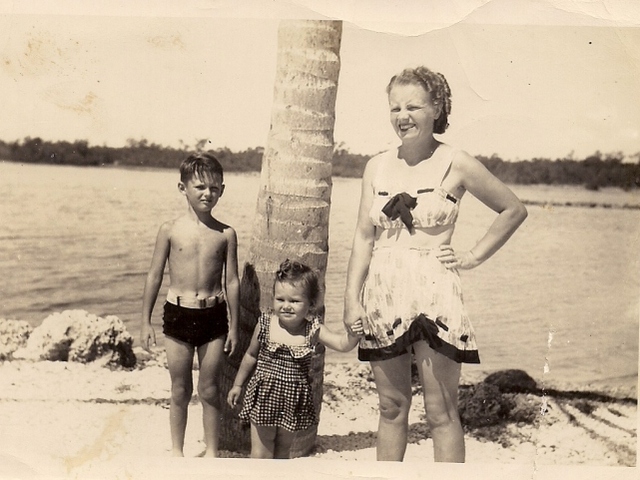
Ocean Drive, with its beach of golden sand, was “combed” freshly each morning by beach boys who had a chair concession every hundred yards or so along the beach. Our special spot was under a clump of three Coconut Palm trees on the beach at 14th Street. For a dime or so, you could have a beach chair set up foruse all day. Another quarter got you and your group some towels and a large umbrella planted nearby to provide shade from the broiling sun. Sunburns were frequent, and unwary visitors suffered much pain if they didn’t take proper precautions by taking the blazing sun in small doses.

Teams of lifeguards would protect the occasional bather in trouble, and each lifeguard station had a lifeboat that was used for more serious emergencies. This setting made Miami Beach a picture-perfect place to spend a vacation.

Flamingo Park provided outdoor sports venues of all types for natives and tourists alike. Baseball diamonds, tennis courts and a jungle gym kept a sports enthusiast busy from dawn to dusk. The older folks had shuffleboard and horseshoes to keep them entertained. The park also had a football stadium used by the Beach High Typhoons. Free concerts were held often, and the park was the central attraction outside of the beach scene.

Lincoln Road, today’s equivalent of an upscale shopping mall, was meticulously manicured and lined with Royal Palm trees. The Beach and Lincoln Theatre provided the latest in movie entertainment.

Miami Beach at the time was a city of less than 10,000 permanent residents that swelled to an estimated 50,000 or more during the winter season. The “season” was considered to last from November through March. Because of the extreme heat in summer, most commercial establishments would close during June, July and August. A few businesses would remain open with skeleton crews to accommodate the people who remained. In those days, even the permanent residents would leave town in the summer, leaving Miami Beach a virtual ghost town.

While about a hundred hotels had been built, all in close proximity to the beach, the city council had wisely reserved the beach along Ocean Drive be used for the public. There was also a 12-story height restriction on all buildings. The city of Miami Beach was fairly small, linking together several islands. The main island extended to 87th Street, where the village of Surfside began.

The east side of Washington Avenue from First Street to Lincoln Road housed block after block of small, mostly family-owned businesses — bakeries, food stores, restaurants, delicatessens and butcher shops. Most of these shops were owned by Jewish people who had found that a good living could be made catering to the permanent residents, as well as the tourist population.

In 1950, my grandparents built a fabulous home at 45th and Pinetree Drive just north of the Firestone property on Indian Creek. We could look across the creek and see the ocean from our living room. This view was spoiled somewhat when the Eden Roc Hotel was built.

While growing up, we spent a lot of time fishing in the Everglades, picking grapefruit and just sightseeing. It was a great time that I shall never forget.

Hopefully, some of my friends will see this article and recall with me those happy times.

I moved to Miami Beach in 2009 from Naples, Florida, with my boyfriend, in search of better career opportunities.

I grew up in Massachusetts, however, and lived in Massachusetts until 2005. When I first moved to Miami Beach, I was not a happy camper. It took me a while to adjust to the craziness of South Beach. I couldn’t find my comfort zone and was intimidated by the whole “party” scene.

I didn’t have a true understanding or love for Miami Beach, until I started working for the Miami Design Preservation League. Since starting my position at MDPL, I have learned about the history and culture of Miami Beach. I continue to learn about the Art Deco, MiMo, and Mediterranean Revival historic buildings and architecture and about all the passion and hard work that went into saving these gorgeous buildings that surround my home and office.

My appreciation for these architectural gems grows every day. I feel so lucky to live in such a beautiful place.

MDPL has allowed me to become more involved within my community. I am able to meet people that live and work in Miami Beach. I’ve learned that although Miami Beach is a huge tourist attraction, it is also a small community of residents.

I’ve never lived in a place in which people are so passionate about their community. The residents of Miami Beach care about Miami Beach’s image, its businesses, its organizations, and about each other. They want it to be a safe place, a beautiful place, and a place people want to live and visit.

I feel settled in Miami Beach now. I have made wonderful friends. I am in love with the design and art scene of Miami and Miami Beach. I am a regular at Second Saturday Art Walks in the Wynwood District (the food trucks are a bonus).

I LOVE the Design District, too! I stroll down Lincoln Road every weekend and often have breakfast at Books and Books. I have become a HUGE Heat fan (don’t tell my friends and family back in Boston).

I love spending afternoons at South Point Park and sometimes splurging for dinner at Joe’s Crab Shack afterwards. I LOVE being a car ride away from the Keys, a boat ride away from the Bahamas, and only a short three-hour plane ride away from my friends and family back in (freezing cold) Boston.

I have developed a love for Cuban food and I cannot live without my cafe con leche each morning! I always take my visitors to dinner on Espanola way (its a hit every time). I take my young visitors to the Everglades for a Florida adventure they will never forget. Miami Beach is always a hit for my guests. I have developed a true love for Miami/Miami Beach and the WEATHER!

Miami Beach is my home now. I look forward to many years living and working here.

My name is Alex Sturman, and I am sharing with you a glimpse in the life that took place in the summer of 1957 when I was a nine year old in a family of six.

We were living in Charleston, S.C., where I was born. My father was a ‘travelling salesman’ at the time. He would pack up his company station wagon with restaurant supplies and take off for a week or two, covering most of South Carolina.

I’m sure that he was ready for a change when my uncle gave him a call to join him in Miami. My father decided to pack up the family and join his two brothers in business down in Miami.

The business was owning and operating lunch stands and trucks that serviced construction sites such as the Fontainebleau Hotel along Miami Beach. My Uncle Ben started the business a few years earlier and by 1957 he saw a chance to get his two brothers, Coleman and Nathan, to come down and work with him in beautiful Miami. The business was called Hadacal’s Mobile Canteen.

It was August 28th, 1957. My father, brother Philip and I packed up our 1953 Studebaker Champion Starliner, hooked on a U-Haul trailer and headed for Miami. My mother Ruth and sister Anita would join us once we got settled. My oldest brother Joey left for Miami a few months earlier and rented a house with our cousin Dave Hill. They were both nineteen at the time. Dave would later own the Taurus restaurant in Coconut Grove during its heyday in the ‘70s and ‘80s.

There was no I-95 back then. We drove all the way down using US1 and A1A. My father drove and Philip sat shotgun. I sat in the back with our two myna birds, Heckle and Jeckle. When we hit Hollywood, I kept sticking my head out the window looking for John Wayne. My father laughed. I didn’t know that this was a different Hollywood. We made it to Miami and pulled into the Chelsea Court Motel, made up of small cottages located on Biscayne Boulevard.

The car stopped, and once the dust settled I could see these shirtless, shoeless kids looking into the car window. They were my cousins Max, Annie Kay, Ina Rae and Martin. They were my Uncle Nathan’s kids that I was meeting for the first time. Max and I would later attend the University of Miami and become architects.

The next day my brother Joey had to run errands and asked if I would like to join him. He had a 1947 Hudson with an in-dash radio that was the size of a present day boom box. As he ran errands, I would sit in the car, windows down with the smell of horsehair padded seats and listen to the radio on a beautiful sunny day.

I remember the songs that played as I waited. They were “Honeycomb,” by Jimmie Rodgers, “Bye Bye Love,” by the Everly Brothers, and “Diana,” by Paul Anka. I was hearing these songs for the first time ever that day. To this day, whenever I hear any one of those songs, I am a nine year old back in that old Hudson, so excited about this new life in Miami that I am about to begin . . . and what a beautiful day.

Miami seemed so new back then. Everything was clean and freshly painted. It was as hot as it is today, but I never complained. The uniform of the day was shorts, sneakers and no shirt. No one wore shirts back then. The only air-conditioned buildings were the drug store and movie theater.

No such thing as graffiti and the only thing that kept an intruder out of your house as you slept was the latch on the screen door. There was no need to protect your property, because everyone respected each other and a break-in was unheard of. And as you slept, the oscillating fan kept you cool. It felt so good when the fan made its sweep and got back to you.

Trips to Miracle Mile and Lincoln Road were always family events. We would put on shirts, eat at the local cafeteria, and Mother would shop. I always remember the sky being sunny and bright as you looked through palm trees that were everywhere.

From Pogroms to Palm Trees: Rose Weiss, “The Mother of Miami Beach”

How does it feel to be the granddaughter of a Pioneer Family In a word—unique!

It would be a colossal understatement to say being born in Miami and growing up in Miami Beach has been spectacular, but how that all happened is the real story, and it all started with my grandmother, Rose Sayetta Weiss.

“Rosie,” as she was known, immigrated with her family to Brooklyn, New York, from the small village of Mizrich, on the Russian/Polish border. Jews there lived under the oppressive rule of the Czar, and going to America was every family’s dream.

The Sayettas settled in the East Side, and eventually Rosie married Jeremiah Weiss. They had three children: the oldest my Aunt Malvina Liebman Gutschmidt, an educator and author, My father, Milton Weiss, a lawyer and banker, and my Uncle and Godfather, Eugene Weiss, a podiatrist.

Rosie suffered from allergies and asthma and was advised by her doctor to move South. Luckily for me, she chose Miami Beach. In 1919, she arrived, and it’s safe to say the City was never the same.

I remember her as being formidable in stature as well as personality. She immediately became active in politics and attended every city council meeting for 40 years. The City Fathers called her the “eighth councilman.”

While raising her children and then directing her grandchildren, she managed to organize the first Red Cross, found the PTA in Beach schools, design and sew the Flag for the City of Miami Beach and raise five million dollars in War bonds, more than any other woman in the State.

I pity the person who ever tried to say no to my grandmother, and there weren’t many who did. During the Thanksgiving and Christmas Holidays, she convinced the local merchants to donate food and clothing for poor families.

She would take my cousin Wolf (who was 10 at the time) and make the deliveries in her four door green Chevrolet. On her car was the decal of a Rose, and the Police knew when they saw that rose, not to ever ticket her no matter where she parked. If only I still had that car and decal!!!!

I’m told that when my Father announced he would marry my Mother (Ceecee Alexander), Rosie was skeptical of the blonde bombshell as a future daughter-in-law, but after two grandchildren and lots of brisket dinners they became friends.

Grandma Rose loved to babysit my sister and me. Our outings included the Parrot Jungle, The Rare Bird Farm, Crandon Park Zoo, and Pigeon Park, which is now Bayside.

At home she made up endless stories about a fantasy town called “Catsville” and played Opera and classical music all the time. As a result, I became a music lover and a Mario Lanza groupie in the first grade!

Grandma Rose had strong opinions and was very protective of her family. She made it clear that she disapproved of women wearing trousers and smoking in public. When I went to Europe after graduating from Beach High, she cautioned me to have a good time, but not to talk to any strangers; I didn’t always take her advice.

Rosie was nicknamed “The Mother of Miami Beach.” Her friend Carl Fisher once said that it was his money but her spirit that built the city. She died at 88, and whoever said that one person can make a difference certainly knew my grandmother. Miami Beach continues to be my home and I’m proud that my family tree is a Palm.

“Tey, mire esos hombres con esos sombreros tan chistosos. … Tey, yo quiero ir ahi.”

“Tey,” I said to my grandmother. “Look at those men wearing funny hats. … I want to go over there,” I excitedly pleaded.

“Please, take me over there, please, pretty please, I want to see what’s over there. Look at those cars with angels and stars. It is so pretty in there with all the lights. The tall skinny dancing palm trees adorned with sparkling lights. I want to see the Christmas tree, the stars and all the colorful magical lights.”

As I marveled, our bus arrived, and she would grab me by the hand and say, “Let’s get in, watch your step, let’s go home and get some rest.”

We were at this bus stop after my grandmother had worked another long day cleaning and cooking in one of Miami’s opulent homes. I went with her the days I had no school and my single mother worked, to that house with the courtyard, the tennis court, the pool and a giant poodle I loved to play with.

A week went by and here we were again at my favorite bus bench, waiting, and I was hoping this time Tey would take me over there, to “The Beautiful Place,” the magically adorned building. I may have insisted a little too much this time because I will never forget her reply.

“We cannot go over there, you cannot go in there, do you hear me, do you understand?” she shouted.

“Por que?” Why? I asked.

“Because over there is a place where only rich people can go; they are different than us.”

“What do you mean?”

“Ese es un lugar para los TUFOSOS!” That is a place for the snobs.

My tearful eyes looked up at her hoping to understand what she meant by rich and TUFOSOS.

I loved being with my pretty grandmother. She was strict but she was also funny, kind and loving. She would tell me I was beautiful and covered my body and face with hugs and kisses.

I loved going inside the majestic homes and I daydreamed of the day I, too, would live in a fancy home, near or on the bay or beach. I took in my grandmother’s sad and tired eyes with no light, no hope, and no shine.

I insisted, “Please take me over there.” But here comes the bus. She said, “Let’s get in, watch your step, let’s go home and get some rest.”

The years have gone by, my grandmother is now up in the sky, and our world has changed so much that I am perplexed when I think of where my family comes from and all the possibilities for the future.

She was from the countryside of El Salvador, an orphan raised by aunts and uncles, and shuffled from home to home. I only learned her story later from my mother. My grandmother was only granted a second-grade education, and when she was 12 years old, she was hired to clean other people’s houses — the homes of the “tufosos.” It was in these homes of the “tufosos” that my grandmother became an exceptional cook and she mastered European cooking such as apple turnovers, yams, cheese tarts, and various types of stews and quiches. It was because of her gastronomic talent that she was later hired by an American diplomat who arranged for her to come to the United States, first to Boston but settling in my beloved Miami.

I was born in Miami, raised in the suburbs of North Miami, have loving and generous parents and stepparents. I was privileged to go to private school. I have a graduate degree and a well-established career. I now own a beautiful South Florida home, steps away from the beach and the bay.

The beautiful and enchanted place I have been talking about is a ritzy mall called Bal Harbour Shops. When I was a child, security guards and valet parkers wore pompous uniforms that now seem silly. Their hats with feathers, which I found so funny and enchanting as a child, resembled royal guards’ headdresses. The cars that were led by angels and stars are gaudy Rolls-Royce and Mercedes-Benz.

Now that I am grown, with privilege and abundance, every time I drive in my convertible sports car by Bal Harbour Shops, I get an uncomfortable feeling in the pit of my stomach. It is a fleeting feeling that goes away as soon as the light changes. I emphasize drive by because to this day, I have never been in there. Perhaps it is loyalty to my grandmamma, my own limited beliefs or my simple sensibilities. But to this day, “Not in there … not in there. …” I was told I cannot go over there.

You can probably imagine my reaction as a 9-year-old from Winston-Salem, N.C. after seeing Miami Beach for the first time in 1947. My parents brought my younger brother and me down from North Carolina to escape a polio epidemic running through the South that summer. Miami Beach was the first big city I had ever seen. I was mesmerized.

Compared to life where we grew up, the possibilities in South Florida seemed limitless. Back then in Winston-Salem, it was impossible to avoid the smell of freshly harvested tobacco. There was still Jewish segregation and some anti-Semitism. Our family was one of 50-60 Jewish families in Winston-Salem and our contemporary friends were spread out across the South. Many of my friends lived in other towns in North Carolina, Virginia, South Carolina and Georgia. Our world definitely felt a bit isolated.

The Reform Temple in Winston-Salem was basically our home. Aside from a few movie theaters, Aleph Zadik Aleph (a Jewish youth fraternity with chapters all over the country) was the only true local hangout for us growing up. I really had never seen anything like Miami Beach. It was mostly desegregated for Jews by 1947, except for Bal Harbour. That unforgettable smell of fresh tobacco in the air was gone. Once our family checked into the rooms we reserved at The Georgian Hotel on Lincoln Road and Collins Avenue, I took one look out of the window at the ocean and knew that one day I would make the Miami Beach area my home.

The Georgian was at the heart of everything we did for fun that summer. It was a short distance to some of the Beach’s legendary eateries: the Crossroads, DuBrow’s Cafeteria, Huey’s Cathay House, Wolfie’s, Joe Hart’s Pickin’ Chicken and the Noshery at the Saxony Hotel. Between the hotel pool, the beach, miniature golf next door, and breakfast at the Liggett’s Drug Store counter, what’s not to like for a 9-year-old? I can still taste the fried chicken from Joe Hart’s and the corned beef sandwiches from DuBrow’s, sliced thin and piled high for a dollar.

My family continued to visit Miami Beach during the summers before finally moving full-time in August 1954, when I was in high school. Much to my dismay, I had to go back and stay with my brother in Winston-Salem to complete high school. I skipped a grade, but Miami Beach Senior High did not recognize that year and would have required me to redo it.

I’ll never forget what happened in 1954 during our first few days as official Miami Beach residents. We went to see the house my parents had rented in Bay Harbor Islands, when two gentlemen stopped to see my father about urgent business they needed to discuss.

They were sent by Rabbi Leon Kronish, the legendary rabbi at Temple Beth Sholom. Rabbi Kronish had received a tip from our rabbi in Winston-Salem that our family was moving to Miami Beach and that Temple Beth Sholom should recruit us to be members. Rabbi Kronish apparently wasted no time and, we later learned, sent two of his best to recruit us for their congregation. The two gentlemen were Judge Harry Arthur Greenberg and Howard Miller, one of the initial developers of Cooper City. I guess temple membership recruitment was serious business back then.

My family did join Temple Beth Sholom, and my father quickly became one of the leaders in the congregation, a role he proudly held until he passed away in 1973. My father was always volunteering and giving back. He was a community leader in North Carolina and afterward in Miami Beach.

Naturally, I looked up to him and wanted to follow in his footsteps. After college graduation in 1959, my military obligation was fulfilled as a member of the Florida National Guard outpost in Hollywood, and later in the U.S. Army Reserves across from the University of Miami. In March 1960, I landed my first (and only) job and also enrolled in the University of Miami graduate school for classes to prepare for the CPA exam. I was living in Surfside at the time, and my classes were at night. Getting around back then wasn’t nearly as easy as it is now. The interstate had yet to be built, so I had to take the Broad Causeway or the Venetian Causeway to Biscayne Boulevard, taking that all the way to campus in Coral Gables.

Even though there were about 30% fewer cars on the road than we have today, that was still a huge drive. I stayed busy by volunteering as a firefighter with the Surfside Fire Department. Aside from the chief and captain, , who trained us well, the rest of the Surfside Fire Department was composed of volunteers. We had a single truck. They needed us, but I can really only recall one time when there was an actual fire.

I eventually met my current wife Nancy in the late 1970s and would settle with her in Hollywood. She has been a permanent fixture by my side in the community, involved with Temple Solel, Jewish Adoption & Family Care Options (JAFCO), Cystic Fibrosis Foundation, David Posnack Jewish Community Center, and our current involvement with Miami Jewish Health Systems, where I serve as chairman of the board of directors. This August will mark my 60th year as a full-time South Florida resident, though it all began with that first summer vacation in 1947.

Thank you Miami Beach, for making all the dreams of a wide-eyed 9-year-old from Winston-Salem come true.

Just like so many other Cuban-Americans, we came to Miami to escape the ravages of the Communist regime that had taken over our island-nation.

We were lucky enough to still be able to come on a regularly scheduled Pan Am flight. My parents obtained their visas to leave Cuba in November 1961 and were forced to leave their two children behind.

Those were torturous weeks waiting to see if we were ever going to see our parents again. However, God was looking over us and my brother and I took our first-ever airplane ride on December 1, 1961, from Havana, Cuba, to Miami, Florida.

I remember looking out the window and, as we prepared to land, I saw my mother, father and cousins standing on a terrace on the roof of the airport. Little did I know then that this terrace would be one of the places where we would frequently spend Sunday afternoons – it was free entertainment!

Since we were only able to bring some clothes and had no money whatsoever, our family discovered all the places that provided diversion for my brother, my cousins, and me for free. So we frequently went to the beach (Crandon Park or South Beach), Lincoln Road, the airport, Morningside Park, and Bayfront Park. All these places still exist today, but in a very different way.

South Beach had a dog track right by where Government Cut is and there was no pier. There were rocks that all the kids would climb on and jump from into the water. Lincoln Road was similar to today, but it did not have all the high-end restaurants and it was not as crowded.

There were simple shops, a Carvel Ice Cream shop and a little tram that would take you from one end of Lincoln Road to the other for, I think, 10 cents.

There was no Bayside Marketplace at Bayfront Park – actually, it was really just a big stretch of grass along the Bay. The airport was tiny and you would still have to walk to the tarmac to get on and off planes. The rooftop terrace was very nice to spend time hearing the roar of planes taking off.

Our family settled in what is now called Wynwood. I really do not know if that area had a name then, but I do not think so. We referred to the general area as “el Norwes” (the Northwest). The building that we lived in is actually still there, but the area has changed dramatically.

There was no Miami skyline to be seen and Midtown was not even a thought in anyone’s mind. In fact, having come from Havana, a bustling city with a lot of nightlife and bright neon signs, Miami seemed like a sleepy town then and reminded me more of the town where I was born, rural Moron, Camaguey.

Somehow, it seemed that half of Moron settled within the same block of NW 32 Street. By 1967, when we bought our first house and moved to Hialeah, the entire two blocks between Miami Avenue and NW 2 Avenue seemed to be inhabited by “Moroñeros.”

It was a great childhood there. Everyone knew everyone, we rode our bikes freely without the concerns that seem to worry every parent today, we played “hide-and-seek” throughout the entire block with dozens of kids, and on rainy days we would play Monopoly.

There was no Publix or Dadeland Mall. The only large supermarket in the area was a place called Shell near NW 54 St. We bought our groceries at “Paul’s Grocery Store” on the corner of Miami Avenue and 29th Street and took the bus for a few stops to shop downtown at places like Richards, Kress, Lerner’s, Burdine’s, and McCrory’s. My mother and I loved to have corn dogs at the McCrory’s luncheonette.

I went to Buena Vista Elementary School where I was first called a “spick.” I can still remember the boy’s name: Juan (!). He was taken a little aback by my non-reaction – I had no idea what it meant. I asked him, he explained it to me, and we became good friends. Still not sure what a boy named Juan was doing calling me a spick, though! Fortunately, I never heard the term (nor any other derogatory name) directed at me again.

Later, I went to Miami Edison Junior High, which was bulldozed out of existence several years ago. My brother graduated from Miami Edison Senior High, which was where Edison Middle sits now. We loved going to the Orange Bowl for the Red Raiders games – especially when we played our main rivals – the Stingarees from Miami High.

My father was a very resourceful, intelligent, and ambitious man. Within a couple of months of arriving in this great country, he owned his first gas station – on NW 7th Avenue near 50 Street.

The pumps were manned at the time – no self-service then. He provided full service and automotive repair. My mother pumped gas, checked the oil, radiators, put air in the tires, and cleaned the car windows.

After school and during summers, my brother also worked at the station. I always wanted to work there, but my father would not let me – I was a girl and this was well before feminism and the time, like now, when everyone pumps their own gas.

Within a short time, my father owned several gas stations throughout Miami and we saved enough to buy a house in Hialeah. Hialeah had not yet become the Cuban and Latin-American haven it is today. We were actually only the second Latin family on our block in 1967.

My mother, who had never worked a day in her life before coming here, was also incredibly hard-working. Initially, she worked the night-shift at a shoe factory nearby. Her shift started at 11 P.M. and ended at 7 A.M. She would arrive home just in time to get us kids ready for school. She would rest while we were in school, but also clean the house and get dinner ready. Once we were tucked into bed, she would go to work.

Eventually, she was able to transfer to the day-shift. Then she went to school in the evenings to learn to speak English and become a beautician. She received a beautician’s license and opened up her own beauty shop on Collins Avenue and 23 Street.

Both my parents accomplished this when they were already in their forties and fifties, in a new country whose language and culture was totally foreign to them. Hardly anyone spoke Spanish then. Both of their children went to college and received advanced degrees – mainly, I believe, as a result of our parents’ example and expectations.

Although I went away to school and have traveled extensively, Miami remains home and will always be. This is where I grew up, where my parents brought us seeking to raise their children in a free land where opportunity is available for all.

I appreciate all that Miami has given us and I try to give back whenever I am able. Coincidentally, a few years ago I moved to the Morningside area, right down the street from the old park that I used to frequent as a kid. It is still beautiful!

I remember vividly the days that led to my coming to Miami from Cuba. I was only 9 years old and turmoil, to say the least, was at hand. We were leaving my country for a short period of time. No one in my family thought it was forever. But even as a goodbye, it felt very sad.

My mother told me we would be staying in Miami for a long vacation, but I knew better. I overheard a conversation between my mother and father. They were afraid that Fidel Castro was installing a communist regime and that they would lose custody of the children to the state and the ability for us to practice our faith.

At that time, I couldn’t understand how they would make the ultimate sacrifice of leaving everything behind for my little brother and me. My father, who was in his 30s, already had a very successful job and future in an American company, and was finishing his studies at La Universidad de La Habana as an electrical engineer. My mother had a doctorate in philosophy, also from the same university. She was working as a teacher.

In those days, they seized all American businesses, and Mr. Skilton, my dad’s boss, and his family were expelled from the country. It was very sad for me. In their home, I had learned many American values and, because of the Skiltons, I celebrated Halloween and Thanksgiving. The regime asked my dad to help in the take-over of this business. My dad replied he wasn’t a thief. He had to leave the country before us.

On November 6, 1960, my mom, my 4-year-old brother Freddie, and I left Cuba for Miami. They put us in the “fish bowl,” a glass room where you stayed for hours, fearing your name would be called to be searched. From my seat, through the glass, I could see my grandparents trying to hold their tears so that we would not see them cry. What I didn’t know at that moment is that I would never see my paternal grandparents again. Still today, that sad memory touches my heart when I’m sitting in any enclosed glass room. I held my mother’s hand as the Pan American flight left Havana late that afternoon. People were crying; others feared the plane would go back to Cuba and screamed to the pilot not to return. You could hear the sobbing throughout the hour that the flight lasted.

The Miami International Airport was in the same place as it is today, but back then it was a small building with a terrace. We all came down the ladder and some kissed the ground. Before we went into U.S. Customs, in a moment of emotion, we sang the Cuban National Anthem. Then I saw my dad on the terrace waving at me, and I knew at that moment, that Cuba will always be in my soul but that Miami was home.

A few days later, I started school at Kensington Park Elementary. I knew very little English. My classmates were so friendly, but I only had one friend who could communicate with me, a Cuban boy named Ricky. We were the only two Cubans in the class. Children learn fast, and weeks later, I could say the words to “America the Beautiful” and the Pledge of Allegiance.

Every Saturday, at 8 in the morning, I had religious education classes at Sts. Peter and Paul Catholic Church. It was too early for me, but my father would make me go, regardless of my protests. After all, that was one of the main reasons we had left Cuba — so that we could practice our faith in freedom.

Soon, all my friends and their parents started arriving from Cuba. We lived in the northwest section of Miami, near the dog track. We went almost every day to the airport to give support to those in our same situation who were just arriving. Everyone was family and we helped each other.

Christmas was an emotional time. The year before, I had received so many gifts – twice — some from Santa Claus and others for Three Kings Day. But most important, my grandparents were there. This year, my young parents were alone and could not afford too much since my dad did not have a job. Days before Christmas, we received an invitation for a Christmas party for Cuban children at the Gesu Church in downtown. Included was a card for a special gift, and I still remember how nice it felt, and the excitement of a child who had nothing. It also meant a lot to my parents.

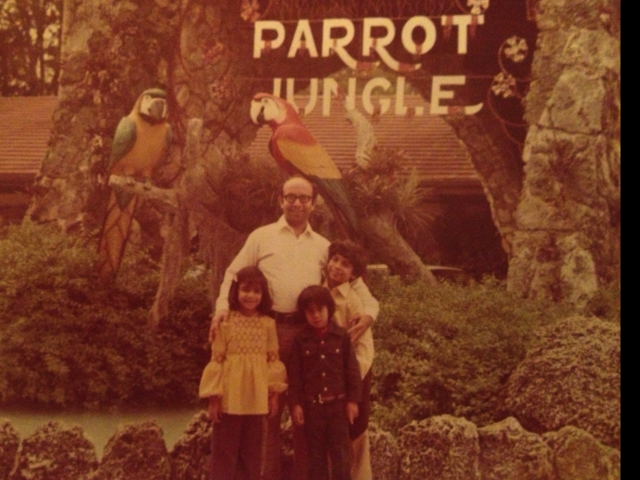
On Sundays, were outings to Miami Beach, Lincoln Road and the parks, and we would take picnics. Once, we tried to sneak into Parrot Jungle but were told you had to be 5 to go in free. So the picnic was outside.

Months later, we had to leave and go to Puerto Rico to find a job for my dad. In all the years we lived in Puerto Rico, we came to Miami every year. The Magic City is the place where most Cubans want to be – for friends and family, Cuban food and pastelitos. But the love of America, the generosity of its people, and the opportunities given to us, made us Cuban Americans.

More than 40 years ago, in 1971, a small restaurant called Versailles came to be. Every time we arrived from Puerto Rico, my dad would take us from the airport to Versailles. Later, when I moved back, my friends and I would always go after the parties for café con leche. I sat there with my husband, then my boyfriend, for long conversations. I pushed my babies’ carriages through the tables, and when my children were teenagers, I took them for lunch and advice. Today, Versailles is the first place to stop when they come from college or from a long trip. Versailles is part of our Cuban culture in Miami.

In the ‘70s, my parents bought an apartment in Key Biscayne, which we call El Cayo. It was the place where I met my husband. We married 35 years ago and have three children. Today, I live in the Grove, and see bikers every day riding the same trails I used to ride to Matheson Hammock. And still my Cuban-American soul finds Miami is my home.

I was born in Georgetown, Guyana, which is the only English-speaking country in South America.

When I was 6 years old, my parents migrated to Toronto. I started school in Canada, and it was my second-grade teacher who was influential in my love of education at an early age.

You see, I had an accent when I spoke English since I am from Guyana and I did not want the other kids to make fun of me. So I kept quiet because I was intimidated to engage with other students and felt out of place.

My teacher spoke to my parents and let them know that unless I got with the program I was going to be left behind and I was going to repeat the school year. So she suggested that I attend summer school to improve my deficiencies. To this day, I am thankful to this teacher from Jamaica who was able to see through my shyness and understand what I was going through.

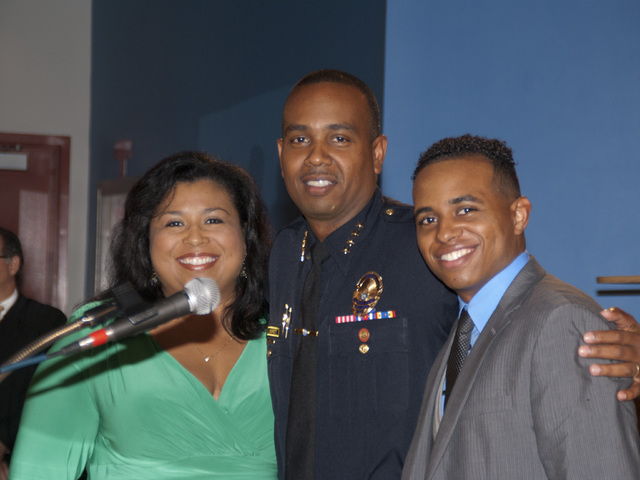
Memories like those have also helped me become the person I am today. I remember that my love for police work came from that tall police officer who visited my third-grade classroom for career day. His uniform and command presence stood out the most and left a visual imprint.

I also had a little more push since we lived close to the police academy and every day when I got home from school, I would see the recruits exercising and practicing. I knew that when I grew up I wanted to be a police officer who would be able to help others.

In 1985, I came to Miami with my family, and it was here that I started my public service career. One year after graduating from Miami Southridge Senior High School, I enlisted in the U.S. Army and spent three years as an infantry soldier. I then was hired by the State of Florida as a correctional officer at South Florida Reception Center and I was subsequently hired by Miami-Dade Schools Police Department as a police officer.

Education has always been an emphasis in my life, and I graduated from Florida International University with a bachelor’s of science and from the University of Cincinnati with a master’s of science. I am also a graduate of the prestigious University of Louisville, Southern Police Institute Command Officers Development Course.

I have been blessed to be able to work and train with multiple agencies responding to critical incidents and have offered countless workshops in the area on youth violence, gang awareness, school safety, weapons of mass destruction, emergency management and tactical training. I also teach for the University of Phoenix and FIU.

Fifteen years ago, I worked with Miami-Dade Schools Police. I was working there in the position of captain when the City of Miami Police Department offered me a position as police major to lead and manage the Miami Police College and certainly this was something I could not refuse. I saw this as an opportunity to grow and learn.

Then I saw the chance of rejoining the Miami-Dade Schools Police Department as the chief. I felt that this was an opportunity I could not pass up and also would finalize my law enforcement career and personal mission. I was working for City of Miami Police Department when Superintendent Alberto M. Carvalho offered me a chance to lead the police department for the fourth-largest educational district in the United States.

The Miami-Dade Schools Police Department is currently the seventh-largest law enforcement agency in Miami-Dade County with an authorized strength of 180 sworn personnel. One of the main objectives of the department is to provide a safe learning environment that promotes good health and is free from violence, weapons, hazards, vandalism and substance abuse.

The Miami-Dade Schools Police Department not only deals with incidents of a criminal nature, but the officers strive to be positive role models for the students and prove there is an alternative to crime or violence. The officers play an active role in the prevention of crime on our campuses.

After Hurricane Andrew, I ended up in Broward County with my wife and son. All these years I have been working in law enforcement, my wife has been the rock that has held our family together. She has made sure that my son was properly prepared for school along with participating in social and sporting activities.

My son just recently graduated from FIU with a bachelor’s in public administration and he has chosen to pursue the career as a law enforcement officer. This is a noble calling since it takes a special person to take on these responsibilities in today’s society.

When I left Guyana with my parents and sister, I never imagined I would be where I am today. My parents had the strength to migrate from not just one country but two countries. The opportunity to swear in those new officers made me realize how lucky my family and I are.

We are lucky to live, work, and recreate in a beautiful city with people from many different cultures, which makes me realize that our differences can be the glue that holds us together.

This endeavor to help others has led me to more than 24 years of public service at the federal, state, municipal and county government levels. I can truly tell everyone that great things are made in America, and this is definitely the land of opportunity. For if it was not for the emphasis on education and good family values, I could not be where I am today.

Translate »